Sinha M A Sayeed
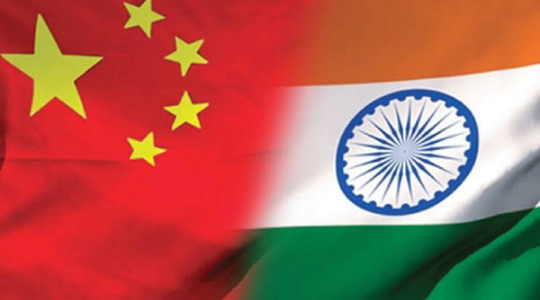
The concept of ‘balanced foreign policy’ is indeed confusing and stands it more confusing and oscillating when a such asking arises during a war-like situation between two giant states India and China vis a vis small neighboring states like Nepal, Bhutan, Maldives, Afghanistan, Srilanka, Pakistan and Bangladesh. Centering the ongoing war-like landscapes in Asia between China and India, countries like Bangladesh in particular cannot but be worried and alert as to what to do under the circumstances, supporting or not. It’s a kind of horns of dilemma for Bangladesh since both India and China bilaterally, regionally and globally are importantly important and unavoidable for her on all counts and equations in various moods, modes and expressions.
Bangladesh-India relations over the decade under Prime Minister Hasina administration rolled so speedily and poetically without much mathematics and summations towards such a height, which has been termed as ‘Role model’ by both leaderships of Bangladesh and India engulfing further think-tanks, nation-states and global bodies of various forms, natures, backgrounds and dimensions. Nonetheless, strongest sense of deprivations, suffocations and humiliations, unfolded and unfolding, tend to generate and drive a pertaining but moot conclusion: ‘Is India committed to vertical-vertical/horizontal-horizontal standing between these two sovereigns, free and independent states or otherwise to vertical-horizontal standing under the superficial drills and exercises of vertical-vertical/horizontal-horizontal standing? Why has the Prime Minister of Bangladesh Sheikh Hasina herself uttered ‘We have done enough from our end but got virtually nothing from India? Why has the Modi administration become so crude to Muslims in India putting Bangladesh into further crises regarding NRC and other communalistic initiatives? Why does the Modi administration show unfriendly gestures to solve outstanding issue in practice? Why is Modi administration getting distanced from neighbors in south Asia pointedly? Why the old thorny maxims are staging a come-back? Of them two issues are mostly piercing and penetrating (a) ‘Geography tells us to be with India but history alerts us not to be so much emotional about India’ and (b) ‘India-friendly Bangladesh at the government levels to maintain state to state routine relations but Indo-phobic Bangladesh at the mass levels exist and continue unbridled, meaning overall understanding and experiences of the people of Bangladesh about outlooks and behaviors of India are not friendly and supporting in reality. Yes, replies lie in India, not in Bangladesh.
China under life-long President Xi Jinping with China dream declared in 2012 aims at reaching its targets by 2049, the 100 years founding anniversary of the Communist state of China. In her politico-strategic-military-economic box remain BRI, BRICS, promises, deals and aids for massive economic, commodities and technical cooperation and as ideology not communism at all but Confucianism, institutes of which are being planted conceivably across the earth planet. Leading global think-tanks and institutes including World Bank, IMF, IDB and ADB are in constant forecasts about China’s emerging as the topmost global economic super power by 2025. Militarily she is advancing geometrically sans beating a drum even at the defiance of reports and researches by the western powers. COVID 19 and subsequent overall global landscapes seem to be more potential for China as well.
Bangladesh is one of the direct beneficiaries of China’s overall approaches and initiatives in almost all areas. Today, Chinese investment in Bangladesh rose more than 50 billion dollar and its exports to Bangladesh are not less than 15 billion dollars. Her unflinching supports to Hasina administration in all situations are tested meanwhile. Again, added impetus is China’s role to come forward to mediate the Rohingyas crisis also made Bangladesh closer to her. As of today, Bangladesh -China relations are comfortable, dynamic and mutually rewarding as opposed to India. Ironically enough, here the perceptions run as ‘Both at government to government and people to people levels friendly relations between Bangladesh and China are coveted for’.
Therefore, no doubt it is that the deteriorating relations with rise and fall of musical intonations and vibrations may be leading to war between India and China making it clear that the greatest challenge before Bangladesh is knocking at the door. Question is more important in the context of priority between Regime security and State security and, so Bangladesh cannot remain silent in the end. Foreign minister of Bangladesh Abdul Momen meanwhile expressed to the media not to side either with India or with China under such bewildering state of affairs Even neutrality from Bangladesh’s end implies budging from committed role model standing with India, which denotes in the naked and crudest form of analyses yes, showing honor to China meaning to India at attempt towards rolling China. Those who support India with eyes closed and ears unheard may feel obligated to term such historic stand of Prime Minister Sheikh Hasina as not visionary enough but those who want to see foreign policy as playing rightly in the context of time, space and dimension may simply sound and voice ‘Yes, Prime Minister you have done the right thing upholding balanced policy in our context and reality while dealing with two giants India and China during the war-like standing between them and called it is ‘Statesmanship’( Attn. to my article. ‘India factor while dealing with China’,7 September 2014, Daily Observer and’ Jostling under the armpits of giants’,14 August 2014, Dhaka Courier).
Notwithstanding anything contained in texts, documents, contracts and MOUs, one should especially India must have to take into notes that Sheikh Hasina’s positive understanding about China came to forefront during her maiden visit to China in November, 1993 as the Leader of the Opposition in the 5th Parliament at the invitation of the Communist Party of China. Immediately after arrival at the Zia international airport, now Hazrat Shahjalal International Airport, she told the waiting journalists ‘China has a great role to play in Asia’ (Attn, to my articles ‘Sheikh Hasina’s Visit to China: Seen in the wider perspective’, 5 February 1994, Daily Star).
Dr. Sinha M A Sayeed(titled ‘Global voice’ for the book O United Nations), writer, columnist, public speaker, member of International Political Science Association and Chairman of Leadership Studies foundation, LSP, at [email protected]
Views in this article are author’s own and do not necessarily reflect CGS policy.