In This Article 5
As of October 1, 2020, WHO has recorded 34 million confirmed cases of COVID 19 infection, worldwide and 1 million deaths of which 50% of the infections are in the Americas. Among the top four infected countries are USA (7 million) followed by India (6.0 million), Brazil (5.0 million) and Russian Federation (1.0 million).
Given the challenges of tracking and reporting of COVID 19 infections, actual numbers in most of developing world are likely to be much higher.
As the scourge continues to rage, its costs in health and economic terms are mounting. Some countries such as Australia has already officially declared that they are in recession, apparently worst of its kind in the last 150 years.
With economies weakening right across the world, COVID 19 is shaking and reshaping the world at multiple levels and some of these changes are likely to last long and some may even become permanent.
While the more visible non-health casualties of the virus are economic fallouts, less visible but somewhat more conceivable changes include, among other things, a re-think on neoliberalism – a free market economic ideology that dominated the world and ways of our lives in the past decades. Indeed, COVID 19 has exposed many of neoliberalism’s weaknesses especially how in most parts of the world, a market-led economic system has depleted state capacities and as such have failed to come to the aid of people when they needed most, more strikingly in countries that have blindly embraced market economic solutions to address all economic and social needs.
The pandemic has also revealed more starkly how leadership plays important role in management of the crisis.
In addition, and with the virus raging and economies dwindling changes in the world order is another emerging scenario.
Changes to the world economy
Without any exception, impact of COVID 19 on world economies is likely to be devastating. It is making each nation lot poorer and living standards, lot lower. The virus is also making rich less wealthy and some rich may even cease to remain rich and poor are becoming poorer. In some developing countries poor whose number is on the rise are facing starvation and this has serious political and social implications.
Terming the crisis “like no other” Chief of IMF warns that 170 of its 189 member states would experience negative growth. Another projection suggests that more than half a billion would join a billion poor that already exists.
In the ensuing economic trauma, Africa would be hardest hit – sub-Sahara would slid back to extreme poverty and South Asia, a growth powerhouse is likely to descend from pre-pandemic projection of 6.3 % growth per annum to 1.8% to negative growth, meaning millions would be without jobs, food and shelter.
US economy, world’s largest is faltering, people are losing their lives, their jobs – In US, overall mood is one of despondency and hopelessness.
China, world’s largest supply chain economy is also reeling. Social isolation and dwindling demand of its products from abroad, have contributed to closure of many of its factories. However, given that the Chinese have tackled the crisis reasonably successfully and within a short period of time, there are speculations that their factories would also re-start soon though may not be at the same capacity as before. Some of China’s factories are also diversifying and introducing new products that are currently in demand. A recent IMF estimate suggests that at a time when most economies are either stagnating or experiencing negative growth, China is projected to grow at 3.4% per annum.
Overall, the prognosis is hardly inspiring, we are indeed marching fast towards a major economic catastrophe which if not tackled proactively, strategically and more importantly, collectively (both within and across) and innovatively mass unemployment and despair are inevitable which would easily morph into major political and social upheavals right around the world.
Another important lesson of the pandemic is that the countries that refused to surrender completely to the market and retained control of social services provisioning – health, education, social protection – with the state have done better.
In sum, if there is one message COVID 19 has given quite loudly, it would be that neoliberalism, an ideology that for last few decades has put market ahead of the state and given growth priority over equity and sustainability has done grievous damage to the society and “… the crisis: coronavirus could bury it.”
Shifting world order
In its 2017 Report, World in 2050, Price Water House divided the world growth economies into two major groups, namely the G7 (5 European countries, US and Japan) and E 7, seven ‘Emerging’ economies, led by China, India and Indonesia[9].
E7 economies were projected to take over the G7 in 2050 where China would be at number 1, US at number 3 and share of 27 European countries combined would constitute a mere 10% of world GDP.
However, COVID 19 may have induced new dimensions to these projections – G7 countries are much weaker and some are staring at recession. The US which is a consumer economy and is heavily dependent on supply of cheap consumer goods from abroad, mostly from China, is likely to suffer the most. Its recovery would take much longer and with Mr. Trump at the White House who according to Arundhuti Roy is “the effluent of a system that went wrong” the recovery looks even more daunting and when and if it does, there is little or no guarantee that it would resume its position at No 1.
Among the E7 countries, only China has shown resilience and India is a bubble waiting to burst and the third most important economy, Indonesia is reeling and its leaders are trying their best to chalk out a strategic plan to get out of the crisis.
Given China’s exceptional capacity to making prompt adjustments to changing conditions, their economy is bouncing back somewhat though slowly. However, with the world economy slowing and that as several rich countries that have become aware of the risks of supply-chain dependencies are resorting to alternatives of self-sufficiency, would hurt China, world’s key supplier of goods and services.
Another important dimension that separates E7 from G7 countries is that most G7 countries – the West and the US -have accumulated their wealth through colonisation and occupation of what now constitutes developing world and since World War II, through exploitative trade and other neo-colonial arrangements. However, COVID 19 may have shaken that monopoly.
Whereas E7 countries especially China that have developed their economies through hard work, innovations and competitiveness and the fact that most G7 countries especially US thrive through unequal deals, it is conceivable that competence and not confrontation would count in determining economic relations in the coming days.
Moral divide
COVID 19 has also unmasked quite vividly the global moral divide – at the height of the crisis while some countries extended their helping hands to assist affected countries, others tightened sanctions on some countries and deprived them of vital medical supplies to ensure that the dyingdie. Furthermore, Mr. Trump’s recent withdrawal from WHO has also signalled America’s reluctance to adhere to globally agreed principles and at the same time, revealed its inclination to give power politics precedence over human sufferings.
However, America’s withdrawal from WHO did not go down well with most UN member states, not even its allies who look to WHO for collective guidance. Six of the seven G7 countries have either regretted or condemned Trump’s decision of withdrawal and expressed their solidarity with the WHO. The Guardian has termed Trump’s WHO withdrawal decision, “…an act of international vandalism.”
These shifting economic prowess and moral divides are sure to redefine the post COVID 19 international relations and world order, in ways more than one.
Leadership
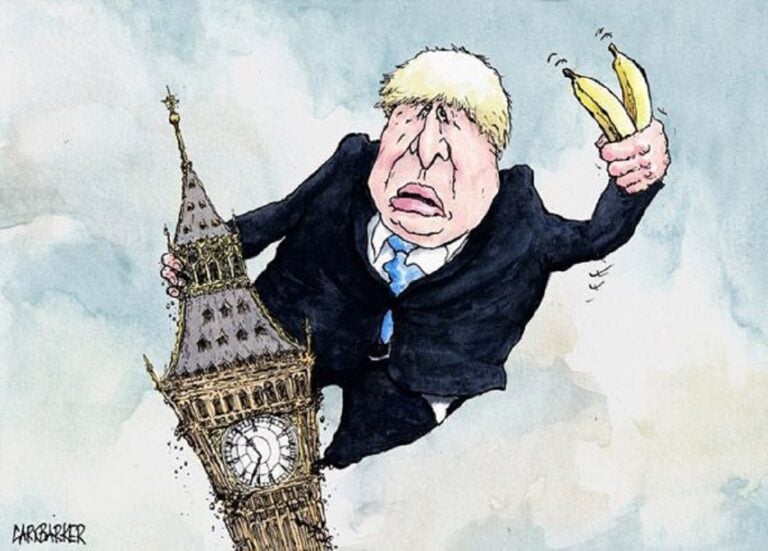
COVID 19 has also shown that leadership matters. Thus it is no wonder that countries that have successfully abated the pandemic – and these include both rich and developing countries – have had leaderships that showed qualities of deep social consciousness, determination, toughness and gave unwavering support to science over economy and backed decisions by putting resources where these were needed most – in medical services. Whereas, countries – for example, the top three most infected countries such as USA, India and Brazil – that have populist, divisive and pro-market leaderships have resorted more to rhetoric than real solutions and in one particular case, has looked to heaven for guidance and thus have failed their people miserably.
Summary of Changes
In sum, devastations of COVID 19 have been multifaceted and so are its after-effects – firstly, we may be in for a prolonged period of uncertainty and lives in every country and of every Individual – rich and poor – would alter at many levels and we need to be aware of this and prepare ourselves accordingly; secondly, the crisis has proven once for all that neoliberalism as the policy framework of economic, social and political organizations of societies which has reduced the role of the state and conceded among other things, vital public utility functions such as health to the market has had devastating effects on societies and people, begging for balance; thirdly, it is about time that people start to see that quality of leadership is key to their wellbeing and thus they need to be more scrutinising and objective in the selection of their leaders and be more bold in demanding accountability; and finally, thanks to COVID 19, weakening of the economic prowess and revelations of the moral depravities of the current hegemonic world order – a post-colonial, post war construction – that has since fostered injustices, inequities and violence over the last several decades may have been shaken, offering in advertently, the opportunity to reflect and build a new world order based on equity and mutual respect.
M. Adil Khan is a professor of development practice at the school of Social Science, University of Queensland, Australia and a former senior policy manager of the United Nations. He is also on the editorial board of the Journal of Governance, Security and Development, a bi-annual journal of the Centre for Governance Studies, Dhaka, Bangladesh.
Views in this article are author’s own and do not necessarily reflect CGS policy.