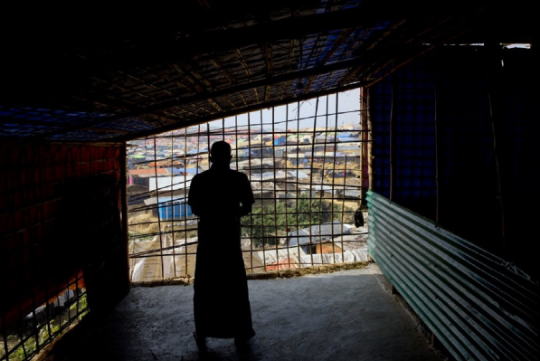
Since 2017, Bangladesh has hosted nearly 1.1 million Rohingya refugees in crowded camps that pose increasing challenges for the country.
On June 23, 2021, during the ninth Moscow Conference on International Security, Bangladesh’s Prime Minister Sheikh Hasina reiterated a request for global cooperation to ensure the dignified and peaceful repatriation of Rohingya refugees, stating that “they are posing huge security threat to Bangladesh as well as the region.” Earlier, on June 16, expressing similar concers, the foreign minister of Bangladesh, A.K. Abdul Momen, during a bilateral meeting with the United Nations Special Envoy on Myanmar Christine Schraner Burgener at the Bangladesh Permanent Mission in New York, sought a clear roadmap from the U.N. for repatriation of Rohingya refugees to Myanmar. Momen said that if repatriations did not start soon, it would only deteriorate the overall situation in Cox’s Bazar, where large numbers of Rohingya are camped, and create instability in the region and beyond.
Bangladesh’s recent calls for repatriations yet again raise the unresolved issue of the Rohingya crisis more broadly and Dhaka’s intensifying concern over hosting nearly 1.1 million Rohingya, most of whom have been in the country since August 2017, following a military crackdown by Myanmar. Moreover, the onset of a political crisis in Myanmar, following the military’s coup in February 2021, has distracted international attention from Rohingya refugees to the country’s domestic political situation. While the solution to the crisis lies in the safe and sustainable return of the Rohingya to Myanmar, it is equally important to acknowledge Bangladesh’s growing concern over hosting the refugees. The protracted presence of Rohingya refugees has put pressure on Bangladesh’s resources, causing conflict and insecurity for locals, which is detrimental to the internal political stability of the country. Additionally, it also strains Bangladesh’s relations with Myanmar.
Amidst the uncertainties over repatriation, Rohingya refugees continue to live in Bangladesh, which has the ninth-highest population density in the world. They are hosted in overcrowded, densely populated camps in the Cox’s Bazar district of Chittagong Division, bordering Myanmar, which is said to be the home to the world’s largest refugee camp. About 40,000 to 70,000 people per square kilometer are living in camps side by side, which is more than 40 times the average population density of Bangladesh. This makes these camps the most densely populated human settlements on the planet, an especially dangerous situation given the COVID-19 pandemic. In addition, the influx of Rohingya has adversely affected not only the Cox’s Bazaar region but also the national economy of Bangladesh. Bangladesh’s economy spends an estimated $1.21 billion a year supporting the Rohingya and the cost may go up with their population growth, inflation, and decline in foreign funding.
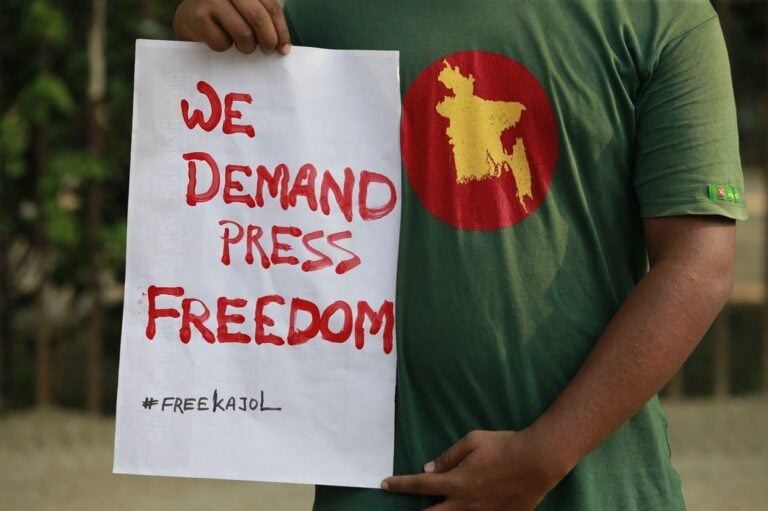
Since the influx of Rohingya refugees, Bangladesh had witnessed a number of demonstrations surrounding the issues of the refugees. Demonstrations were staged against the persecution of Rohingya refugees at the hands of Myanmar military forces as well as the inability to protect the rights of Rohingya in their home country. Demonstrators including various influential Islamist and religious groups have been raising their voices demanding the Bangladesh government to cut its diplomatic relations with Myanmar as well as to put pressure on the latter to accept the Rohingya back. Moreover, on September 15, 2017, following the Rohingya refugee crisis in Myanmar, Hefazat-e-Islam (HeI), an Islamist group, held a nationwide program in which the leaders of the group threatened to launch jihad against Myanmar to liberate Rohingya from Myanmar’s Rakhine State. On many occasions, the refugees have also demonstrated, asserting their right to peaceful protest against the military aggression in Rakhine as well as demonstrating against the attempts to send them back to Myanmar.
The presence of Rohingya refugees in Cox’s Bazar has given rise to mounting tensions between them and host communities, which consider them outsiders. Many in host communities believe that with all the assistance given by humanitarian organizations to the refugees, their own needs are sidelined. Inflation, increased levels of poverty, and strains on infrastructure further add to the concerns of host communities. On many occasions, sporadic clashes have been reported between Rohingya and host communities in the region. Some Rohingya have also engaged in acts of violence against civilians, as well as armed clashes with law enforcement authorities in Cox’s Bazar.
Some Rohingya have been reported as being involved in various criminal activities ranging from robbery and abductions, to smuggling of arms and drugs in the region. In recent years Rohingya have also become the targets of human trafficking networks focusing on refugee camps. Nonetheless, the deteriorating security situation in the camps, including the involvement of some refugees in drug smuggling, human trafficking, and conflicts between refugee groups, is becoming a major government concern. It thus makes the management of law and order in the Cox’s Bazar region a formidable challenge.
Bangladesh also has concerns over the recruitment of refugees into extremist networks by banned groups such as Hizb-ut Tahrir and Jamaat-ul-Mujahideen Bangladesh (JMB), as well as by radical Islamist groups such as HeI. Reportedly, HeI’s influence in the refugee camps is growing among frustrated and traumatized Rohingya, which could fuel militancy not only in Bangladesh but across the wider region. Moreover, Rohingya militant groups active in bordering Myanmar — such as theArakan Rohingya Islamic Front (ARIF), Arakan Rohingya National Organization (ARNO), Rohingya National Alliance (RNA), and Rohingya Solidarity Organization (RSO) — could also recruit refugees, further threatening Bangladesh’s internal security.
Indrajit Sharma, Writer.
This article was originally published on The Diplomat.
Views in this article are author’s own and do not necessarily reflect CGS policy.