Darren Ellis, Jorge Guira and Roger Tyers
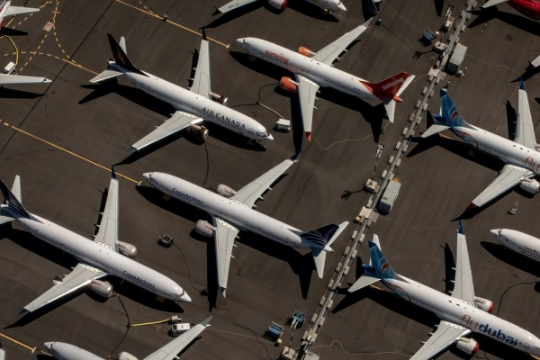
Airlines face an unprecedented international crisis in the wake of the coronavirus pandemic. The International Air Transport Association (IATA) estimates that the global industry will lose US$252 billion in 2020. Many airlines are cutting up to 90% of their flight capacity. On March 1, more than two million people in the US were flying per day. A month on, fewer than 100,000 people are going through airport security daily.
Some climate activists have welcomed the emptied skies, pointing to the dramatic fall in carbon emissions. But others worry that the bounce back and attempts to take back some of the losses might mean that an opportunity for fundamental, sustained change may be missed.
In the US, a federal government US$50 billion bailout fund – part of which will fund cash grants going towards airline workers, and the other part loans for the airlines themselves – was rolled out piecemeal in March, with revisions announced on April 14.
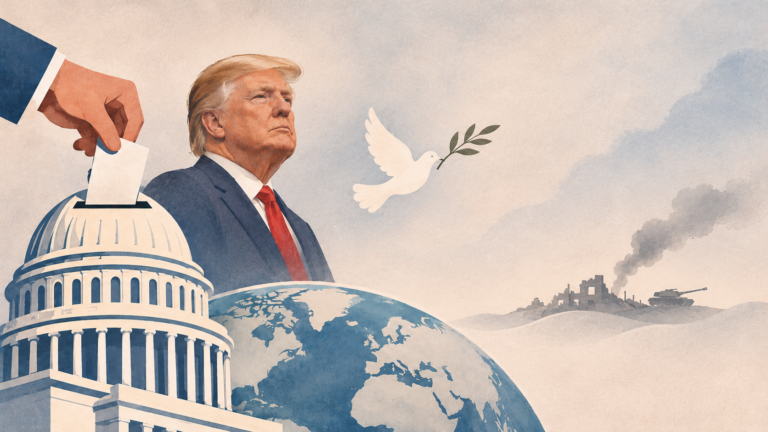
More than 200 airlines applied. American Airlines will get US$5.8 billion, Delta US$5.4 billion, and Southwest US$3.2 billion, among others. Donald Trump, the US president, stated that the airline bailout was needed to return the industry to “good shape” and was “not caused by them”. Another US$4 billion is available for cargo airlines and US$3 for contractors.
In the UK, it was initially announced that no industry-wide bailout would be offered. Instead, the industry would have to rely on broader aid packages covering 80% of salaries (below a cap) for furloughed employees. But subsequently, the government quickly gave easyJet a £600 million loan (US$740 million). Flybe, a smaller regional or “secondary” airline with pre-crisis financial issues, was not bailed out and collapsed. Many money-making routes Flybe ran have since been picked up by others.
Continental Europe is in worse shape. Italy has re-nationalised Alitalia, forming a new state-owned entity and investing €600 million (US$650 million). France has indicated it will do whatever it takes to bailout Air France/KLM (France owns 15% and the Dutch 13%), with a possible €6 billion bailout package (US$6.5 billion).
Meanwhile, Australia’s Qantas secured a A$1 billion loan (US$660 million). Debt-laden Virgin Australia, meanwhile, was denied a A$1.4 billion loan (US$880 million) and has subsequently plunged into voluntary administration. Singapore Airlines, however, got a US$13 billion aid package.
The airline industry has faced many crises before – 9/11 and the 2010 Icelandic volcano eruption, for example. But these pale in comparison to the economic hit that airlines are currently facing. Some are asking: can it recover? Is this an economic crisis that could reshape how we travel and live? Or will it turn out to be more of a pause, before returning to business as usual? And what role does the climate crisis play in all this – how will sustainability figure in any rebooting of the industry going forward?
We are all experts in the airline industry. Darren Ellis (Lecturer in Air Transport Management) considers these questions first, looking at the industry’s structure and response. Jorge Guira (Associate Professor in Law and Finance) then explores bailout options and likely future scenarios for the industry. Finally, Roger Tyers (Research Fellow in Environmental Sociology) considers how the industry might just be at a turning point in terms of how it tackles climate change.
Darren Ellis, Lecturer in Air Transport Management, Cranfield University.
Jorge Guira, Associate Professor of Law and Finance, University of Reading.
Roger Tyers, Teaching and Research Fellow in Sociology, University of Southampton.
This article was originally published on The Conversation.
Views in this article are author’s own and do not necessarily reflect CGS policy.