Mohammad Mainul Islam
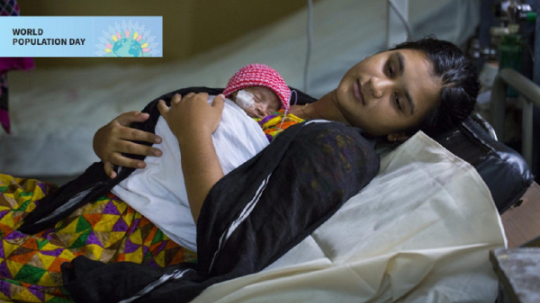
This year, 11th July 2020, marks 31 years of World Population Day (WPD) which was established by the Governing Council of the United Nations Development Programme in 1989. It is an outcome generated by the Day of 5 billion population in the world that was observed on July 11, 1987. The Day was first marked on July 11, 1990 since then, UN and other organizations and institutions commemorate WPD, in partnership with governments and civil society to enhance awareness of population issues, including their relations to the environment and development.Every year the occasion of WPD offers an opportunity for reminding our local communities of the worldwide issues emerging from the size and growth of population and focuses on the urgency of the importance of population issues in the world and to make reproductive health and rights a reality for all. But the observance of the WPD 2020 is different than previous years due to COVID-19 pandemic. The theme of WPD 2020 is-“Putting the Brakes on COVID-19: How to Safeguard the Health and Rights of Women and Girls Now?” The key messages for this year isto raise awareness about thesexual and reproductive health needs and vulnerabilities of women and girls during thepandemic, to highlight how we can provide safeguard that ensure sexual and reproductive health and rightsat local level. Also we need toexplore how to maintain the momentum towards achieving the Sustainable Development Goals (SDGs)by 2030 that we reconvened at ‘The Nairobi Summit on ICPD25: Accelerating the Promise’, November 12-14, 2019, Nairobi, Republic of Kenya.
Thismarks the 25th anniversary of the International Conference on Population and Development (ICPD), which took place in Cairo in 1994, which gave emphasis on rights and choices, equality and to improve the quality of life.To complete the ICPD Programme of Action and SDGs now it is time to deliver actions on ‘Three Zeros’-the commitments of ICPS25 to transform Bangladesh by ending all maternal deaths, unmet need for family planning and gender-based violence and harmful practices against women and girls by 2030. ButtheCOVID-19 pandemic- this crisis has taken anoverwhelming impacts on people, communities and economies everywhere including Bangladesh. No doubt, the pandemic will have great impacts on the above stated “Three Zeros.” Currently Bangladesh is facing challenges of gender-based violence, child marriage and making contraceptive services more available and accessible to the grassroots. Unintended pregnancies, including those among adolescents the pandemic creates further barriers to pregnant women who need antenatal care or safe-delivery services.Thus to fulfill the commitments given at the ICPD25 will be a great challenge. As we know during this crisis not everyone is affected equally.
A majorsegment of the front-line health workers are women, who are excessively exposed to the COVID-19. Supply chains are being interrupted due to lockdown, impacting the availability of contraceptives and worsening the risk of unintended pregnancy. Ensuring access to safe, effective contraception protects the lives and well-being of women and allows crisis-affected families to succeed more competently.According to press release of UNICEF dated on May 7, 2020, in Bangladesh, an estimated 2.4 million babies will be born under the shadow of the COVID-19 pandemic where these babies are projected to be born up to 40 weeks after COVID-19 was recognized a pandemic on March 11. Bangladesh ranks 9th in terms of the highest expected number of births during this period. Having current straining health systems and medical supply chainsthe pandemic has also interrupted school and community-based services for adolescents and youth. Women mostly work in the informal economy, at greater risk of falling into poverty due to COVID-19.News-media also reports the increasing incidence of child marriageand gender-based violence during the pandemic where the country is on lockdown and health systems struggle to cope, sexual and reproductive health services are being sidelined.
Over the years despite significant progress Bangladeshi women still lack modern contraceptives women who want to avoid pregnancy are not using safe and effective family planning methods, for reasons ranging from lack of access to information or services to lack of support from their partners or communities.In Bangladesh 12% currently married women (aged 15-49 years) are in this category according to Bangladesh Demographic and Health Survey-BDHS 2017-2018. The level is similar in the BDHS 2014 level of need. However, here we find much high unmet need (15.5%) for family planning among the young (15-19 years) in the BDHS 2017-2018. Despite substantial decrease in total fertility rate-TFR (2.3 in BDHS 2017-2018) in Bangladesh adolescent birth rate in the highest (83 per 1000) in South Asia (Human Development Report 2019, UNDP). The BDHS 2017-2018 reports adolescent fertility (15-19)is 27.7% which was 30 in BDHS 2011. Since 2011 TFR and contraceptive prevalence rate (CPR) as evidenced in are almost stagnant in Bangladesh. Reduction of maternal mortality ratio (MMR) has become a big challenge. Most recent Bangladesh Maternal Mortality and Health Care Survey (BMMS) 2016 shows stagnant or slightly increased MMR despite increased number women seeking maternal care at health facilities!Moreover, child marriage of the women aged 20–24 marry before age 18 in Bangladesh remains highand the highest in South Asia (58.9%, BDHS 2017-2018). Between 2011 and 2018, the percentage declined to 59% from 65% (BDHS 2017-2018). These facts and figures show thatthe women and girls are more vulnerable but in the pandemic situation they are more vulnerable where their specific needs must not be overlooked.
Displaced young girls and women are mostly vulnerable to Sexual and Reproductive Health (SRH), and they urgently need information and services to protect themselves from disease and unintended pregnancies.Individuals with disabilities need special attention during a crisis. Populations living in poverty are facing with daily survival crisis and incapable to take necessary steps to be prepared in this situation. This is a unique and critical moment but will have an impact on every citizen of Bangladesh. Specifically, addressing ways in which the particular needs of vulnerable, disadvantagedpopulations including women and girls should be accounted in national policies and plans for the short and long terms. For that more careful investment are needed to provide for developing, evaluating, and supporting effective care delivery programs considered to meet their needs and ensure safeguardin the COVID-19 pandemic.
Mohammad Mainul Islam, PhD, Professor & Chairman, Department of Population Sciences, University of Dhaka.
This article was originally published on The Business Standard.
Views in this article are author’s own and do not necessarily reflect CGS policy.