
Roundtable on Media Reform in Bangladesh: Between Freedom, Responsibility and Power
27 January 2026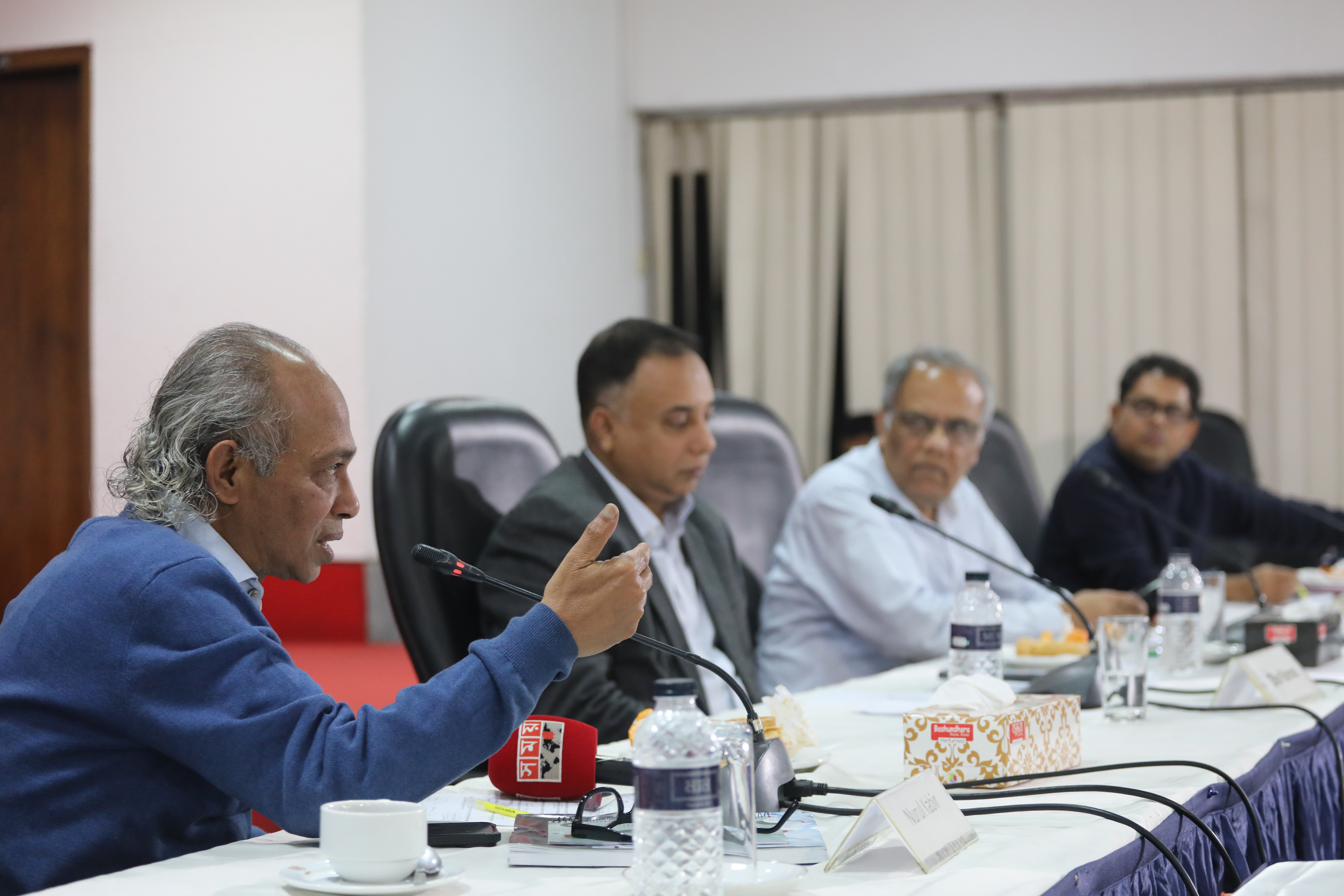
The Centre for Governance Studies (CGS) held the roundtable dialogue on Tuesday, January 27, 2026, at the CIRDAP Auditorium, Dhaka. The event focused on reforms related to Bangladesh’s mass media sector. The roundtable dialogue was titled “Media Reform in Bangladesh: Between Freedom, Responsibility and Power.”
The guest of honor was Kamal Ahmed, Former Head of the Media Reform Commission. Also other speakers are Executive Editor of Bangladesh ProtidinA.K.M Manjurul Islam; Executive Editor of Dhaka Tribune Reaz Ahmad; Head of English Web, Prothom Alo, Ayesha Kabir; Member of Central Committee, Communist Party of Bangladesh (CPB), Dr. Sajedul Huq Rubel; General Secretary of Socialist Party of Bangladesh Bazlur Rashid Firoz; General Secretary of G-9,Shakhawat Hossain Sayantha;Professor of Department of Mass Communication and Journalism, University of Dhaka, Dr. S. M. Shameem Reza; Special Content Editor, The Daily Star, ShamsuddozaSajen; Senior Journalist, Zahid Newaz Khan, Political Analyst, Zahed Ur Rahman; Freelance Journalist, KaziJesin; Senior Reporter of The Daily Star, Zyma Islam. The roundtable discussion was moderated by Zillur Rahman, President of CGS.
At the beginning of the event, Zillur Rahman said that even though the Chief Advisor talked about 'three zeros', in reality he only sees emptiness around him. He mentioned that recently fire incidents occurred at the offices of Prothom Alo and Daily Star, and a senior editor who is a strong critic of the government was harassed there, labeled as an Awami League crony. He further informed that at a CGS event, a government representative refused to term these incidents as 'mobs', claiming it would be an insult to the mass uprising. He raised questions about media freedom in such a situation.He raised questions about media freedom in such a situation.
Nurul Kabir said that 'mobs' are usually known as chaotic public forces, but he saw that they attacked in an organized and planned manner. According to him, this systematic attack was patronized by the government. He further said that the Chief Advisor's press secretary said that he had made false allegations without evidence, but later the status published by the press secretary on Facebook was enough proof that the claim that the government did not assist in any way was evidence. He also opined that if journalism was taught in universities, no one would become biased. He said, "It is not true that journalists become corrupt only because of lack of money; many rich journalists and editors are also involved in corruption. Real journalists are those who question power, and those who don't are public relations officers."
Kamal Ahmed said that the current government, at the end of its term, has suddenly started various works in a hurry, one ordinance after another is being passed in the last few days, which raises enough doubt as to whether they will last in the next parliament. A meeting has been called at the Information Ministry next Thursday, where a few more ordinances may be patched up, which will not have much effectiveness in reality. He further commented that two new ordinances named Information Broadcasting Commission and Media Commission have already been launched in a hurry, which seems like a kind of hodgepodge initiative. Kamal said that no newspaper was shut down before the Media Commission's report, which can be called a limited achievement of the government, but media owners should reflect their financial gains among the workers as well. He clearly criticized this last-minute haste of the government, which shows that they are doing work with patchwork at the very last moment without following recommendations and plans.
Professor Robaet Ferdous said that effective accountability of the parliament and media is essential to keep power in check and balance. He said that due to the lack of a desired culture of accountability in the parliament and media, an effective system to control the government has not developed.
The gist of the roundtable dialogue was that media freedom in Bangladesh remains limited due to political pressure, mob intimidation, corporate ownership, weak accountability, poor salary structures, and lack of journalist protection. Speakers discussed the need for meaningful media reform, stronger financial and professional security for journalists, effective implementation of the Media Reform Commission’s recommendations, greater accountability, and increased women’s participation in the media sector. The dialogue also highlighted concerns over misinformation, AI-generated content, and the growing influence of social media before the elections.