
Why Bangladesh Must Look Beyond Great-Power Rrivalry in the Bay of Bengal
Zillur Rahman | 01 November 2026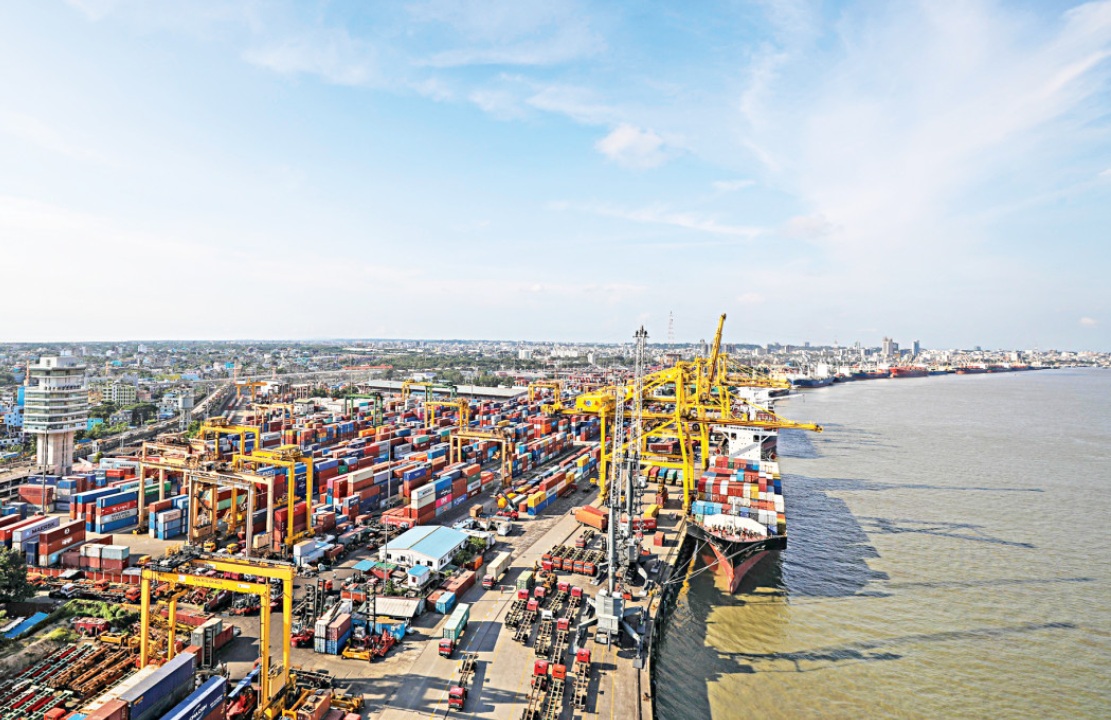
Why Bangladesh must look beyond great-power rivalry in the Bay of Bengal
For a fisherman setting off from Cox's Bazar, the Bay of Bengal is both sustenance and peril; for an exporter in Chattogram, it is a gateway to the outside world. For millions of Bangladeshis living in its coastal regions, it also represents a route through which devastating cyclones strike Bangladesh's coast. Yet in contemporary geopolitical discourse, the Bay is increasingly framed as a zone of competition between the United States and China, with India seeking to pursue its own interests. All these perspectives have some validity. The problem arises when the interests of major powers eclipse those of the countries and communities whose fate is closely linked to the Bay of Bengal.
This duality became especially apparent during a plenary discussion entitled "Why the Bay Matters to the World", held as part of the Bay of Bengal Conversation 2026 in Dhaka on October 5. Representatives of various nations viewed the region through different political, economic and strategic lenses. However, their arguments raised the same question: how can the Bay remain a place of trade and cooperation rather than turn into yet another arena for geopolitical confrontation?
Former Pakistani foreign secretary Aizaz Ahmad Chaudhury emphasised the vulnerability of international shipping routes, especially amid potential threats to major maritime chokepoints. Australian academic Pradeep K. Taneja warned that countries in the region needed to remain alert to possible intervention by outside powers amid regional instability. Christian Brix Møller, Denmark's ambassador to Bangladesh, highlighted opportunities in shipbuilding and ship recycling, while John K. Glenn of George Washington University raised questions about the international order that might emerge from the current period of uncertainty.
These views differed, yet they shared one common idea. The importance of the Bay should not be measured solely in terms of navies, alliances and competing spheres of influence. Its economic, environmental and human dimensions are no less important.
The United States has legitimate interests in secure maritime routes, regional stability and international trade. China has substantial economic and infrastructure interests across the Indian Ocean region. Given its geography and history, India has its own security and connectivity priorities. While these interests are legitimate, Bangladesh should not allow its maritime future to be defined entirely by the strategic calculations of others. The question is how to use the country's geographical advantages to secure economic and diplomatic benefits.
There is already a foundation for Bangladesh–US cooperation in this area. In August 2026, Admiral Steve Koehler, commander of the US Pacific Fleet, visited Bangladesh and met Prime Minister Tarique Rahman and Bangladeshi defence officials to discuss maritime security, humanitarian assistance, disaster response and naval cooperation. Such engagement need not be viewed solely as a manifestation of great-power rivalry. On the contrary, it could also help address the challenges facing Bangladesh.
This relationship also has historical roots. Following the devastating cyclone of 1991, American troops participated in Operation Sea Angel, providing humanitarian relief to affected communities. This demonstrated that maritime capabilities can serve purposes beyond conventional military activities.
Bangladesh and the United States could cooperate to improve search-and-rescue operations, emergency communication systems, maritime training and coastal surveillance. For a fisherman caught in severe weather or a ship facing an emergency, such cooperation could mean the difference between life and death. Economic security is another area in which Bangladesh and the United States could cooperate.
A 2024 World Bank assessment found that Chattogram Port accounted for more than 90 per cent of total trade volume and 98 per cent of container volume shipped to and from Bangladesh. This creates significant vulnerabilities when congestion, infrastructure gaps and inefficient logistics drive up costs. The Bay Terminal project and Matarbari deep-sea port could transform Bangladesh's maritime economy.
However, the ability to accommodate larger ships does not automatically make a port globally competitive. Its success depends on efficient customs procedures, reliable inland transport networks, modern cargo-handling systems and a predictable commercial environment.
American companies and organisations specialising in maritime technologies and logistics could provide valuable expertise in these areas. Japanese, Chinese and European companies, along with regional investors, could also play important roles in the process. Bangladesh should encourage competition and cooperation among capable partners rather than allowing infrastructure development to become a contest for exclusive influence.
It is also worth considering the opportunities for wider regional connectivity. The BIMSTEC Agreement on Maritime Transport Cooperation was signed in April 2025 and provides an institutional framework for improving maritime linkages between South and Southeast Asia. Coordinating ports, shipping services and trade procedures could significantly reduce transport costs and attract greater investment.
Bangladesh's geographical location offers opportunities to connect international maritime routes with the economies of Nepal, Bhutan and India's northeastern states. However, achieving this goal requires more than investment in physical infrastructure alone. Transit arrangements, regulatory compatibility, commercial viability and political trust must develop simultaneously. Otherwise, the proposed connectivity corridor risks remaining little more than a line on a strategic map.
Disaster preparedness is another important area for cooperation. Bangladesh has gained international recognition for its experience in cyclone early warning systems and community preparedness. Nevertheless, coastal erosion, salinity intrusion, flooding and the growing complexity of climate-related risks continue to threaten the livelihoods of Bangladeshis.
A forward-looking Bangladesh–US maritime partnership could combine satellite information, weather forecasting, coastal mapping and joint emergency response exercises. Such cooperation should focus not only on responding to disasters but also on reducing their risks and mitigating their impacts beforehand. Bangladesh's own institutions should remain at the centre of such cooperation, with international partners contributing their expertise in technology, training and specialised technical capabilities.
Another compelling reason to move beyond strategic rivalry is the importance of the Bay's fisheries. Millions of people depend directly or indirectly on marine resources for their livelihoods. However, overfishing, illegal fishing, environmental degradation and inadequate monitoring threaten the sustainability of this sector. The Bay of Bengal Large Marine Ecosystem initiative seeks to coordinate efforts among countries in the region to improve fisheries management, protect marine habitats and safeguard coastal livelihoods.
Fish do not recognise national borders, and the sustainable management of this resource requires scientific research, information sharing and cooperation among neighbouring countries. American expertise in marine science, satellite monitoring and fisheries technologies could contribute to existing regional initiatives. Any regulatory changes should take into account the needs of small-scale fishing communities and avoid imposing excessive burdens on them.
Marine pollution, coastal biodiversity and ship recycling also require special attention. Commercial opportunities in shipbuilding and ship recycling, highlighted by participants in the Bay of Bengal Conversation, should be accompanied by stronger environmental standards, better protection for workers and technological improvements. Economic diversification would offer limited benefits if its environmental and social costs were passed on to vulnerable workers and coastal ecosystems.
Bangladesh has already demonstrated the benefits of international law in resolving maritime disputes. Its maritime boundaries with Myanmar and India were settled through international legal proceedings in 2012 and 2014, respectively. These precedents demonstrate that competing national interests do not inevitably lead to confrontation.
What Bangladesh needs now is a comprehensive maritime strategy covering economic development, environmental sustainability, disaster preparedness and security cooperation.
A first step towards this goal could be a three-year Bangladesh–US maritime cooperation programme focused on three measurable objectives: stronger maritime safety and emergency response capabilities; improved port efficiency and commercial connectivity; and better fisheries management and marine research. Such cooperation should be transparent, respect Bangladesh's policy independence and complement wider regional initiatives.
Success should be measured not by the number of meetings, joint statements or naval visits, but by tangible results: faster rescue operations, lower logistics costs, greater resilience in coastal areas and better protection of marine resources.
These priorities are not necessarily in conflict with the interests of Washington, Beijing, New Delhi or other capitals. A peaceful, economically active and environmentally sustainable Bay of Bengal would serve their broader interests. However, cooperation must be shaped by the countries of the region themselves, rather than dictated by the strategic rivalry of powerful nations.
This, ultimately, is the deeper significance of the discussion in Dhaka. The Bay of Bengal is not merely a geographical passage between two strategically important regions. It is a region with its own people, resources, economies and political aspirations.
Bangladesh should neither seek confrontation with major powers nor become dependent on any of them. The country's goal should be to become a confident maritime nation capable of protecting its interests, developing its blue economy and helping shape the regional order.
The Bay of Bengal matters to the world. But rivalry among powerful nations should not define its future. The countries along its shores should shape their shared future together.
Zillur Rahman is a political analyst and President of the Centre for Governance Studies (CGS). He hosts Tritiyo Matra on Channel i and writes on geopolitics, strategic affairs and governance. Follow him on X: @zillur.
This article published on the Daily Star.
Views in this article are author’s own and do not necessarily reflect CGS policy.