
Survey Findings
1. Demographic Profile of Respondents
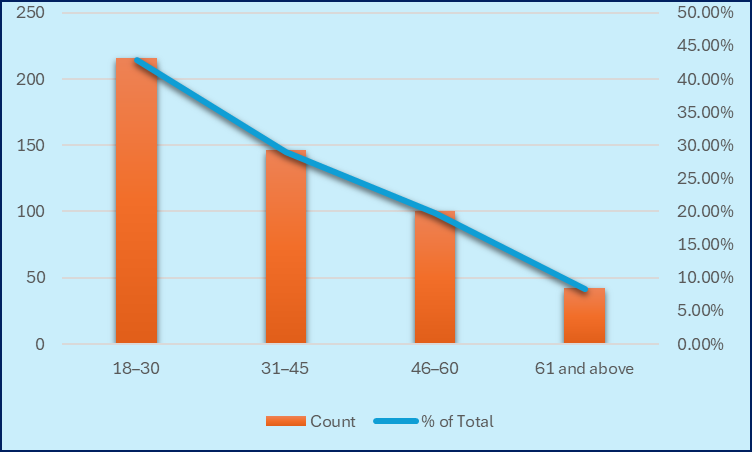
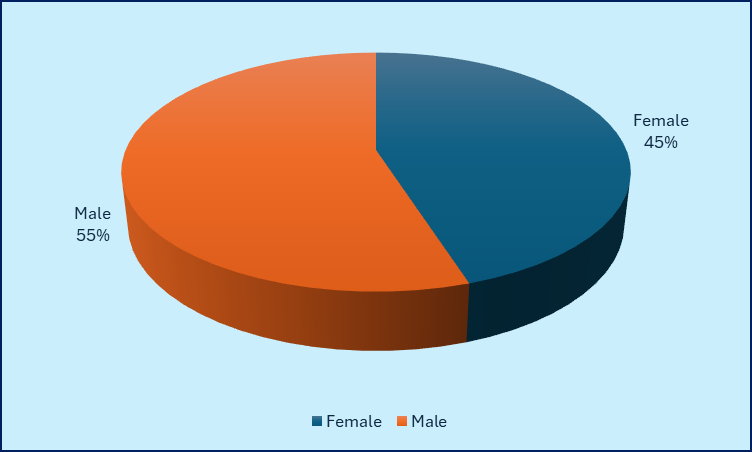
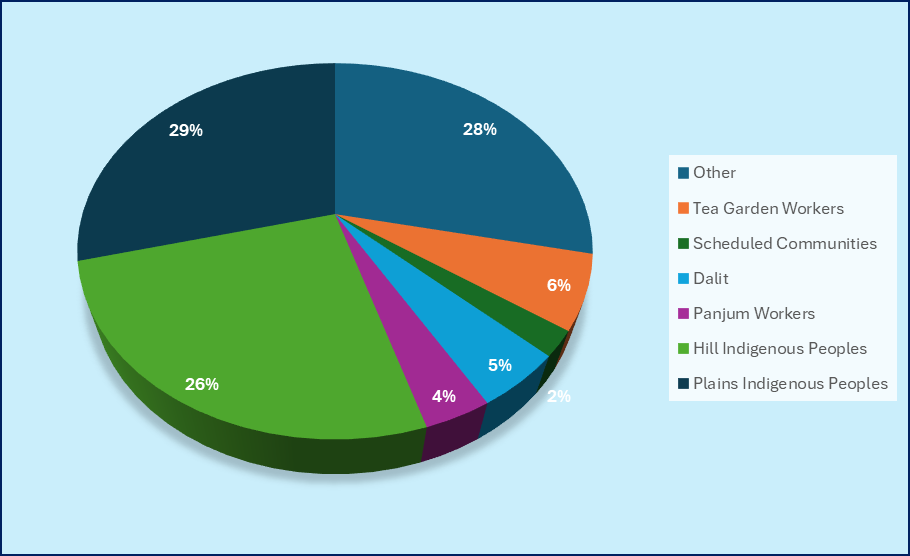
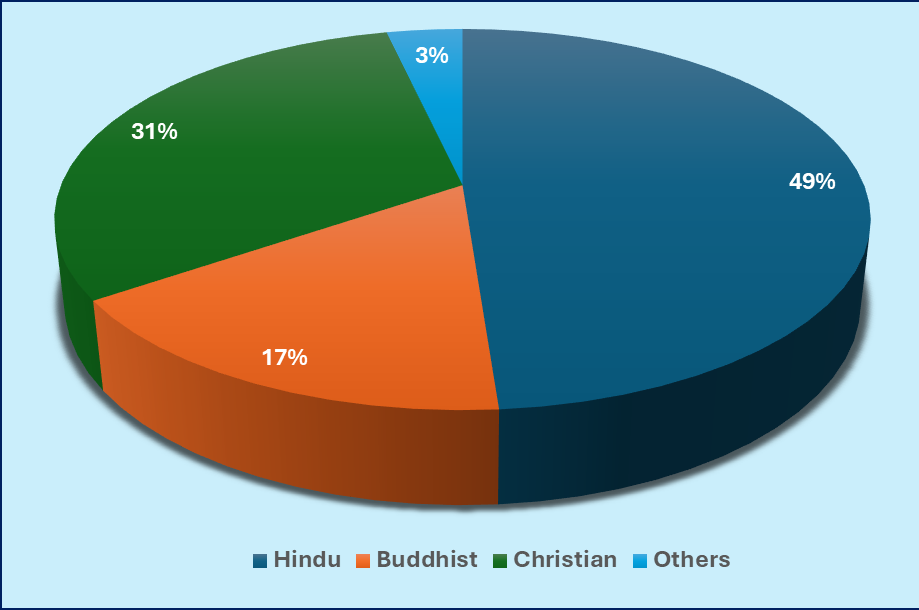
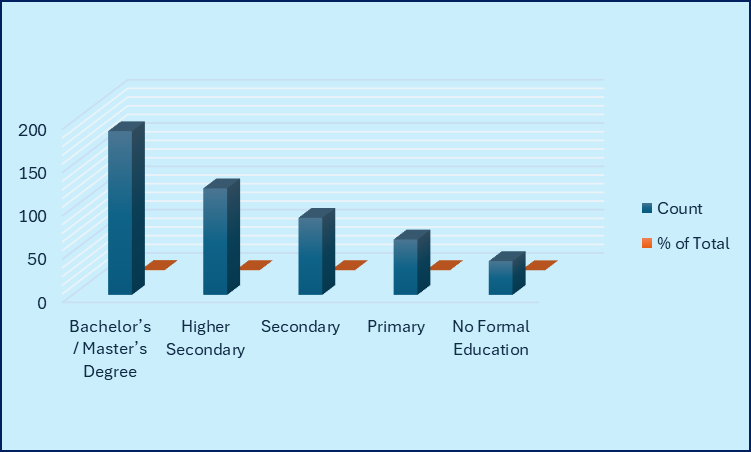
The demographic foundation of this study is built upon a diverse sample of 505 respondents, providing a broad lens through which to view the political landscape of CHT indigenous, plains indigenous, religious and socio-economic minority communities. The survey mostly captures the perspectives of the younger generation; the largest demographic segment consists of individuals aged 18-30, representing 42.9% of the total sample. When combined with the 29% of respondents aged 31-45, it becomes clear that the survey captures the perspectives of a generation currently in their peak productive and civic-engagement years. In terms of gender distribution, the sample is relatively balanced, though it tilts slightly male at 55%, with females accounting for 45%. The religious and ethnic composition of the respondents is particularly significant for this study’s focus on inclusivity. Nearly half of the participants (48.8%) identify as Hindu, while Christians (31%) and Buddhists (16.7%) also maintain substantial representation. Ethnically, the sample is dominated by Plains Indigenous Peoples (29.0%) and Hill Indigenous Peoples (25.8%), followed by a notable presence of Tea Garden workers (6.3%) and Dalit communities (4.8%). Educationally, the group demonstrates a high level of academic attainment, with 37.5% holding a Bachelor’s or Master’s degree. However, it’s heartbreaking to see that nearly 28% had to quit school early, not because they wanted to, but because their families simply couldn’t afford it. This tells us right away that we are talking to a group that values progress but faces real-life struggles.
(Source: Compiled from CGS Survey Findings-2026)
(Source: Compiled from CGS Survey Findings-2026)
(Source: Compiled from CGS Survey Findings-2026)
(Source: Compiled from CGS Survey Findings-2026)
(Source: Compiled from CGS Survey Findings-2026)
2. Geographic Distribution and Socio-Economic Background
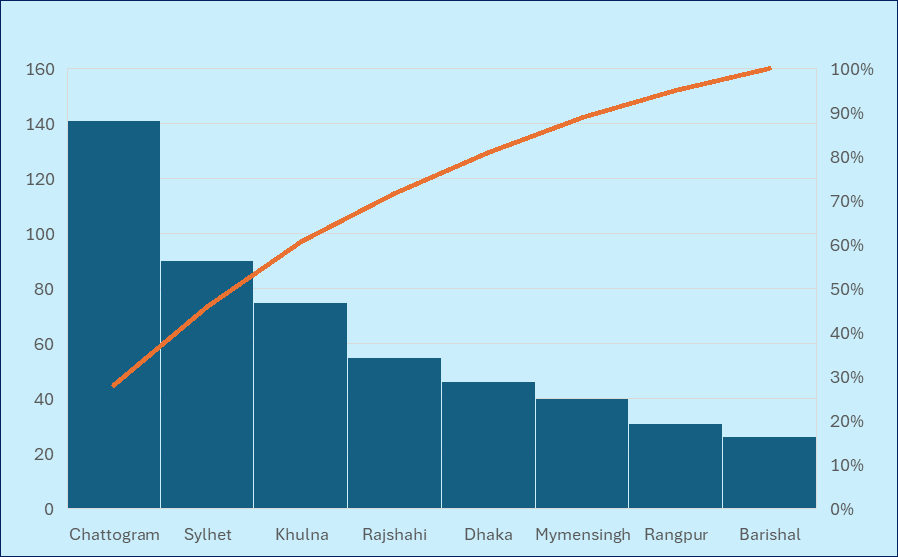
The survey’s geographic reach was designed to ensure that the findings were not localized to a single region but reflected a broad, national perspective of minority and indigenous experiences. Data was collected across multiple administrative divisions, with the Chattogram division providing the highest density of participants at 28.0%. This was followed by significant representation from the Sylhet (17.9%) and Khulna (14.9%) divisions. At the more granular district level, the study captured concentrated voices from Rangamati (10.7%), Dhaka (8.9%), and Bandarban (8.7%), ensuring that both hill-tract regions and urban centers were well-represented.
(Source: Compiled from CGS Survey Findings-2026)
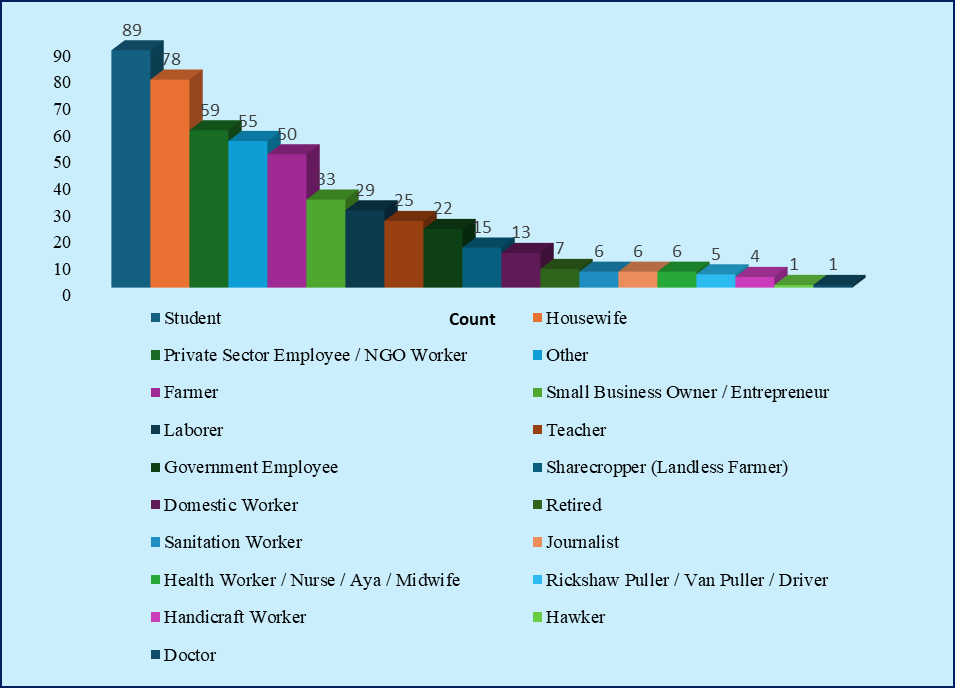
This geographic variety is matched by a complex socio-economic landscape. The professional backgrounds of the respondents provide a cross-section of both urban and rural economic realities. Students represent the single largest professional group at 17.7%, highlighting a high level of civic interest among the youth. They are followed closely by housewives (15.5%) and employees within the private sector or NGOs (11.7%). The inclusion of farmers (9.9%), small business owners (6.5%), and laborers (5.8%) further ensures that the data reflects the perspectives of those working in the primary and secondary sectors of the economy. A critical socio-economic finding is the intersection of education and economic status. While the cohort is relatively well-educated—with 37.5% holding a Bachelor’s or Master’s degree—there is a stark underlying vulnerability. Nearly 27.7% of all respondents reported dropping out of the formal education system specifically due to poverty. This highlights a “double reality” where academic achievement exists alongside significant financial insecurity, a factor that likely influences the community’s political priorities and their focus on practical development over abstract ideology.
(Source: Compiled from CGS Survey Findings-2026)
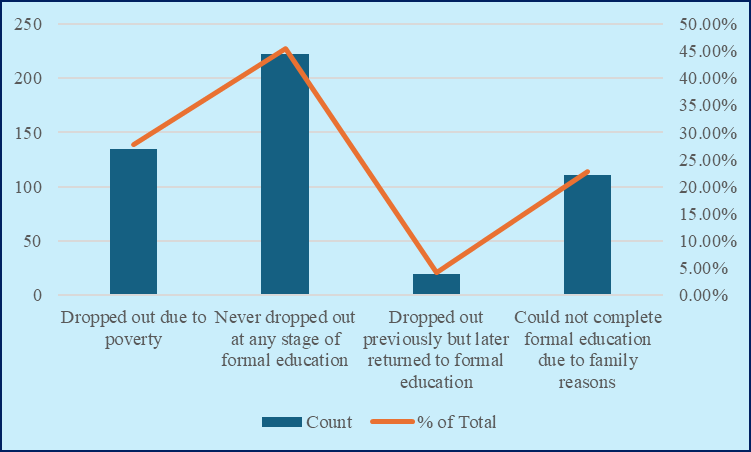
The findings show that educational discontinuity is a notable concern among respondents from minority communities, as a majority (50.4 percent) reported having dropped out of the formal education system at some point, compared to 45.5 percent who never experienced dropout, while only 4.1 percent were able to return to formal education after dropping out. This indicates that once interrupted, educational trajectories are difficult to resume for most respondents. Among those who dropped out, the reasons were predominantly structural rather than individual, with poverty being a major driver, forcing many to discontinue education due to financial hardship, alongside family-related reasons such as household responsibilities, caregiving duties, or family decisions that deprioritized formal schooling. These patterns highlight the intersection of economic vulnerability and familial constraints in shaping educational outcomes for minority populations, suggesting that dropout is closely linked to broader socio-economic marginalization rather than lack of interest in education.
(Source: Compiled from CGS Survey Findings-2026)
3. Electoral Participation Patterns: How They Feel About Voting
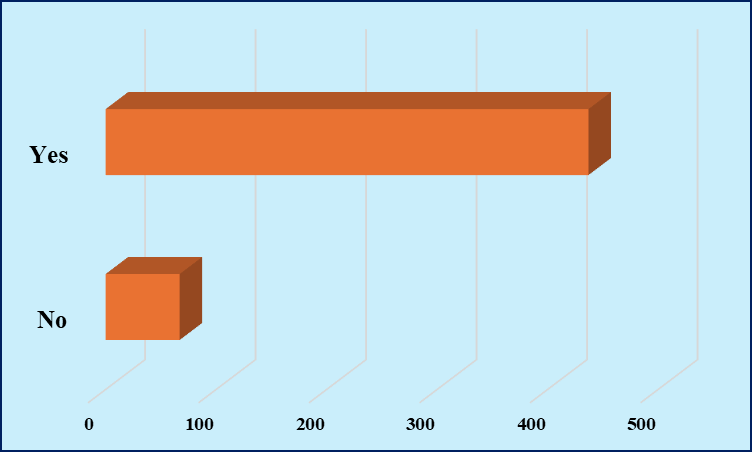
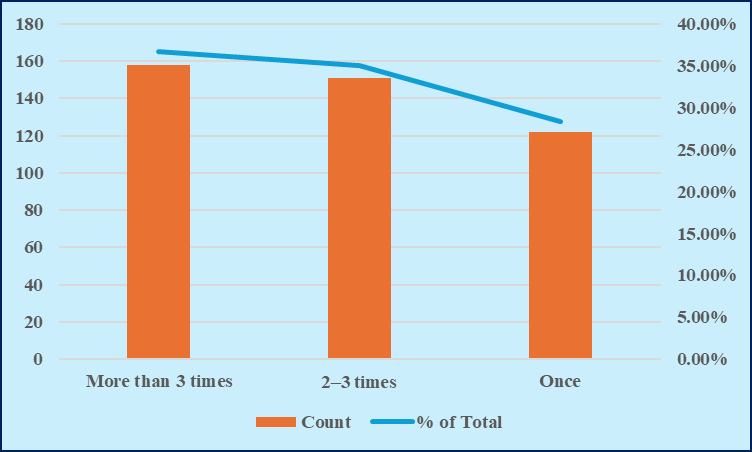
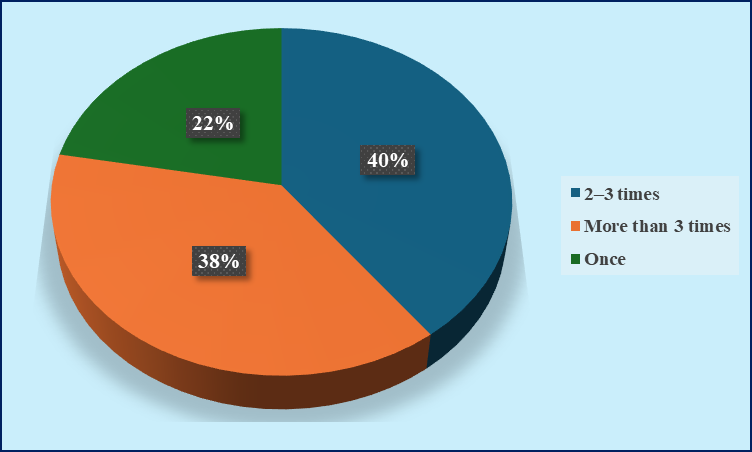
The data reveals a population that is deeply familiar with the act of voting but remains psychologically distanced from the formal political process. This “participation-engagement gap” is one of the most striking findings of the survey. On the surface, the community shows a robust history of civic duty; an overwhelming 86.7% of respondents have participated in an election at some point in their lives. This is not a group of first-time or occasional voters, but rather a seasoned electorate. Experience levels are remarkably high, with 36.7% having cast their ballots in more than three national parliamentary elections. This consistency extends to the local level as well, where 38.1% have voted in local government elections more than three times, and another 39.8% have participated at least twice. These figures suggest that voting is a deeply ingrained habit within the community.
(Source: Compiled from CGS Survey Findings-2026)
(Source: Compiled from CGS Survey Findings-2026)
(Source: Compiled from CGS Survey Findings-2026)
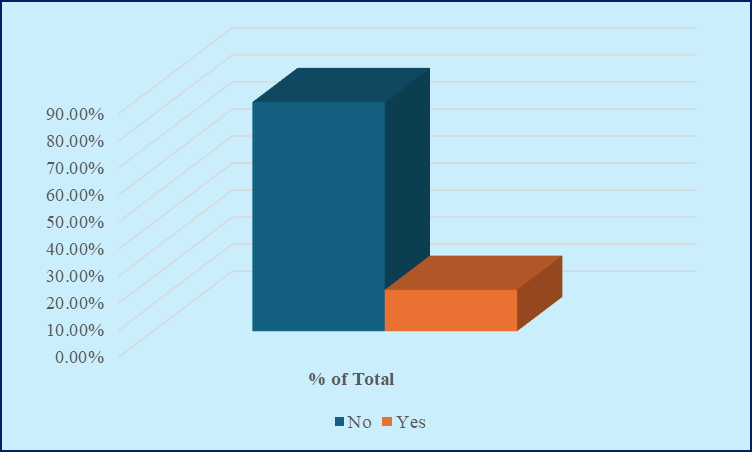
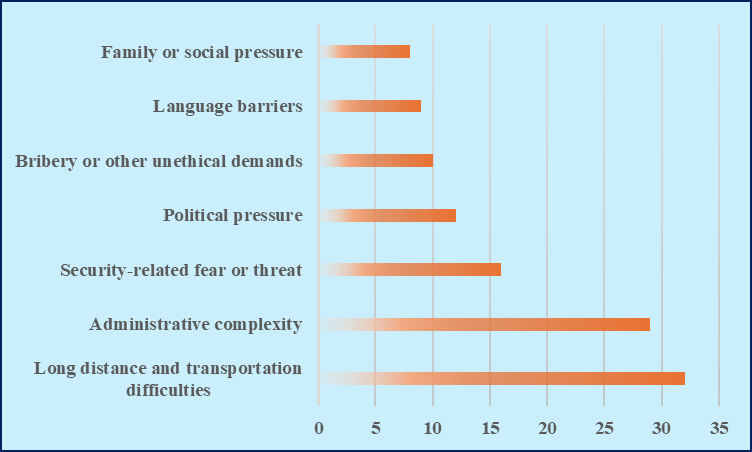
The survey findings show that a minority of respondents faced difficulties during the voter registration process, with 15.3 percent reporting that they encountered problems while becoming a voter, compared to a large majority (84.7 percent) who reported no such difficulties. Among those who reported facing challenges (n = 76), respondents were asked to specify the nature of the problems and were allowed to select multiple responses. Within this subgroup, long distance and transportation difficulties emerged as the most frequently cited challenge, reported by 43.2 percent of respondents, indicating physical and infrastructural barriers to voter registration. Administrative complexity was reported by 39.2 percent, reflecting procedural and bureaucratic hurdles. Security-related fear or threats were cited by 21.6 percent of respondents, highlighting concerns over personal safety, while 16.2 percent reported experiencing political pressure during the registration process. Additionally, 13.5 percent reported encountering bribery or other unethical demands, 12.2 percent identified language barriers, and 10.8 percent cited family or social pressure. As respondents could report more than one challenge, the findings illustrate that voter registration difficulties among minority communities are multifaceted, involving overlapping logistical, administrative, and socio-political constraints that affect a segment of the population despite overall high voter inclusion.
(Source: Compiled from CGS Survey Findings-2026)
(Source: Compiled from CGS Survey Findings-2026)
The “Wait-and-See” Approach to Upcoming Elections
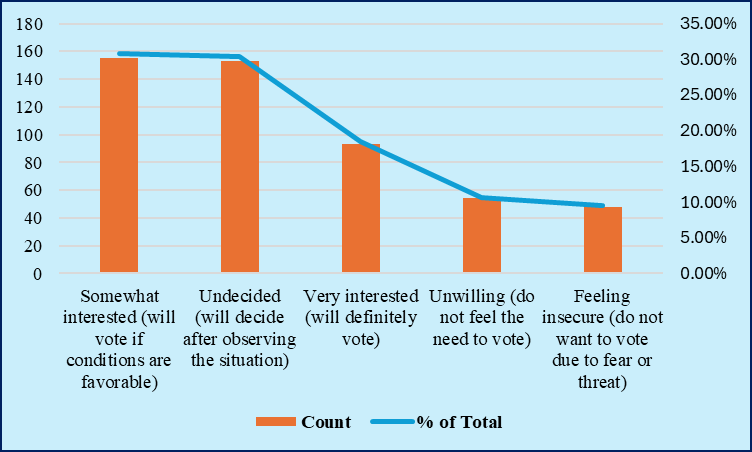
However, this high historical turnout does not translate into current political enthusiasm. Interest in the upcoming national election is characterized by a cautious “wait-and-see” approach, signaling a profound sense of uncertainty or skepticism. Only a small minority—18.5% of respondents—identified as “very interested” or certain to vote regardless of the circumstances. Instead, the plurality of the population (30.8%) is only “somewhat interested,” indicating that their participation is conditional on favorable environmental and security conditions. Furthermore, nearly one-third (30.4%) remain completely undecided, choosing to observe the evolving political situation before committing to participate.
(Source: Compiled from CGS Survey Findings-2026)
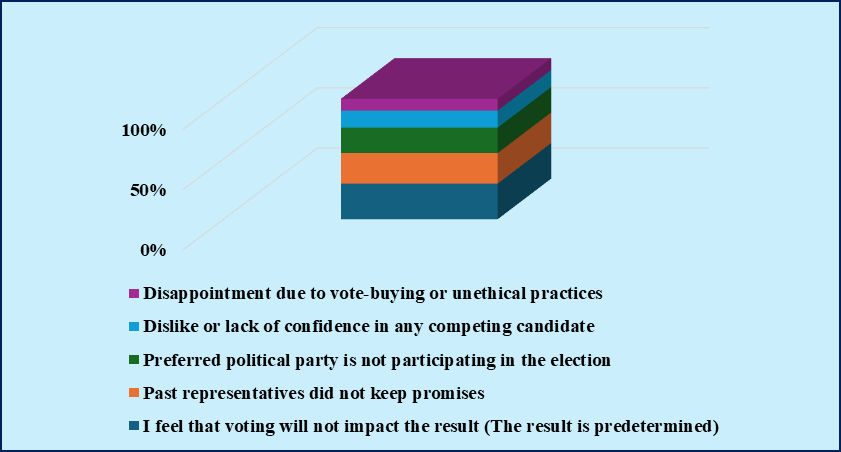
Most tellingly, a significant portion of the community expressed total hesitation: 10.7% are currently unwilling to vote because they feel it is unnecessary, while 9.5% are deterred by a palpable sense of insecurity and fear.
(Source: Compiled from CGS Survey Findings-2026)
The Social “Culture of Silence”
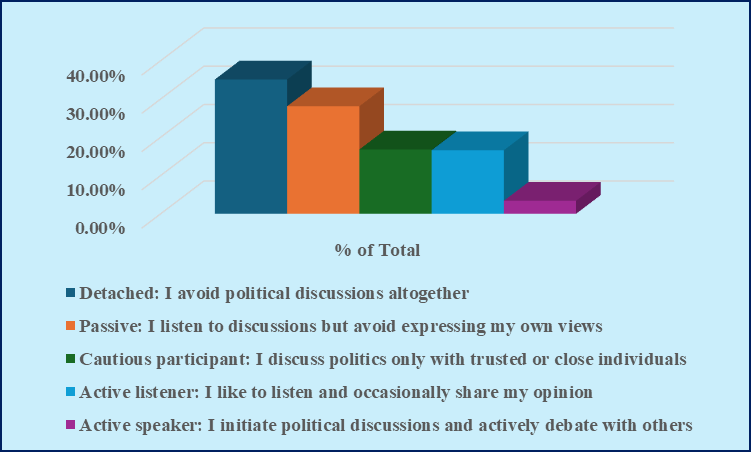
The findings reveal a predominantly cautious and passive approach to political engagement among respondents. While a small minority (3.4%) actively initiate and debate political issues, the vast majority either avoid participation altogether (35.1%) or listen without expressing their views (28.1%). Another segment engages selectively, discussing politics only with trusted individuals (16.8%) or occasionally sharing opinions while primarily listening (16.6%). These patterns suggest that, despite a strong history of electoral participation, many members of minority communities remain hesitant to voice their political opinions publicly, reflecting a culture of caution and selective engagement shaped by social, cultural, and possibly security-related considerations.
(Source: Compiled from CGS Survey Findings-2026)
Perceptions of Previously Elected Public Representatives
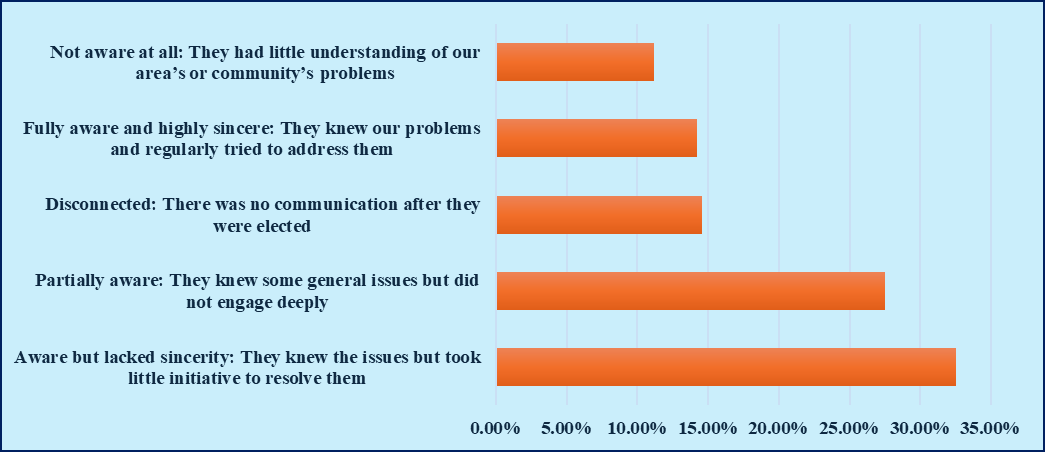
The data indicates a significant gap between the expectations of minority communities and the performance of their elected representatives. A plurality of respondents (32.5%) felt that representatives were aware of their issues but lacked sincerity, taking little initiative to address them, while another 27.5% perceived them as only partially aware, engaging superficially with community concerns. Combined, this shows that nearly 60% of respondents experienced inadequate responsiveness from public officials. Smaller segments reported more positive or extreme experiences: 14.2% believed representatives were fully aware and genuinely sincere in addressing problems, whereas 14.6% experienced complete disconnection, and 11.2% felt their representatives were entirely unaware of local issues. These findings underscore a persistent sense of mistrust and limited accountability among minority populations toward their elected officials, reflecting structural gaps in political representation and responsiveness.
(Source: Compiled from CGS Survey Findings-2026)
Prioritization of Local Problems in Election Campaigns
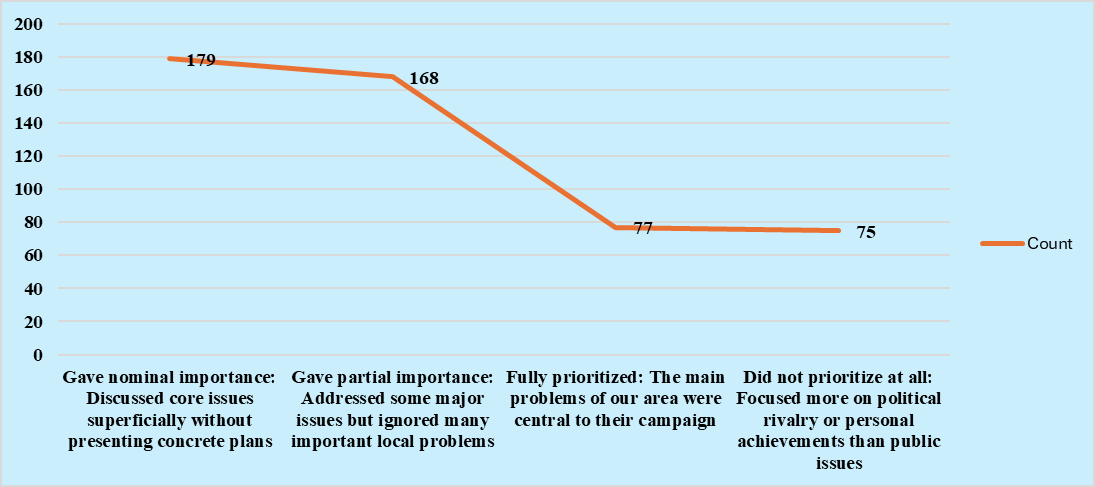
The responses show that most participants felt their representatives paid only limited attention to the pressing issues affecting their communities. A plurality, 35.9%, reported that candidates discussed these issues superficially without concrete plans, while 33.7% said some major problems were addressed but many important concerns were ignored. Only 15.4% believed that representatives fully prioritized the main problems during their campaigns, whereas 15.0% felt that candidates did not prioritize these issues at all, focusing more on political rivalry or personal achievements. Overall, the data indicates that while some acknowledgment of local concerns occurred, the majority of campaigns failed to meaningfully engage with the real needs and priorities highlighted by respondents.
(Source: Compiled from CGS Survey Findings-2026)
Together, these factors paint a picture of an electorate that is experienced in the mechanics of voting but deeply wary of the risks and rewards of the political system.
4. Political Awareness and Information Consumption: What They Know (And What They Don’t)
The survey findings highlight a complex paradox within the community: while there is a high level of fundamental civic awareness, it is deeply undermined by a lack of specific, actionable political information. This “knowledge-information gap” suggests that while the electorate understands the mechanics and risks of democracy, they remain largely disconnected from the actors and ideologies driving the current political landscape.
Foundational Knowledge and Awareness of Malpractice
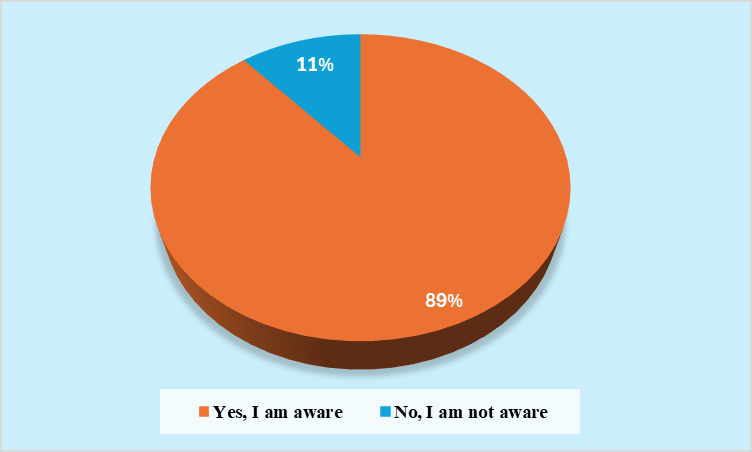
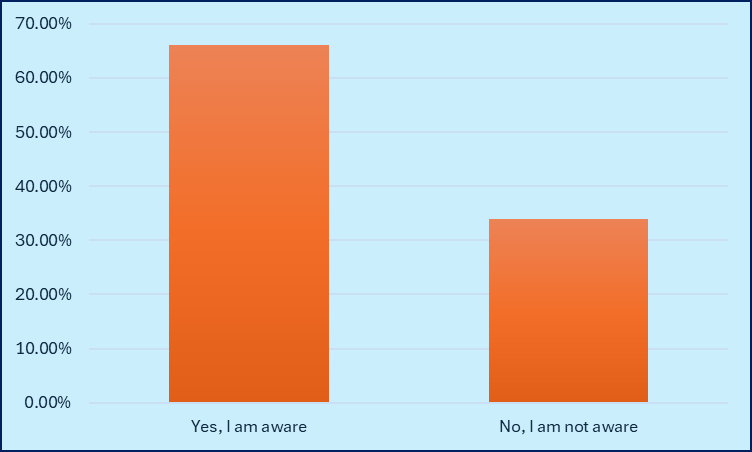
At the most basic level, political awareness is quite high. A substantial 88.7% of respondents stated they are fully aware of their rights as voters. This indicates that the community is not starting from a position of ignorance regarding their role in a democracy. Furthermore, they demonstrate a sophisticated—and perhaps cynical—understanding of the electoral environment. Approximately 66.1% of participants are aware of various election irregularities, ranging from unethical financial transactions and vote-buying to more aggressive tactics like capturing polling centers or forcibly preventing citizens from voting. This high level of awareness regarding malpractice suggests a community that is “street-smart” about politics; they are not naive about the challenges of the democratic process in their context.
(Source: Compiled from CGS Survey Findings-2026)
(Source: Compiled from CGS Survey Findings-2026)
The Specific Information Deficit
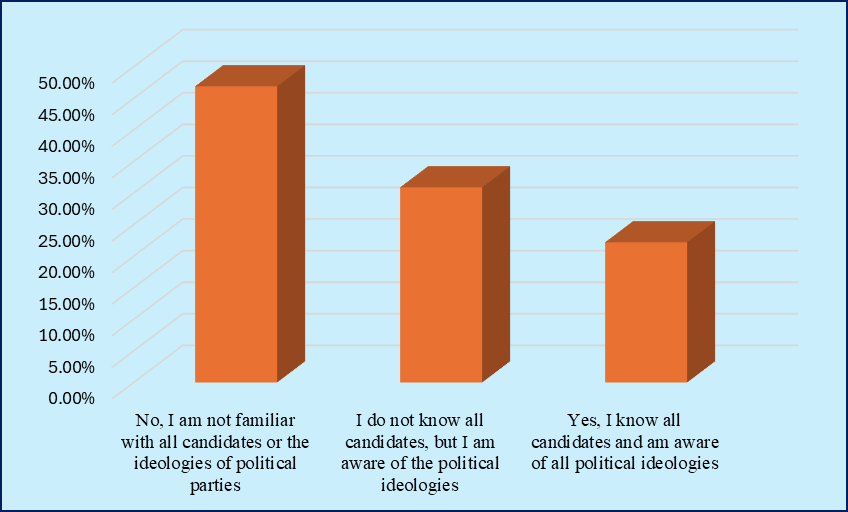
Despite this general awareness, there is a profound lack of clarity regarding the specific choices available to them. Nearly half of the respondents (46.9%) admitted that they are not familiar with the names of all the candidates running in their own areas, nor do they understand the specific ideologies or platforms of the political parties involved. Only 22.2% claimed to have a comprehensive understanding of both the candidates and the party ideologies.
Awareness of Candidates and Political Backgrounds Among Minority Communities
The responses indicate that awareness of candidates and their political backgrounds among minority communities is limited. Nearly 47% reported that they were not familiar with all candidates or the political ideologies of parties, while 30.9% knew the parties’ positions but not all individual candidates. Only 22.2% felt fully informed about both the candidates and their political backgrounds. These results suggest that, according to the respondents, a significant portion of minority voters do not have complete information about the upcoming national election, which may affect their ability to engage fully in the electoral process.
(Source: Compiled from CGS Survey Findings-2026)
Factors Considered by Minority Voters When Choosing a Candidate
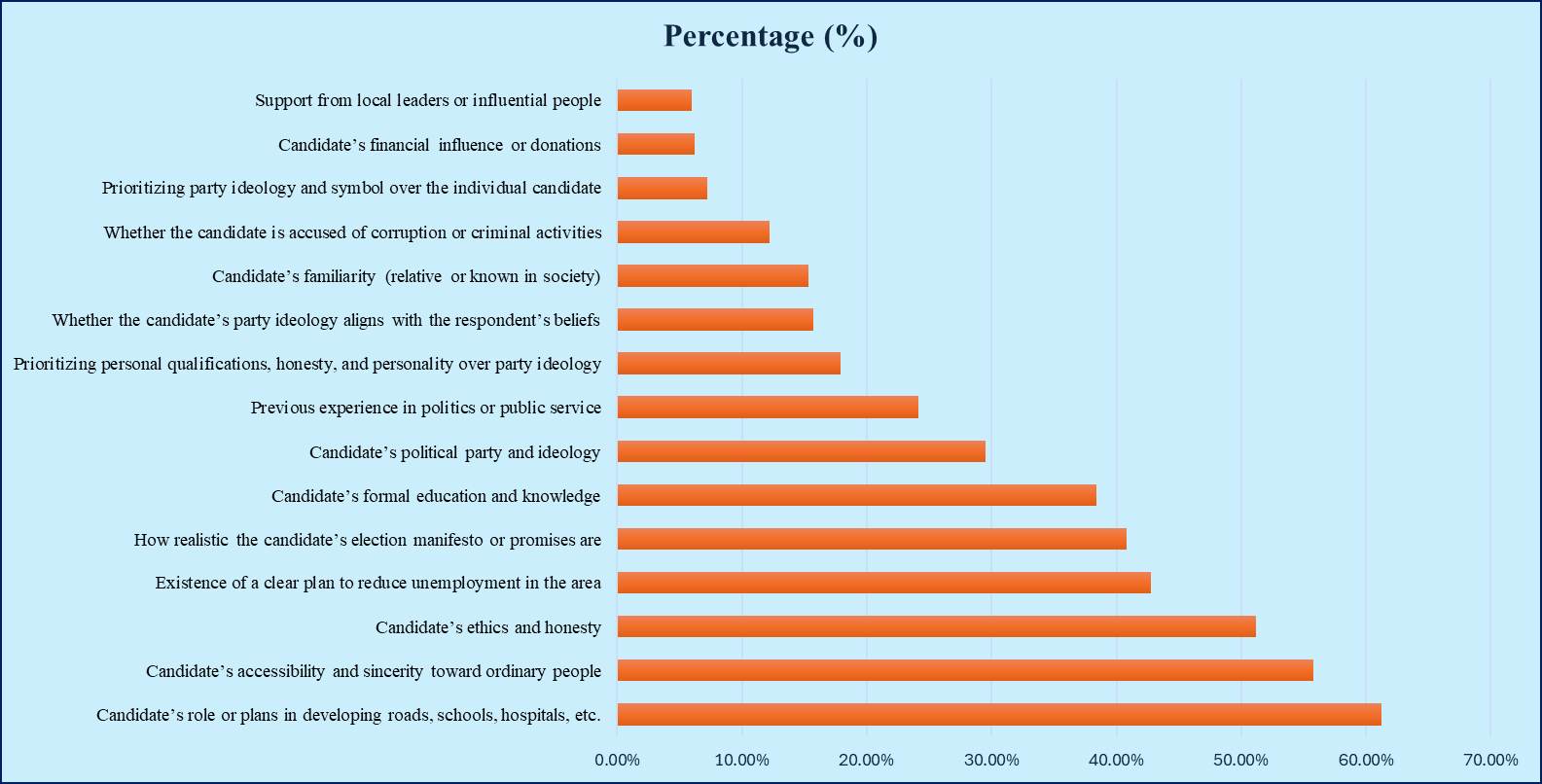
The responses show that minority voters prioritize candidates’ practical contributions and personal qualities over party affiliation or political influence. The majority, 61.2%, consider a candidate’s plans or role in developing roads, schools, hospitals, and other local infrastructure, followed closely by 55.8% who value accessibility and sincerity toward ordinary people. Ethics and honesty were also important for 51.2%, while 42.8% looked for clear strategies to reduce unemployment and 40.8% assessed how realistic the candidate’s promises were. Formal education and knowledge were considered by 38.4%, whereas party affiliation or ideology ranked lower, with 29.5% giving it importance. Factors such as prior political experience, personal qualifications, or familiarity in society were less frequently cited, and aspects like corruption allegations, financial influence, or support from local leaders were considered by only a small minority. Overall, these patterns indicate that respondents evaluate candidates primarily on tangible impact, integrity, and responsiveness, suggesting that minority voters are more focused on candidates’ ability to address real community needs than on political alignment or symbolic factors.
(Source: Compiled from CGS Survey Findings-2026)
This lack of specific information is a significant barrier to informed decision-making. If voters do not know who is running or what they stand for, their ability to hold leaders accountable or vote in their own best interests is severely diminished.
Digital Shift and the “Big News” Culture
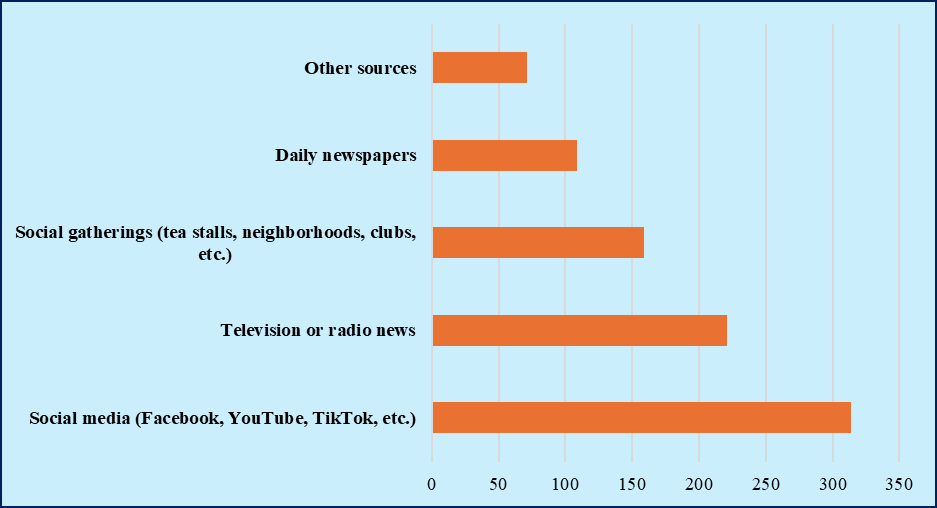
The way the community consumes political information has shifted drastically toward digital platforms. Social media—specifically Facebook, YouTube, and TikTok—has emerged as the primary tool for information gathering, with 314 respondents citing it as their main source. While traditional media like television and radio still play a role for 221 respondents, they have clearly been overtaken by the speed and accessibility of the smartphone. Informal social gatherings at tea stalls or within neighborhoods remain a vital secondary source for 159 respondents, highlighting the continued importance of oral tradition and community discussion in disseminating news.
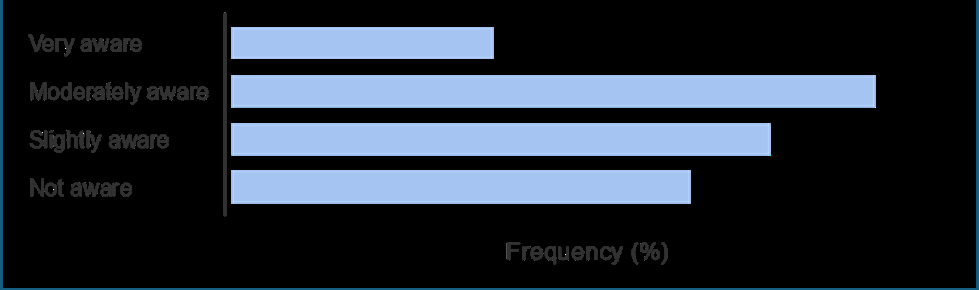
However, this digital-first consumption does not necessarily lead to deeper engagement. The data shows that the majority of people are “surface-level” consumers of politics. About 33.9% described themselves as “moderately aware,” meaning they keep up with major headlines but do not engage in any deep analysis of political events. Another 28.3% are only “slightly aware,” gathering bits of news sporadically from their social media feeds. Only a small fraction—13.7%—regularly follow political news in detail or keep track of specific party activities. This suggests that while information is more accessible than ever, it is often consumed in bite-sized, sensationalized formats that may lack the depth required for meaningful political participation.
(Source: Compiled from CGS Survey Findings-2026)
Level of Awareness of National Politics and Political Parties among Minority Communities
The responses suggest that awareness of national politics and party activities among minority communities in Bangladesh is limited to moderate levels for most respondents. A plurality (33.9%) described themselves as moderately aware, familiar with major political events but not engaging in detailed analysis, while 28.3% reported slight awareness, relying mainly on occasional updates or social media. Nearly a quarter (24.1%) indicated minimal or no awareness, highlighting a segment of the population largely disconnected from political developments. Only a small minority (13.7%) identified as very aware, actively following party activities and national political developments. Overall, these patterns reveal that while some engagement exists, a significant proportion of minority respondents face constraints in accessing detailed political information, which may influence their capacity for informed participation in the electoral and civic process.
(Source: Compiled from CGS Survey Findings-2026)
Voter Preparedness and Accountability
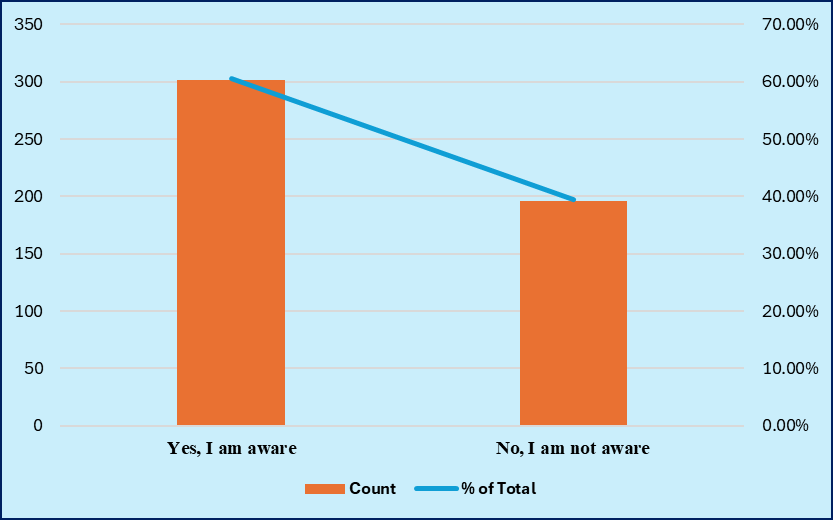
This landscape of high general awareness but low specific knowledge creates a vulnerability in the democratic process. While 60.6% of people know who to complain to if violence or irregularities occur , nearly 40% remain in the dark about how to seek justice or report issues. This lack of procedural knowledge, combined with the absence of information about candidates, leaves a large portion of the electorate feeling empowered in theory but sidelined in practice. The community possesses the “will” to participate and the “wit” to recognize corruption, but they lack the “tools”—in the form of deep, candidate-specific information—to fully exercise their democratic power.
(Source: Compiled from CGS Survey Findings-2026)
5. Do They Feel Represented?
The survey findings reveal a profound sense of political marginalization among the respondents, characterized by a lack of descriptive representation and a deep-seated mistrust of elected officials. This section examines the gap between the community’s needs and the responsiveness of the political establishment.
The Crisis of Underrepresentation
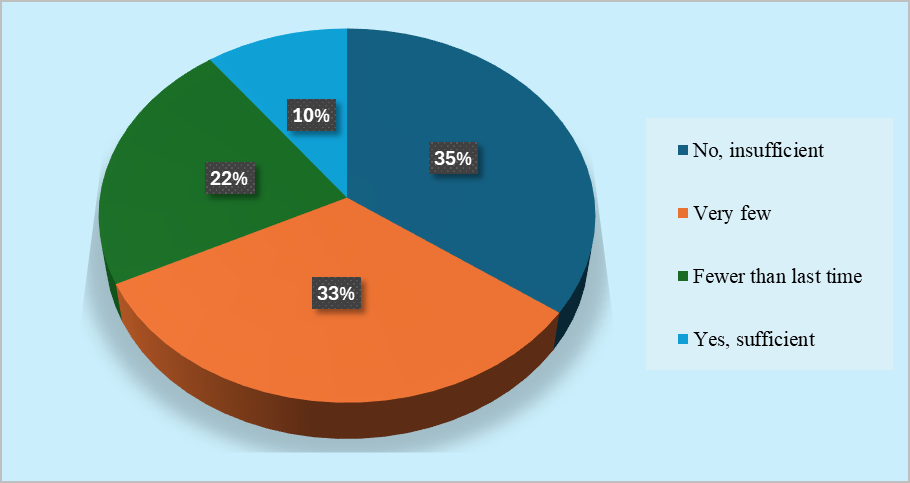
A primary concern for the surveyed community is the lack of candidates who share their religious or ethnic background, which many perceive as a barrier to authentic representation. The data shows that approximately 67.7% of respondents believe that the number of minority candidates in the upcoming election is significantly inadequate. This sentiment is divided into two major categories:
- Systemic Exclusion: 35% of respondents feel that despite the presence of qualified individuals within their communities, major political parties have failed to provide sufficient nominations.
- Symbolic vs. Real Representation: 32.7% describe the current number of candidates as “very few,” arguing that the current levels are too low to ensure any real influence at the policy-making level.
- Declining Trends: Furthermore, 22.2% of participants believe that representation has actually worsened, noting fewer minority candidates compared to previous election cycles
(Source: Compiled from CGS Survey Findings-2026)
Experiences of Discrimination in Political and Electoral Participation
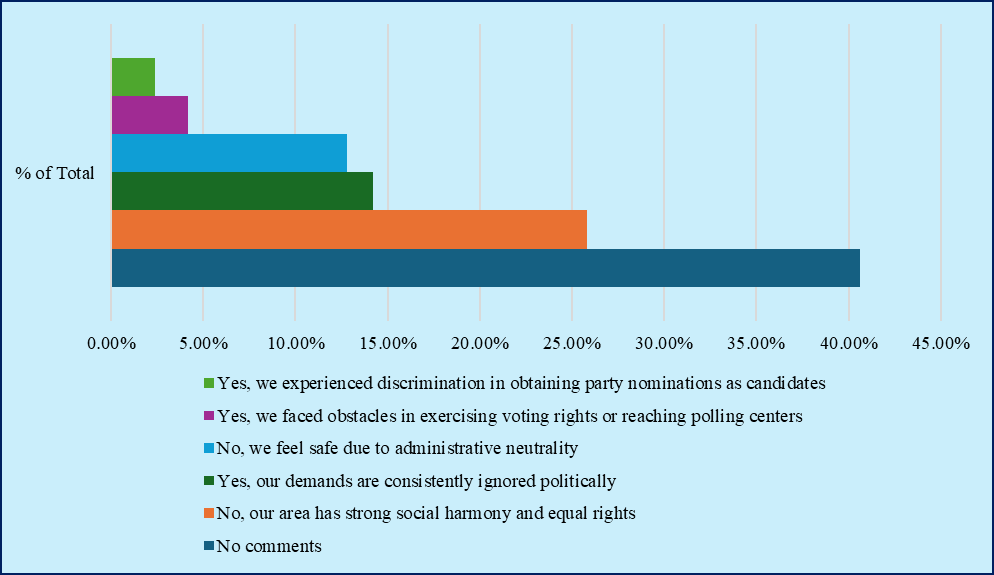
The responses indicate that while some minority communities in Bangladesh perceive political participation as largely accessible, there are notable concerns regarding exclusion and marginalization. A significant portion of respondents (40.6%) chose not to comment, which itself reflects reluctance or hesitation to speak about potential discrimination. Among those who responded, 25.8% reported that their areas maintain strong social harmony and equal rights, and 12.8% felt safe due to administrative neutrality. However, 14.2% stated that their demands are consistently ignored politically, 4.2% faced obstacles in exercising voting rights or reaching polling centers, and 2.4% experienced discrimination when seeking party nominations. These findings suggest that although a portion of the community experiences inclusive conditions, a meaningful share continues to face structural and social barriers, and the high level of non-response may indicate underlying fear, mistrust, or perceived vulnerability in reporting discrimination.
(Source: Compiled from CGS Survey Findings-2026)
The Pervasiveness of Electoral Anxiety
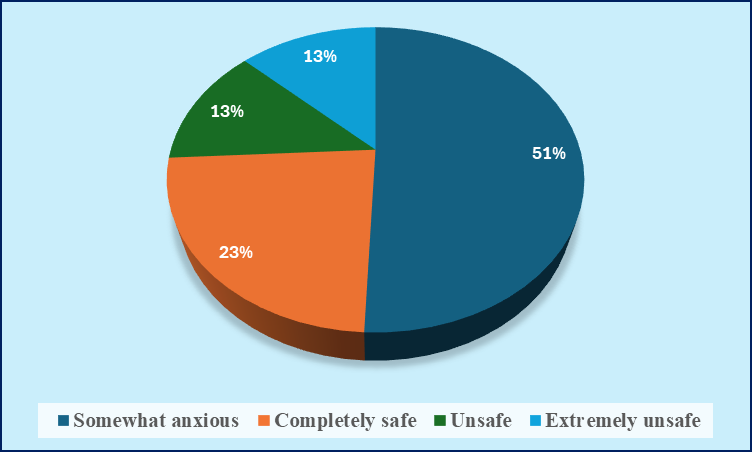
A critical factor influencing political behavior is the pervasive sense of insecurity felt by the community. Only a small fraction of the population (23.4%) feels “completely safe” participating in elections. The majority of respondents (50.7%) described themselves as “somewhat anxious,” feeling safe only if the surrounding environment remains strictly favorable. More concerningly, a combined 25.8% of participants categorized themselves as feeling either “unsafe” or “extremely unsafe,” with many citing past negative experiences or the current surrounding situation as the reason for their withdrawal from the process. This anxiety is not merely a personal feeling but a systemic obstacle that directly impacts voter turnout and the exercise of political rights.
(Source: Compiled from CGS Survey Findings-2026)
6. Safety, Justice, and Moving Forward
Barriers to Justice: The Culture of Silence
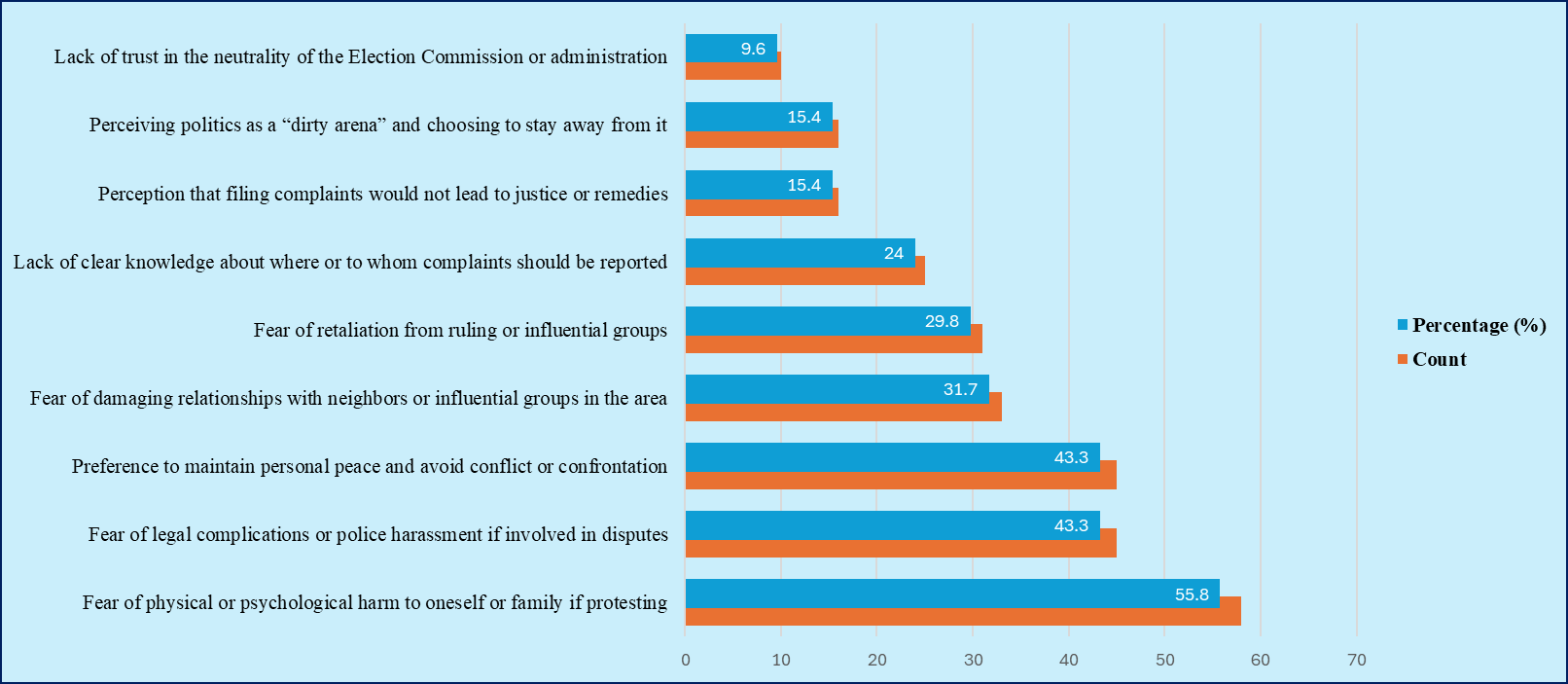
When irregularities occur, there is a clear tendency toward silence rather than reporting, driven primarily by a fear of physical or legal retaliation. Among those who have witnessed irregularities but chose not to act, 55.8% cited the fear of physical or psychological harm to themselves or their families as the primary reason for their silence. Legal and administrative complications also serve as deterrents; 43.3% of respondents fear police harassment or legal disputes, while an identical percentage (43.3%) simply prefers to maintain personal peace and avoid conflict. This reluctance is further exacerbated by a lack of faith in the system, as 15.4% of respondents believe that filing a complaint would not lead to any justice or remedy, and 9.6% specifically doubt the neutrality of the Election Commission.
(Source: Compiled from CGS Survey Findings-2026)
Immediate Responses to Electoral Irregularities
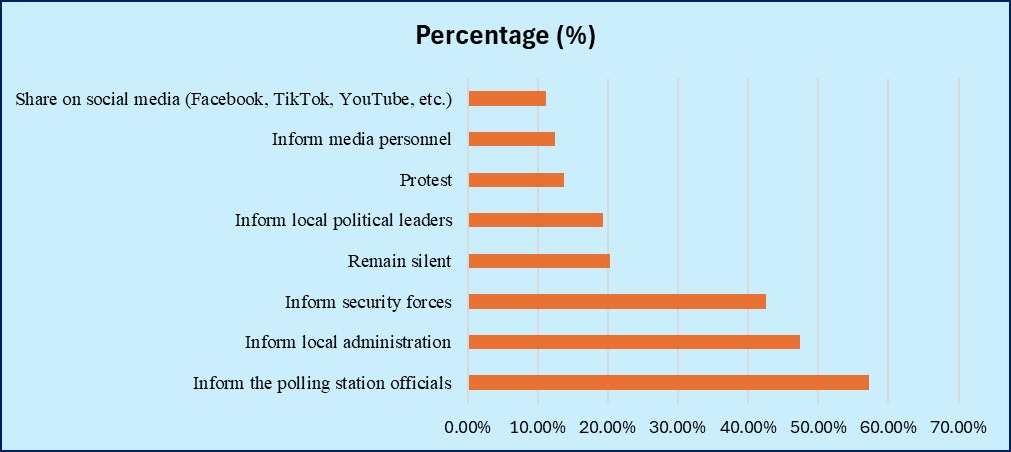
As respondents were allowed to select more than one option, the results reflect overlapping and complementary response strategies rather than mutually exclusive choices. The findings show a clear preference among minority respondents for institutional channels in the event of electoral irregularities. A majority indicated they would inform polling station officials (57.2%), while substantial proportions also reported that they would notify the local administration (47.4%) or security forces (42.6%), suggesting that many respondents would pursue multiple formal avenues simultaneously. At the same time, 20.3% stated that they would remain silent, pointing to apprehension or lack of confidence in corrective mechanisms. Comparatively fewer respondents indicated that they would protest (13.7%), inform media personnel (12.5%), or share incidents on social media (11.2%), reflecting limited reliance on public or confrontational responses. Overall, the pattern suggests that while minority communities are inclined to seek resolution through official structures, the coexistence of silence and restraint alongside institutional reporting highlights ongoing concerns related to safety, trust, and perceived effectiveness of electoral accountability mechanisms.
(Source: Compiled from CGS Survey Findings-2026)
Reporting Patterns and Institutional Gaps
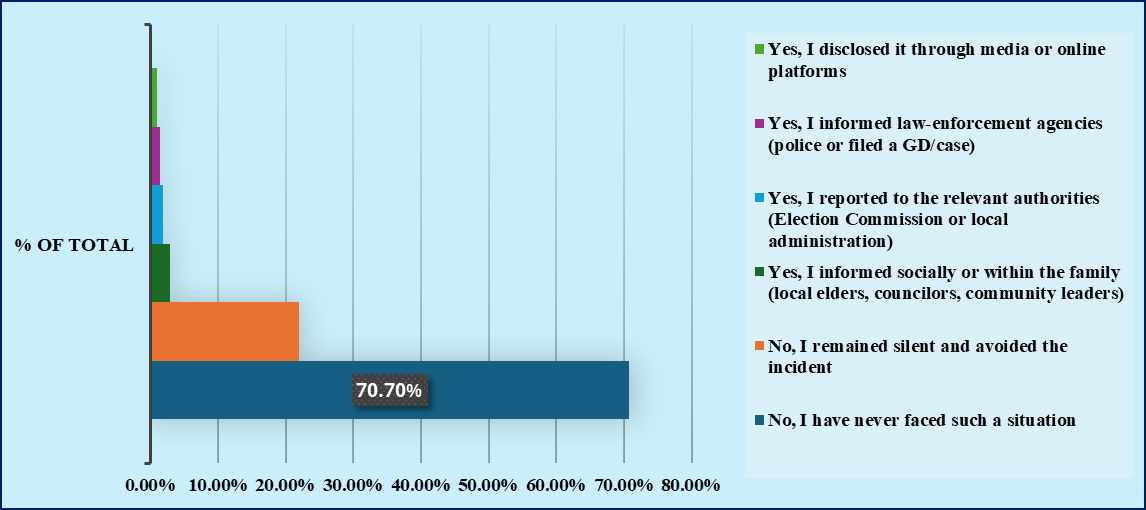
The data on reporting harassment highlights a deep disconnect between citizens and formal law enforcement. A substantial majority of respondents (70.7%) stated they have never faced a situation requiring a complaint, but of those who have faced threats or violence, 22.0% chose to remain silent and avoid the incident entirely. When reports are made, they are more likely to stay within the social sphere rather than reach the authorities; only 1.9% reported issues to the Election Commission and a mere 1.5% went to the police. This hesitation to engage with formal institutions is rooted in a perceived lack of security; 48.7% of victims fear further harm after filing a complaint, and 28.6% lack trust in the legal system to take effective action. This suggests that current institutional frameworks are not seen as protective shields but as potentially hazardous arenas for minority communities.
(Source: Compiled from CGS Survey Findings-2026)
Reasons for Not Reporting Political Violence
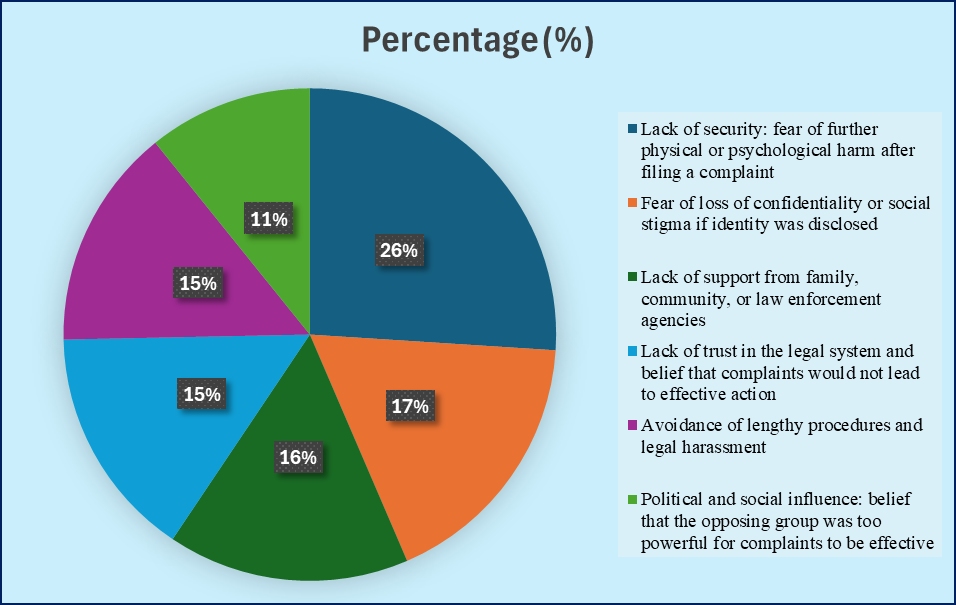
This question was designed to identify the underlying reasons why individuals chose not to complain after experiencing or witnessing political violence, particularly within minority communities. As respondents were allowed to select multiple reasons, the results capture overlapping and interconnected constraints rather than a single determining factor. The most prominent concern was lack of security, with 48.7% fearing further physical or psychological harm after filing a complaint, indicating that personal safety is the primary deterrent to reporting. Concerns related to social exposure were also significant, as 32.8% feared loss of confidentiality or social stigma if their identity were disclosed. Institutional shortcomings further shaped non-reporting behavior, with 29.7% citing lack of support from family, community, or law enforcement, and 28.6% expressing distrust in the legal system and skepticism about the effectiveness of complaints. Procedural barriers were evident as well, as 27.2% avoided reporting due to anticipated lengthy processes or legal harassment. Additionally, 20.2% pointed to political and social influence, believing that powerful opposing groups would render complaints ineffective. Collectively, these responses illustrate that the decision not to report political violence is driven by a complex interaction of security risks, social pressures, institutional weaknesses, and power imbalances, rather than individual reluctance or indifference.
(Source: Compiled from CGS Survey Findings-2026)
Community Demands and Expectations for an Inclusive Election
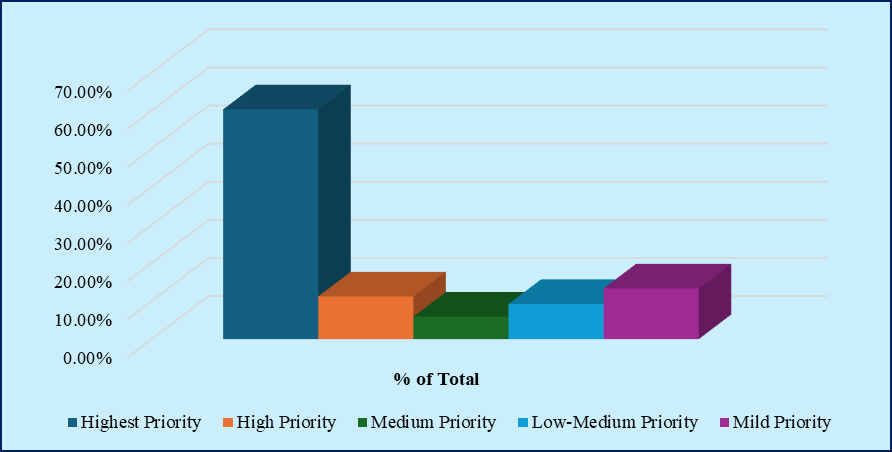
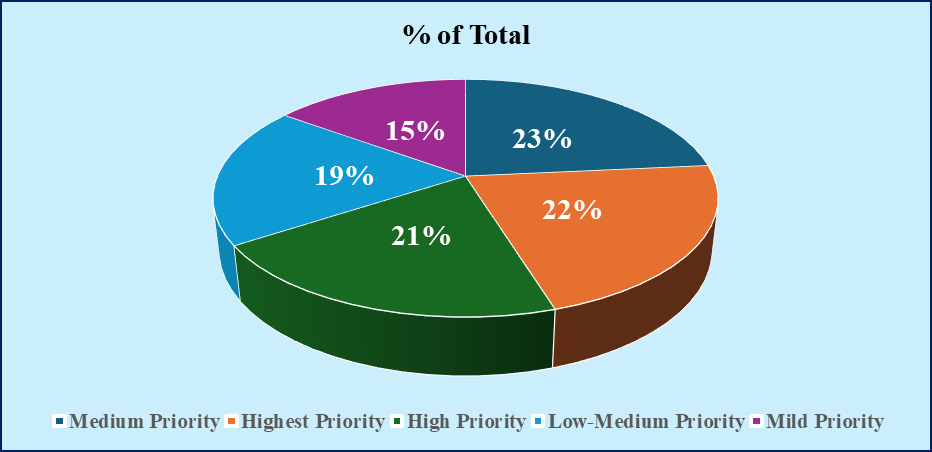
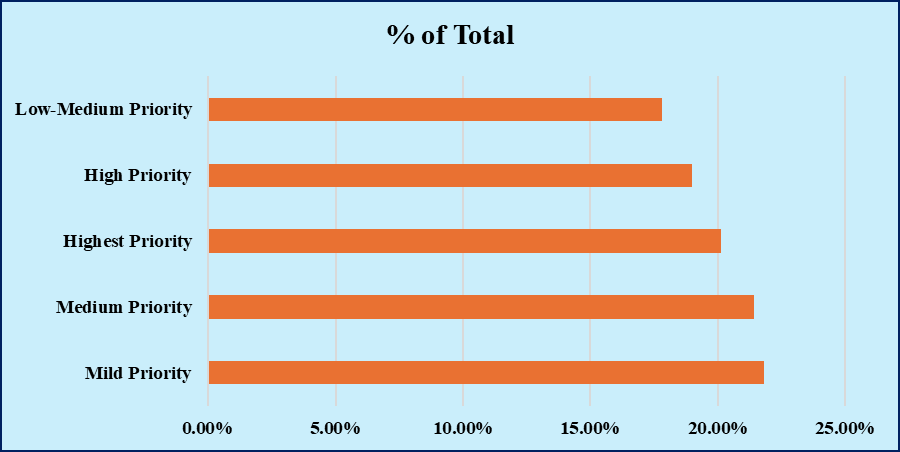
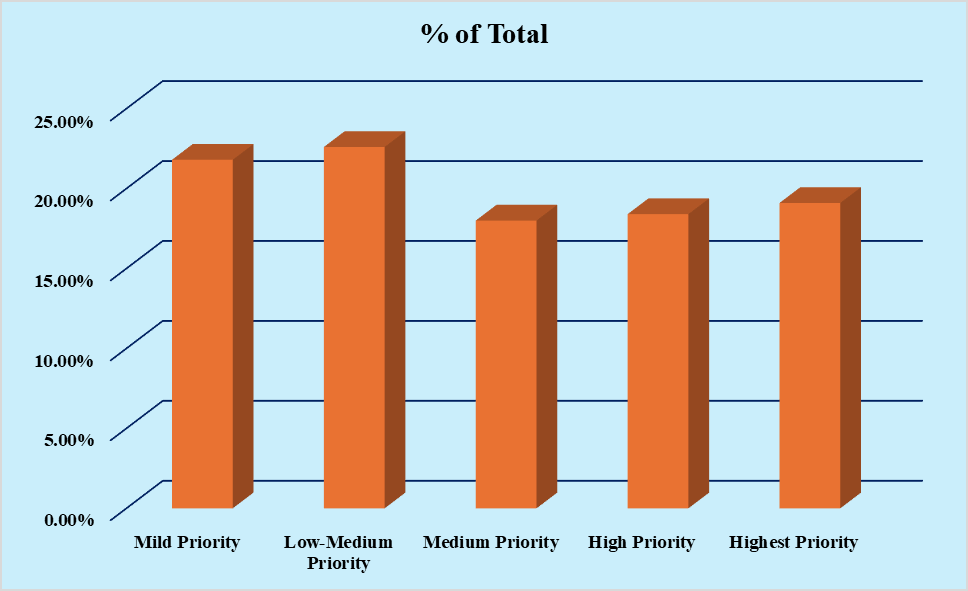
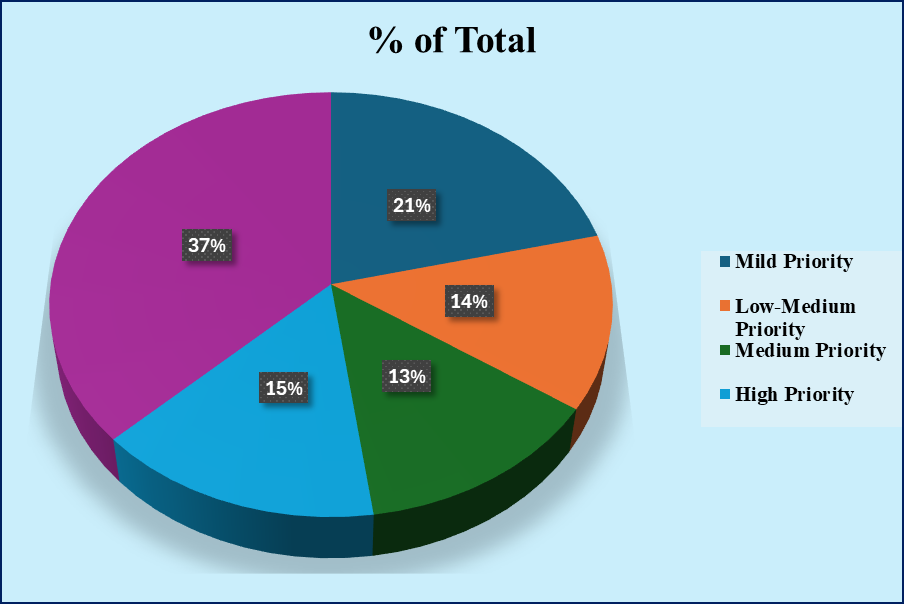
The demands articulated by respondents underscore a strong emphasis on security, institutional fairness, and protection from identity-based exclusion as core conditions for inclusive electoral participation. The most urgent demand relates to physical safety, as an overwhelming 71.5% of respondents collectively assigned high or highest priority to ensuring the safety of life and property before, during, and after elections, reflecting persistent fears of violence and intimidation. A similarly strong concern is evident regarding hate-driven politics, with 52.2% ranking a strict ban on religious or ethnic hate speech and campaigns as a high or highest priority, highlighting anxiety over identity-based targeting during electoral periods. Institutional neutrality also emerged as a critical expectation, as 42.3% placed high or highest priority on ensuring a fully neutral role by the Election Commission, police, and local administration, indicating widespread concern over bias and misuse of authority. In contrast, demands related to deeper political inclusion received comparatively lower urgency, though they remain significant. Only 39.1% assigned high or highest priority to ensuring sufficient party nominations for qualified candidates and participation at the policy-making level, while 37.5% emphasized high or highest priority for written commitments in party manifestos addressing community-specific issues. Taken together, these patterns suggest that respondents view safety, neutrality, and protection from divisive politics as immediate prerequisites for participation, whereas structural reforms related to representation and policy influence are perceived as secondary and dependent on the establishment of a secure and impartial electoral environment.
What are the main demands or expectations from your community to ensure an inclusive election?
(Source: Compiled from CGS Survey Findings-2026)
(Source: Compiled from CGS Survey Findings-2026)
(Source: Compiled from CGS Survey Findings-2026)
(Source: Compiled from CGS Survey Findings-2026)
(Source: Compiled from CGS Survey Findings-2026)
Addressing the Safety-Participation Paradox
The findings of this survey culminate in a critical realization: for minority and indigenous communities, the primary barrier to democratic inclusion is not a lack of civic will, but a pervasive and systemic crisis of safety. This concluding section synthesizes the socio-political implications of the study and outlines the fundamental requirements for a more inclusive electoral future.
The Centrality of Personal Security
The most significant factor weighing on the collective consciousness of the respondents is the issue of physical and psychological safety. Quantitative data confirms that only 23.4% of participants—essentially two out of every ten individuals—reported feeling “completely safe” to participate in the election process. The remaining majority exists in a state of heightened vulnerability, with 50.7% experiencing significant anxiety and more than a quarter of the sample feeling outright scared or extremely unsafe. This high level of apprehension indicates that for these marginalized groups, the act of voting is not merely a civic exercise but a calculated risk to their personal well-being.
The “Muzzling Effect” and Institutional Disconnect
This climate of fear exerts a profound “muzzling effect” on the electorate, effectively stifling transparency and accountability. When irregularities or malpractice occur at polling stations, a significant portion of the community opts for silence as a survival strategy. The fear of reprisal against oneself or one’s family creates a barrier that formal complaint mechanisms have failed to bridge. This is evidenced by the stark reality that even in cases of direct harassment or threats, victims rarely seek assistance from the police or the Election Commission. The prevailing sentiment is one of institutional distrust; many respondents believe that reporting a grievance will either result in no meaningful action or, worse, provoke further retaliation from local power structures.
A Human-Centric Approach to Inclusion
The demands voiced by the community are remarkably fundamental and human-centric. Rather than seeking complex political concessions, their primary requirements center on the basic duty of the state: protection. The data shows that the absolute priority for the community is a government guarantee that their lives and property will remain secure throughout the electoral cycle. This is accompanied by a demand for institutional integrity, specifically a plea for law enforcement and election officials to operate with strict fairness and neutrality. Furthermore, there is a clear call for the cessation of political rhetoric that utilizes religious or ethnic hate speech, which is seen as a direct precursor to physical violence.
Final Comments
In conclusion, these findings depict a community that is deeply invested in the country’s future and possesses a robust history of participation, yet is currently holding back due to a lack of safety, representation, and institutional responsiveness. The “participation-engagement gap” observed throughout this study is a direct consequence of an environment where the costs of voting often outweigh the perceived benefits. Moving forward, true electoral inclusivity can only be achieved if the state shifts its focus from the mere mechanics of polling to the guaranteed protection of its most vulnerable citizens. Ultimately, the community is not asking for special status, but for a fair and equitable opportunity to exercise their democratic rights without the shadow of fear.