
Key Findings
1. Most SMEs were either fully or partially closed during the COVID-19 pandemic
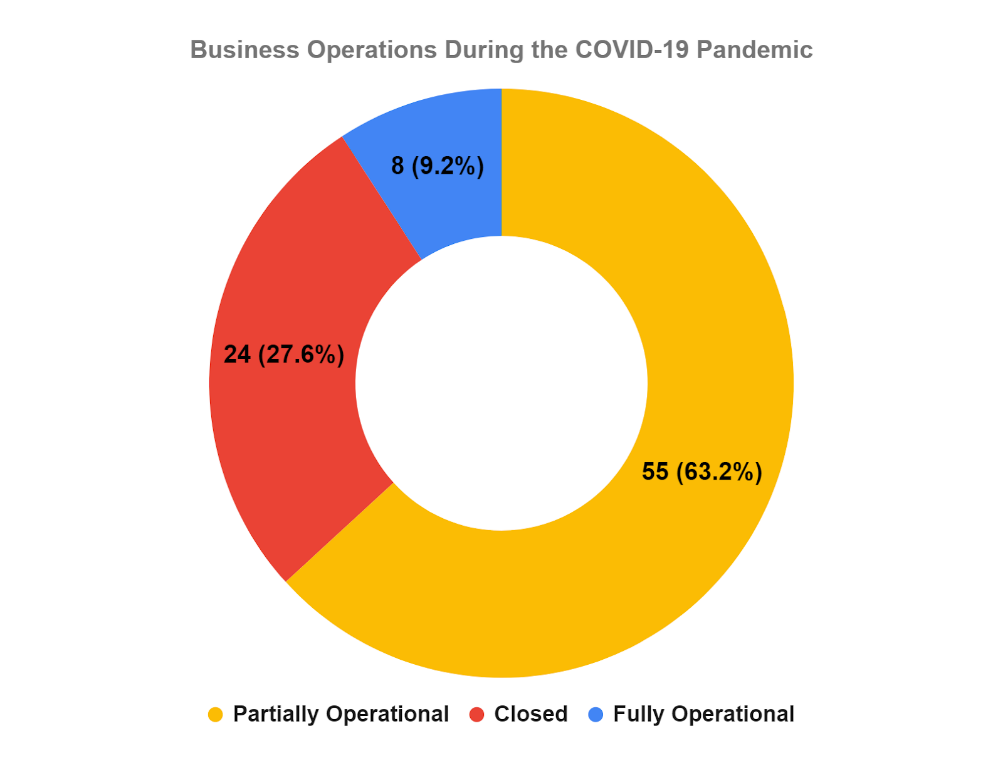
When analyzing the impacts of the COVID-19 pandemic on SMEs in Bangladesh, the findings of the survey showed that 63.2% of participants were forced to close their businesses partially and 27.6% were forced to fully close their businesses. Further analysis also showed that Dhaka, Barisal, and Sylhet were particularly affected. 83.3% of SME businesses in Dhaka, 66.7% in Sylhet, and 33.3% in Barisal were forced to shut down their businesses during the lockdown period. On the other hand, most SME participants from the port city of Chattogram (66.7%) reported that their businesses could operate during the pandemic, as businesses focusing on import and export saw fewer restrictions during the lockdown.
Participants of the survey and focus group discussions identified three main challenges in conducting business during the COVID-19 pandemic: – Around 60% of participants from the SME sector stated that a rapid fall in consumer demand was a key obstacle for operations. – Around 60% of participants from the SME sector said they faced difficulties paying utility bills, wages, and other business expenditures due to lack of earnings. – Around 54% of participants from the SME sector stated that they experienced an increase in operational costs during the pandemic.
2. Government Stimulus Package failed to reach most SMEs
On April 5, 2020, the government of Bangladesh launched a stimulus package worth around 8 billion USD. This stimulus package included low-cost loans for SME businesses that could be attained from select national banks. Analysis showed that while most participants from the study were aware of the stimulus package being offered, the vast majority did not apply for the loan. Ultimately, only around 13% of respondents stated that they received the stimulus loan for their business.
9.7% were not eligible to receive stimulus
78% of participants were 5.6% applied for stimulus aware of the stimulus
84.7% did not apply for stimulus When asked about the main reasons SMEs did not acquire stimulus loans, entrepreneurs participating in the study outlined several issues, such as a lack of understanding around the terms and conditions as well as eligibility of the loan.
3. Local government entities delivered sporadic interventions for SMEs during the pandemic
Bangladesh has two types of local government settings: rural and urban. There is a two-tier government at the urban level: City Corporation and Pourashava (Municipal Corporation). At the rural level, the existing system provides a three-tier structure: Zila Parishad (district office), Upazila Parishad (subdistrict office), and Union Parishad (UP). During the pandemic, these entities supported local SMEs by distributing food rations and face masks. Around 17.6% of the participants in the study reported receiving aid from their local government office.
4. New survival strategies and coping mechanisms for SMEs were identified
SMEs and entrepreneurs highlighted the following three common coping mechanisms that helped them weather disruptions to their business operations during the pandemic: – Around 46% of respondents reported that they implemented remote working and worked from home. – Around 44% of respondents stated that they explored means of digitization to automate work or carry out business functions remotely. – Around 33% of respondents reported diversifying their business by exploring new markets, finding new business partners or providing new products/services.
5. Some SMEs and entrepreneurs are still struggling to recover fully from the pandemic
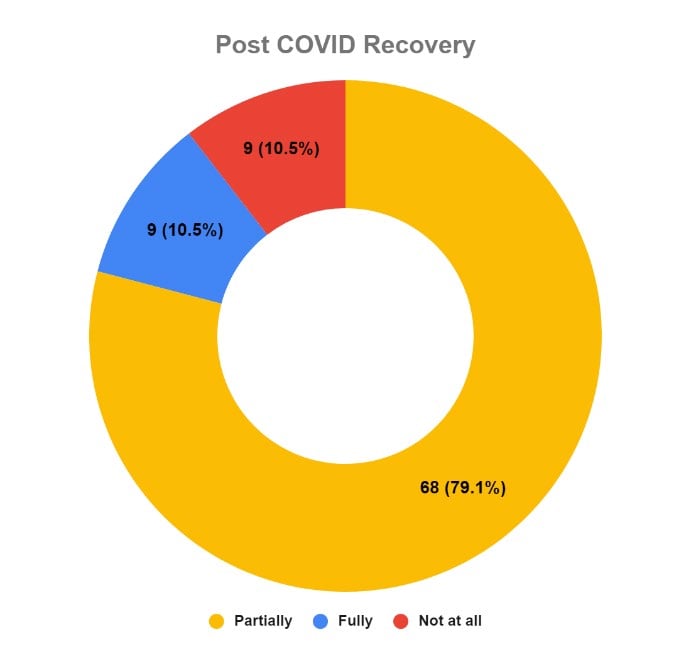
– Around 80% of respondents reported partial recovery from the adverse effects of the pandemic on their businesses. – The rest of the respondents were evenly divided between full recovery (10%) and no recovery (10%), which shows that some businesses are still facing challenges posed by the COVID-19 crisis.
In terms of divisional breakdown, apart from Dhaka and Chattogram, the pace of recovery was relatively slow. In Rangpur and Khulna, 100% of the participants reported that they had yet to recover fully from the impacts of the COVID-19 pandemic. SMEs and entrepreneurs that participated in the study also identified potential opportunities that could help the local business community recover faster from the impacts of the pandemic:
– One of the key challenges for SMEs is difficulty acquiring finance and loans from banks to facilitate the cashflow to grow their businesses. For example, many SME entrepreneurs work from their rented homes, and often cannot provide the regulatory certification requirements to apply for loans or have difficulty securing guarantors. SME participants restated the necessity to streamline the process of getting loans as a SME through implementing effective incentives and systems for banks to provide loans to small businesses. – There is a strong demand for upskilling and reskilling programs that increase the capacity of entrepreneurs in matters of eCommerce, online marketing, using digital bookkeeping techniques and other technological support for further digitalization. – Finally, providing more training opportunities for SMEs to expand their knowledge and capacity on topics such as business development and organizational governance is essential. There are already programs conducted by public institutes such as the Bangladesh SME Foundation, but SMEs would still benefit from additional training and capacity building workshops.
6. New Crises Continue to Impact the Local Business Community across Bangladesh
Despite the COVID-19 pandemic lockdown ending in Bangladesh, the Russia-Ukraine conflict and the increase in global oil and food prices have slowed economic recovery. In addition, the rising Balance of Payment Deficit, depleting FOREX reserves, inflation, import slowdown, and the general lowering pace of economic growth in Bangladesh have contributed to even greater challenges when it comes to local business owners weathering disruptions posted by crises. The overwhelming majority of entrepreneurs during the focus group discussions (84.4%) responded that they were still encountering business crises in one form or another. The leading challenges faced by participants are as follows:
-Around 77% of participants reported that they are struggling due to rising prices of raw materials.-Around 75% of participants reported that they are facing difficulty acquiring and maintaining capital funds. Around 57% of participants reported facing challenges due to the ongoing market uncertainty.-It is now more important than ever to take stock of the lessons learned from the pandemic to design and implement policies and programs targeted to help SMEs respond and adapt to these ongoing challenges and any new crises that might emerge in the future.