
Why War on Iran Threatens to Unleash Unrest in South Asia
Analysts warn the crisis is threatening to spill over into wider economic and political instability
Biman Mukherji | 06 April 2026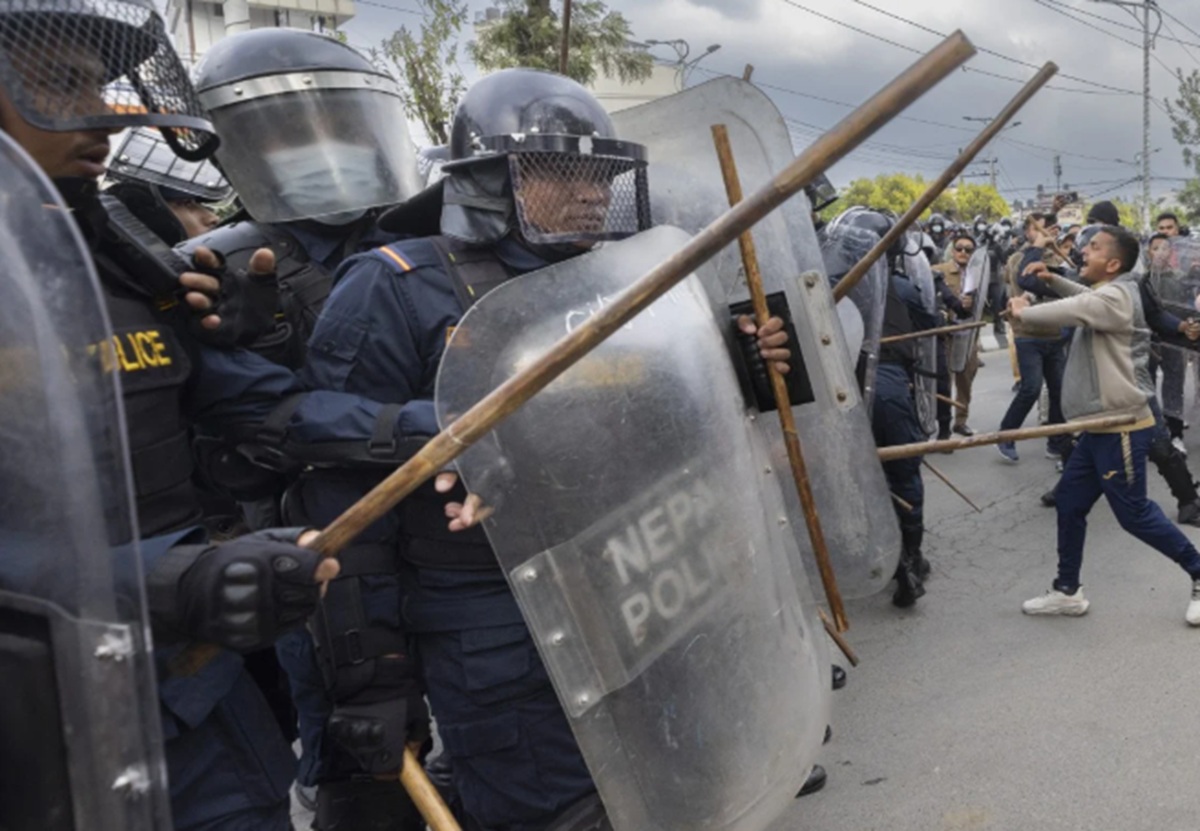
While the Iran war has sent shock waves through energy markets across Asia, one corner of the region has been hit especially hard.
South Asia’s reliance on Middle Eastern fuel and Gulf remittances threatens to push some of its most exposed economies to the brink, analysts warn, as the conflict drives energy and food costs to multi-year highs.
For Sri Lanka, Bangladesh and Pakistan, whose International Monetary Fund bailout programmes and thin fiscal buffers limit their ability to shield citizens from war-driven price shocks, the crisis threatens to spill over into wider economic and political instability.
It could do the same in Nepal, where massive student-led protests toppled a government last year. Bangladesh and Sri Lanka experienced their own youth-led popular uprisings in 2024 and 2022, respectively.
“The longer this war goes on, the more closely the impact will be felt,” said Pearl Pandya, South Asia senior analyst at the Armed Conflict Location and Event Data project, an independent global conflict monitor.
“The region relies heavily on the Gulf and Iran for oil, gas and fertilisers, while remittances from large diaspora populations – particularly in countries like Nepal and Bangladesh – remain a critical economic lifeline.”
Energy prices have surged since the Iran conflict began on February 28, with benchmark Brent crude jumping more than 50 per cent to over US$100 per barrel while spot prices for natural gas are at their highest in years as Tehran throttles Gulf fuel flows.
When US President Donald Trump threatened “extremely hard” fresh strikes against Iran in an address to the nation on Wednesday, Brent futures jolted higher still, briefly touching US$105.
Even if the war ends within weeks – as Trump has previously claimed – the damage to infrastructure will outlast the fighting. Analysts say the same for the impact it will have on the jobs that millions of South Asian workers depend on for their livelihoods.
“We might see the unrest driven by economic grievances take over,” Pandya said. “Historically, there have been strong reasons for people to mobilise.”
Factories fall silent
In Bangladesh, the garment industry – a primary economic engine – is reeling from the crisis, with reports of widespread mill shutdowns, falling production and mounting financial losses.
That is a dangerous dynamic in a country where student-led protests recently toppled a government because, as Pandya put it, “people didn’t think the economy was working for them”.
Nepal, where similar protests also produced regime change in recent months, faces the same undercurrent of economic despair, particularly as Gulf remittances begin to dry up.
Pakistan, meanwhile, confronts a twin challenge. As one of the largest Shia-majority countries outside Iran, it must manage the risk of sectarian unrest alongside serious economic pressures.
Yet like other economies operating under IMF bailout programmes that impose strict limits on government spending, its leaders are prevented from deploying fiscal firepower to absorb higher costs through subsidies or offer much in the way of tax relief to cushion the blow.
“Sri Lanka, Bangladesh and Pakistan are being forced to discipline their fiscal policies,” said Biswajit Dhar, economics professor at New Delhi’s Council for Social Development.
“The government’s fiscal space to control inflationary pressures will be less … How will they then douse inflationary fires? It will have a domino effect.”
Sectarian tensions surfaced last month when Pakistan’s military chief General Asim Munir told Shia clerics that those who “love Iran so much” should go there, days after protests had erupted following the US-Israeli assassination of Supreme Leader Ayatollah Ali Khamenei. Most of Pakistan’s population is Sunni Muslim.
Khamenei’s killing also triggered protests in Indian-administered Kashmir, prompting authorities to deploy security forces and impose movement restrictions, Pandya said.
A protracted war in Iran would be particularly damaging for agriculture – one of the region’s largest employers – as it pushes up fertiliser prices. With the Middle East accounting for around 30 per cent of global fertiliser trade, supply disruptions have already begun to affect availability, particularly as China and Russia tighten their own exports, according to ANZ Bank.
Higher fertiliser and energy prices “could lead to reduced planting area and lower fertiliser application, which will eventually result in less bountiful harvests”, the bank said in a report.
If those costs persist into the planting season for summer crops like rice, which typically go in with the monsoon rains that are still a couple of months away, the result will be higher grain prices and a food inflation spiral layered on top of an energy crisis.
India’s lifeline
With the Iran war approaching its sixth week, regional giant India has moved to provide emergency fuel shipments to Sri Lanka and Bangladesh – with Nepal expected to be next in line.
This comes as Delhi also works to secure its own supplies for a population of more than 1.4 billion and as consumers have reported anxiety over the availability of cooking gas.
Priyajit Debsarkar, a London-based author who writes about South Asia, said India’s neighbours were likely to return for more help if the energy crisis dragged on.
Knock-on effects from the loss of jobs in Gulf hospitality and real estate would further compound the problem, he said.
Biman Mukherji has more than two decades of reporting and editing experience in Asia, focusing on Indian and Asia business.
This article was originally published on The South China Morning Post (SCMP).
Views in this article are author’s own and do not necessarily reflect CGS policy.