
Myanmar Now A Battleground of Competing Sovereignties
Dr. Azeem Ibrahim | 16 April 2026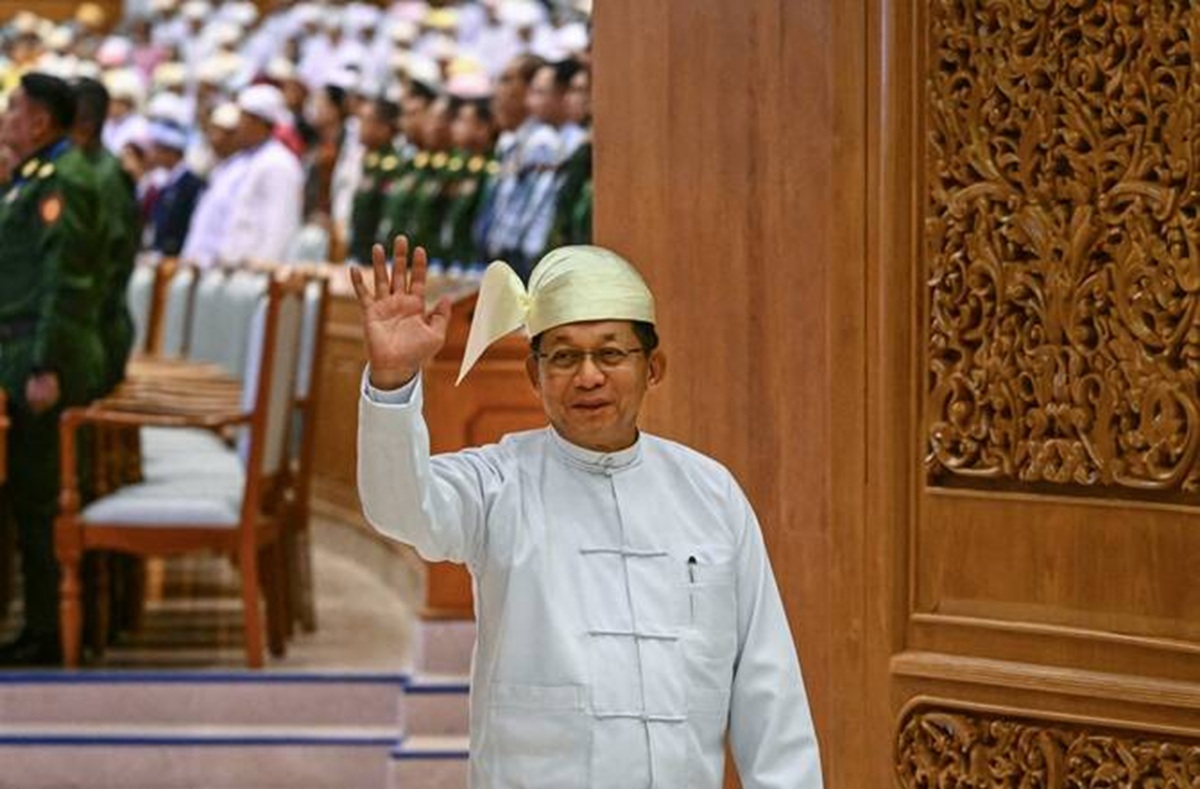
Myanmar is no longer a functioning state in any meaningful sense. It is becoming something far more complex and far more dangerous: a battleground of competing sovereignties. The recent move by Min Aung Hlaing to install himself as president has been widely interpreted as a consolidation of power. In reality, it can be better understood as an admission of its erosion.
For much of the past three years, analysis of Myanmar has remained stuck in an outdated frame. The assumption persists that there is a central authority in Naypyitaw that, however brutal or illegitimate, still constitutes the core of the state. That assumption is no longer sustainable. The reality on the ground has shifted decisively. Myanmar today resembles a fractured political landscape in which multiple actors exercise meaningful control over territory, populations and governance.
Large swaths of the country are now effectively beyond the reach of the military. Ethnic-based armed organizations have expanded their control across border regions, while resistance forces aligned with the national unity government have entrenched themselves in key areas of the interior. In some regions, parallel administrations are not only providing basic services but also establishing taxation systems, judicial mechanisms and local security arrangements. These are not temporary insurgent structures. They are embryonic state formations.
This fragmentation is not incidental, it is structural. Since the 2021 coup, the military has lost not just legitimacy but also capacity. Estimates suggest that the junta no longer exercises uncontested control over most of Myanmar’s territory. Even where it retains nominal authority, its ability to govern is increasingly dependent on coercion rather than administration. Airstrikes, artillery bombardment and scorched-earth tactics have become substitutes for governance. That is not the behavior of a regime consolidating power. It is the behavior of one struggling to hold ground.
In this context, Hlaing’s elevation to the presidency should be read less as a political milestone and more as a symbolic maneuver. By adopting the formal trappings of statehood, the junta is attempting to project continuity and legitimacy. But symbolism cannot compensate for the loss of territorial control or the collapse of administrative coherence. If anything, the move underscores the extent to which the military now relies on optics to mask a deteriorating strategic position.
Hlaing’s elevation to the presidency should be read less as a political milestone and more as a symbolic maneuver.
The implications of this shift are profound, not only for Myanmar but for regional and global policy. Western governments continue to operate as though Naypyitaw remains the primary locus of power. Diplomatic engagement, sanctions regimes and humanitarian frameworks are still largely oriented around the assumption of a central state. This approach is increasingly detached from reality.
Sanctions, for example, have had limited impact on the junta’s strategic calculus. Myanmar’s war economy has proven resilient, sustained by natural resource extraction, illicit trade and external support. More importantly, sanctions do little to engage with or empower the alternative authorities that now control significant parts of the country. By focusing almost exclusively on the junta, Western policy risks ignoring the very actors that will shape Myanmar’s future.
This misreading also carries geopolitical consequences. While Western governments hesitate, China has adopted a far more pragmatic approach. Beijing is not committed to the preservation of the Myanmar state as traditionally conceived. Instead, it is focused on securing its strategic interests, particularly along key economic corridors linking Yunnan province to the Indian Ocean.
To that end, China has demonstrated a willingness to engage with multiple actors simultaneously. It maintains ties with the junta while also cultivating relationships with ethnic armed groups that control territory along its border. This hedging strategy allows Beijing to operate effectively regardless of how Myanmar’s internal dynamics evolve. In a fragmented political environment, flexibility becomes a strategic advantage.
The West, by contrast, remains constrained by its adherence to a state-centric model that no longer reflects conditions on the ground. This creates a widening gap between policy and reality, one that risks ceding influence to actors that are more willing to adapt. It also limits the ability of Western governments to shape outcomes in ways that align with their stated objectives, whether those involve stability, human rights or democratic governance.
The West is constrained by its adherence to a state-centric model that no longer reflects conditions on the ground.
Recognizing Myanmar as a landscape of competing sovereignties does not mean endorsing fragmentation. It means acknowledging it as a starting point for policy. The question is not whether the country can be neatly reassembled under a single authority in the near term. It is how to manage a protracted period of decentralized power in a way that minimizes violence and creates pathways toward a more stable political order.
This requires a fundamental shift in approach. Engagement strategies must expand beyond Naypyitaw to include credible nonstate actors that exercise de facto governance. Humanitarian assistance must be adapted to operate across fragmented territories rather than being channeled through central structures that lack reach. Diplomatic frameworks must account for the possibility that any future settlement will involve a reconfiguration of sovereignty, potentially along federal or confederal lines.
None of this is straightforward. Engaging with nonstate actors raises legal, political and ethical challenges. It complicates already-sensitive regional dynamics. But the alternative is to persist with a policy framework that no longer corresponds to reality and, in doing so, to forfeit both influence and effectiveness.
Myanmar’s trajectory is not unique. Across multiple regions, from the Middle East to parts of Africa, the erosion of centralized state authority has given rise to hybrid political orders in which sovereignty is contested and layered. What makes Myanmar particularly significant is the speed and scale of this transformation, as well as its strategic location at the intersection of South and Southeast Asia.
The installation of Hlaing as president does not mark the consolidation of a regime. It marks the hollowing out of a state. Treating it as anything else risks misunderstanding the nature of the crisis and misdirecting the policies designed to address it. Until the international community adjusts its lens, it will remain not only behind events but also largely irrelevant when it comes to shaping them.
Dr. Azeem Ibrahim is the director of special initiatives at the New Lines Institute for Strategy and Policy in Washington.
This article was originally published on Arab News.
Views in this article are author’s own and do not necessarily reflect CGS policy.