
Interference With the Judiciary is A Part of Governance in Sri Lanka
Mohamed Ayub | 17 May 2026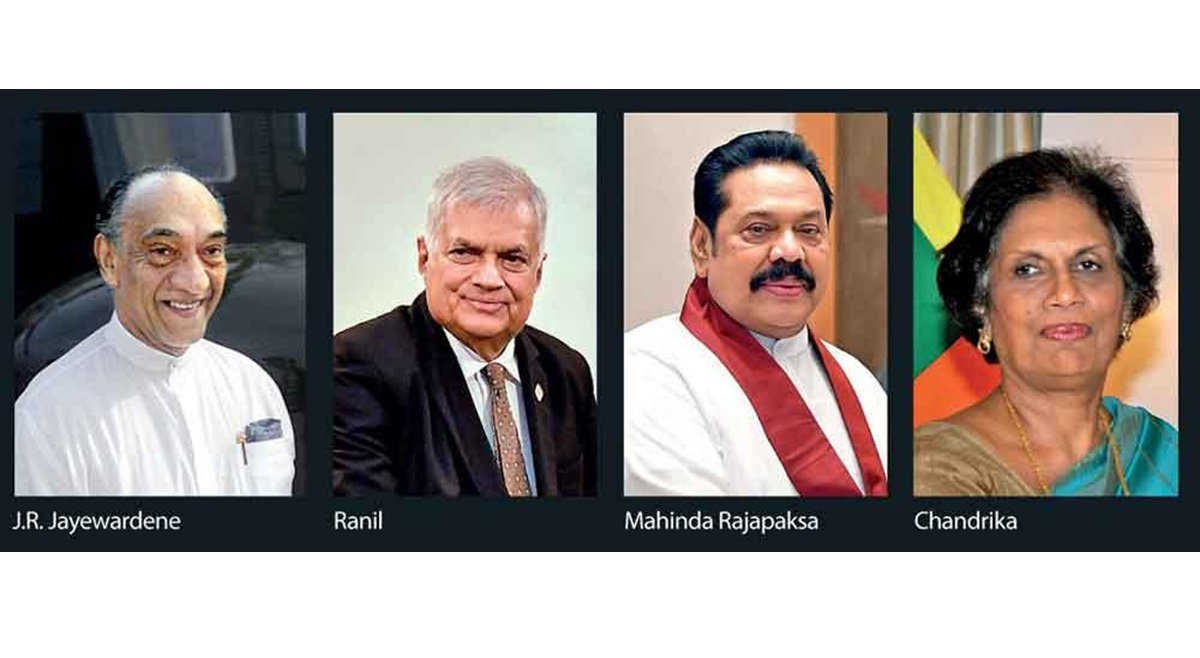
It’s hard to find a single government after 1977 which had not interfered with judicial affairs
Past governments’ failures or violations do not justify those of the current government which has pledged to change the system.
Former President Mahinda Rajapaksa was questioned by the Commission to Investigate Allegations of Bribery or Corruption (CIABOC) on Tuesday in connection with an alleged US$2 million bribe linked to the purchase of Airbus aircraft during his second administration.
On the same day, President Anura Kumara Dissanayake while addressing a special District Coordination Committee meeting in Matale, stated that there were groups who thought that the long arm of the law will never reach them as they were of the view that they are above the law.
He was apparently referring to Mahinda Rajapaksa and Ranil Wickremesinghe, another former President who was arrested August last year over the alleged misuse of state funds for a graduation ceremony of his wife Maithree at Wolverhampton University in England in 2023.
Ironically, on the same day, some Opposition politicians, the majority of whom were ministers and Parliamentarians of past governments, accused President Dissanayake that he has foretold a court judgment which they said amounts to contempt of court. They stated that during the National People’s Power (NPP) May Day rally, President Dissanayake referred to a case heard on April 30, stating that the judgement would be delivered on May 25, and urged the public to be ready to applaud the verdict.
Opposition leaders argued that such statements undermine the separation of powers and accused the President of trying to influence court decisions. They have said that they would bring this matter to the attention of the Chief Justice and international bodies.
Earlier, however, when confronted by a journalist over the President’s remark, Health and Media Minister Dr. NalindaJayatissa said the President only referred to the next dates of several court cases, which is public knowledge already. However, the Minister dodged the alleged call by the President to applaud a verdict.
Some government supporters argue that people guessing verdicts of court cases based on the evidence already in the public domain is nothing new and not wrong. It is true in some instances. For instance, many people were able to infer the verdict delivered in 2002 against LTTE leader Velupillai Prabakaran in connection with the Central Bank bombing in 1996. The only thing they could not predict was the punishment.
Greater responsibility
However, a common man predicting a verdict and the executive President doing so is not same. The latter’s remarks might be deemed as something made with prior knowledge or influencing the judiciary. If he has not referred to a specific case, again one cannot blame him. However, despite Dissanayake not having singled out any specific case, he was referring to a case which has closed its hearing on April 30, and the verdict is scheduled be delivered on May 25. Are there so many cases which have closed their hearing on April 30 and the verdicts are scheduled to be delivered on May 25?
However, the fundamental issue with the Opposition is that their strategy often lacks a “shield,” causing every allegation they hurl at the government to boomerang back onto them. They often attack the government for issues like corruption or mismanagement that occurred during their own time in power as well, making them look hypocritical rather than principled. In other words, they are doing “glass house politics.”
They were rightly accusing the government of releasing over 300 containers from the Colombo harbour in January 2025 without physical inspection, but knowingly well that the authorities had acted in accordance with a decision by the Customs during the previous government in July 2024. The decision had been implemented several times before the NPP government came to power, to ease container congestion.
They have also been making a big fuss about the importation of substandard coal under the NPP government which is undeniable, but ignoring the fact that previous governments have also levied fines from coal suppliers over the quality of their coal consignments in the period following 2020.
They, despite their allegations thrown at the government, now seem to be attempting to refrain from giving evidence before the Presidential commission appointed to look into irregularities in coal purchases since 2009, using flimsy excuses. One issue they are attempting to hide behind is an alleged statement made by Tilvin Silva, the General Secretary of Janatha Vimukthi Peramuna (JVP), that the commission will ultimately clear only the NPP government’s coal purchases.
Coming back to the independence of the judiciary, can we find a single government after 1977 which had not interfered with judicial affairs? Here are some of the incidents that threatened judicial independence, covering almost all past governments since 1977 -- there were times when even the houses of Supreme Court judges were stoned. It happened after a judgement against the attack on an Opposition protest by the ruling United National Party (UNP) in 1983 during J.R. Jayewardene’s Presidency.
President Chandrika Kumaratunga was accused of appointing one of her personal friends, Sarath Nanda Silva as the Chief Justice in 1999, “bypassing one of Sri Lanka’s steadfastly rights friendly judges, the late Mark Fernado.”
President Mahinda Rajapaksa ignored a Supreme Court order to reduce fuel prices in 2008; during the same administration in 2012, judges and lawyers had to boycott courts for a day to protest the physical assault on judge Manjula Tilakaratne, who was also back then the Secretary of the Judicial Service Commission, over a statement made by him complaining about outside influence on the commission’s decisions. A year later, the then Chief Justice Shirani Bandaranayake was impeached based on the rulings of a Parliamentary Select Committee dominated by the ruling United People’s Freedom Alliance (UPFA).
The Yahapalana government of President Maithripala Sirisena and Prime Minister Ranil Wickremesinghe presented an amendment to the Provincial Councils Elections (Amendment) Bill introducing the mixed election system circumventing the Supreme Court’s perusal.
Ludicrously, a Presidential commission was appointed by President Gotabaya Rajapaksa in 2020 to annul rulings by courts of law against politically connected people and to deprive civic rights of those who were instrumental to those filing such cases.
When the Supreme Court said that the proposed Gender Equality Bill was inconsistent with the Constitution in June 2024, Wickremesinghe called it “judicial cannibalism” which was condemned as a threat to judicial independence by the Bar Association of Sri Lanka. During the same period, SLPP Parliamentarian Premanath C. Dolawatta suggested in Parliament to summon the Supreme Court judges before the Parliamentary Privilege Committee for their order in March 2023 not to withhold funds for the local government election which Wickremesinghe wanted to postponed.
Nevertheless, past governments’ failures or violations do not justify those of the current government which has pledged to change the system.
MOHAMED AYUB, Author
This article was originally published on dailymirror.lk.
Views in this article are author’s own and do not necessarily reflect CGS policy.