
The Youth Jobs Crisis Fuelling India’s Cockroach Janta Party Protests
Gemma Ware and Rosa Abraham | 04 July 2026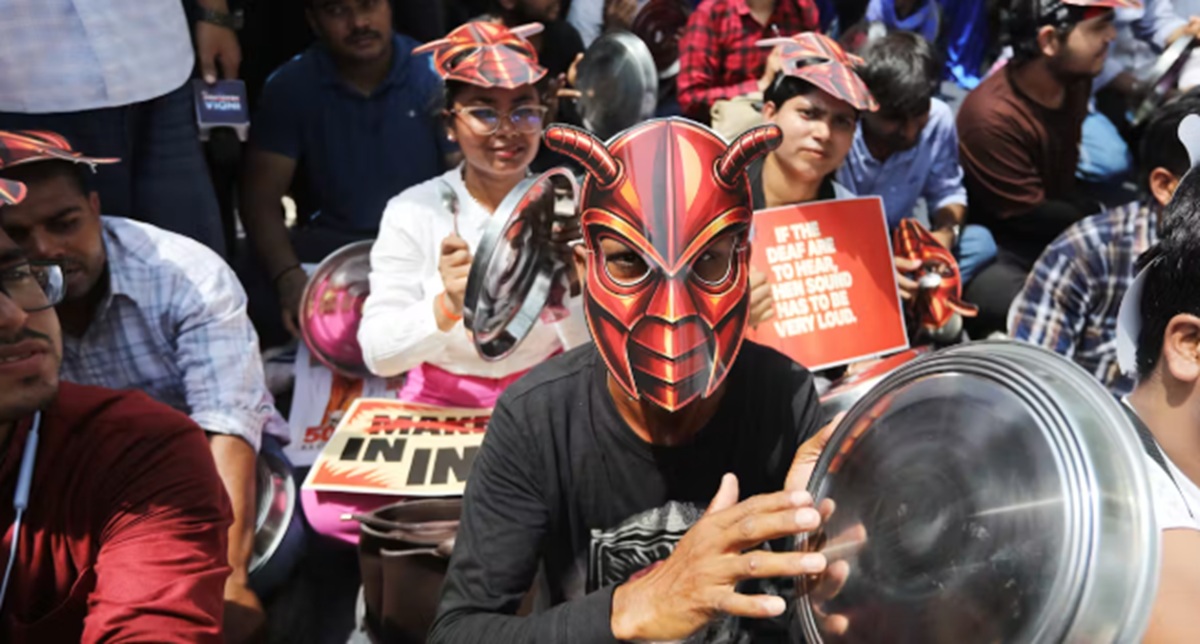
A new youth protest movement in India that started as online satire is now staging an ongoing sit-in in New Delhi calling for the resignation of India’s education minister.
The Cockroach Janta Party (CJP) was launched in late May by Abhijeet Dipke, a graduate of Boston University, in response to alleged comments by India’s chief justice, Surya Kant, comparing unemployed young Indians to cockroaches. Kant later clarified his comments and said he’d been misquoted.
Dipke launched a parody political party, calling on all cockroaches to unite, which led to street protests in cities including Delhi, Pune, Jaipur and Bengaluru.
The CJP latched onto mounting anger in India at a series of issues affecting exams, including the secondary school leaving exam, which has affected thousands of people and been linked to suicides. But the movement has also tapped into the anger of a generation of graduates who’ve done everything right but still can’t find work that matches their aspirations.
In this episode of The Conversation Weekly, economist Rosa Abraham at Azim Premji University in Bengaluru, explains how India’s jobs crisis is fuelling this new youth protest movement.
Lead author of the State of Working India report, an annual review of labour issues in the country, Abraham says the comparison with cockroaches “was seen as an insult to a generation which has felt like institutions, the state, the private sector has failed them”.
There were 63 million graduates in India between the ages of 20-29 in 2023, and around 11 million of them were unemployed. Abraham says that the lack of political response to the jobs crisis means “you’re seeing this kind of simmering discontent, which has always been in the background, which is now finding these release valves through movements like … the CJP”.
Gemma Ware, Host, The Conversation Weekly Podcast, The Conversation
Rosa Abraham, Head, Centre for Sustainable Employment, Azim Premji University
This article was originally published on TheConversation.
Views in this article are author’s own and do not necessarily reflect CGS policy.