
LDC Graduation and Foreign Direct Investment
Ahasan Ahmed | 06 January 2024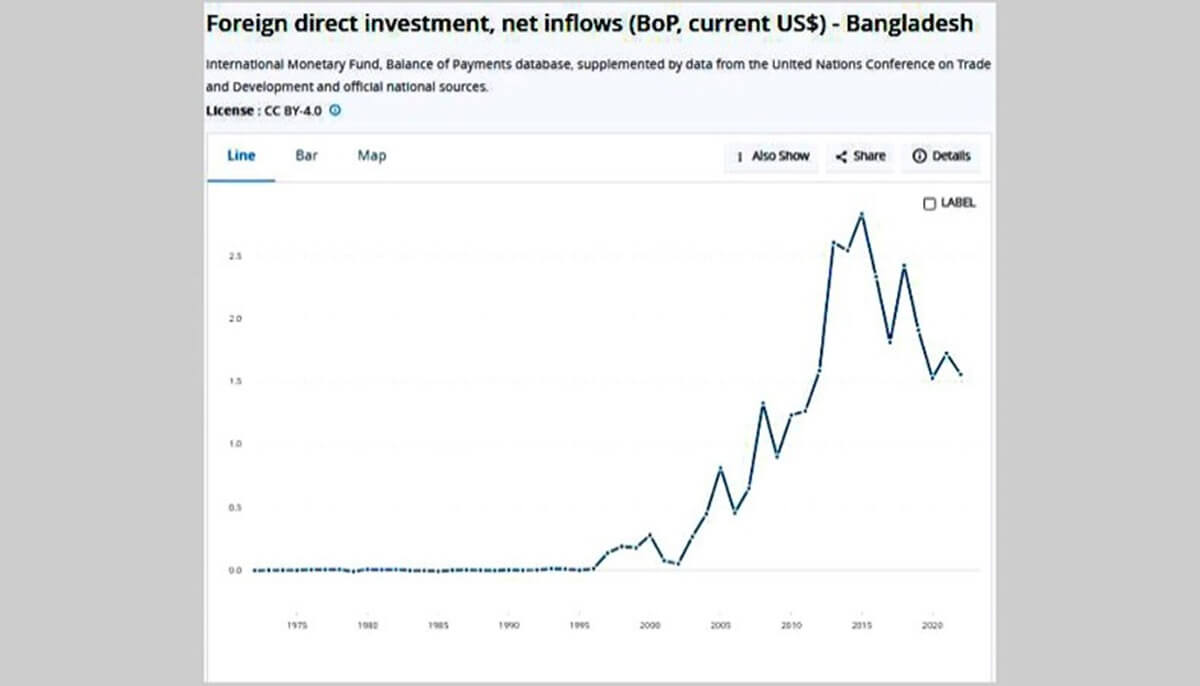
As Bangladesh anticipates its graduation from LDC status in 2026, it is crucial to closely examine the nation’s potential regarding diplomatic relations and foreign direct investment opportunities, writes Ahasan Ahmed
BANGLADESH is a compelling example of resilience and progress in an era characterised by rapid economic transformations and geopolitical realignments. The nation’s journey towards shedding its least developed country status is a multifaceted tale of triumph over challenges, accomplishments, and an unwavering commitment to progress. It is a narrative that reflects the triumph over adversity and envisions a future brimming with possibilities.
espite a turbulent start marked by war and a severe economic crisis, Bangladesh has forged a narrative of progress and transformation. Despite numerous setbacks, the nation has made remarkable strides in various sectors, strongly emphasising human development policies. As documented by the United Nations Development Programme, the rise in Bangladesh’s Human Development Index signifies a clear and consistent improvement over the years. The HDI has shown significant progress, increasing from 0.558 in 1990 to 0.661 in 2021.
The textile and garment industry has been pivotal in propelling the nation’s economic prosperity, significantly boosting its export revenues. Bangladesh’s authorities have taken initiatives to foster growth in sectors beyond textiles in response to the imperative need for diversification. This prioritises the expansion of agriculture, industry, and technology, showcasing a resilient, diversified, and sustainable economy.
As Bangladesh anticipates its graduation from LDC status in 2026, it is crucial to closely examine the nation’s potential regarding diplomatic relations and foreign direct investment opportunities. This evaluation can be approached from an academic perspective by exploring the establishment of robust economic and foreign relations, achieved through exploring the potential for expanding overseas trade and foreign investments. However, Bangladesh currently faces a significant challenge post-Covid-19 in maintaining economic growth, along with a couple of issues like the foreign reserve crisis, the political crisis with the US, corruption, lengthy legal problems, etc. That is why attracting a broad spectrum of international investments is required for economic uplift, given the ongoing geopolitical transformations in the current global landscape.
The initial inquiry pertains to the interplay between LDC graduation and its correlation with foreign investment within the context of economic progress and the impact of global political shifts on this dynamic. Foreign direct investment plays a pivotal role in Bangladesh’s endeavour to transition from its LDC status. It serves as both a catalyst and a testament to the nation’s progress. FDI injects much-needed capital into the economy and signifies international confidence in Bangladesh’s growth potential. This, in turn, fosters the diversification of industries, bolsters employment opportunities, and facilitates infrastructure development crucial for sustainable progress. Consequently, FDI synergistically accelerates Bangladesh’s journey towards higher income levels and enhanced economic resilience, critical attributes in the LDC graduation process. In light of the global political landscape, especially within the Bay of Bengal region, it is imperative to ascertain the trajectory of foreign investment in the future.
Despite the challenges of doing business in Bangladesh, the location is vital for many international investors. With a rapidly expanding consumer market, Bangladesh presents an appealing opportunity for international investors seeking avenues for economic expansion. The nation’s commitment to creating an investor-friendly environment is evident through the implementation of policy reforms aimed at streamlining corporate operations and expediting investment procedures. Sectors like telecommunications, energy, and manufacturing have seen a significant influx of FDI. According to data from the Bangladesh Bank, the aggregate inflow of FDI has notably increased, surging from $0.91 billion during the 2010 financial year to $3.48 billion in 2022. However, data from the World Bank shows different trends. When we examine the current trend of FDI in Bangladesh, it reveals a declining trajectory after 2014. World Bank data indicates that the highest FDI inflow was in 2015, amounting to $2.8 billion. Nevertheless, it gradually decreased to $1.56 billion in 2022, signifying that Bangladesh couldn’t sustain its attractiveness to foreign investors. As Bangladesh is poised to lose some of its import-export privileges following LDC graduation, it is imperative that Bangladesh focuses on domestic product management through foreign investments and seeks alternative investors to counteract the current trend. Additionally, efforts should be directed towards attracting investors from other countries with expertise.
The socio-economic trajectory of Bangladesh is intricately connected to the larger context of the Bay of Bengal region, the Indian subcontinent, and other relevant areas. Political changes occurring in neighbouring countries significantly impact regional stability and the dynamics of commerce. Notably, India’s prominent role in the region substantially influences Bangladesh’s political and economic landscape. While Bangladesh’s government aims to increase trade with the neighbouring nations, it could be a more beneficial approach to impress them by attracting investments for overall regional benefits.
In addition to regional factors, China’s ascent as a prominent global economic force, exemplified by initiatives like the Belt and Road Initiative, has resulted in increased Chinese investments in vital sectors of Bangladesh, including infrastructure and energy. However, Bangladesh has struggled to attract significant Chinese investments in the industrial sector. Despite the increase in exports, Bangladesh may export more after graduation while importing less from China. Convincing Chinese businesspersons to invest in domestic production to reduce shipping costs and tax burdens and benefit from lower labour costs could mitigate this issue.
Global power dynamics substantially mould the economic landscape of Bangladesh. The actions and involvements of the United States and other prominent global actors have significant repercussions, influencing the region’s investment environment and strategic alliances. Given Bangladesh’s LDC graduation, the attractiveness of international FDI, and the dynamic political environment in Asia, it intersects with the political realm in Western countries. Global power dynamics dictate a complex web of interconnected effects that influence strategic alliances and economic interests. It is vital to inform Western investors about current improvements and convince them to invest more for their benefit.
The narrative of Bangladesh’s simultaneous pursuit of LDC graduation and FDI reflects a story characterised by optimism, perseverance, and resolve. As the country transitions from its position as an LDC, it eagerly embraces the potential of an upcoming economic era. By creating a favourable atmosphere for foreign direct investment, Bangladesh secures its future and makes a significant contribution to the global landscape of development and transformation. Bangladesh emerged as a prominent symbol of advancement through the complex interplay of geopolitical dynamics, economic transitions, and unwavering determination. The future trajectory presents many intricate and unpredictable factors; however, the nation’s dedication to advancement, restructuring, and inclusiveness establishes the foundation for a forthcoming era marked by economic success and progress.
Ahasan Ahmed, a fellow at the Centre for Governance Studies, is a PhD student at Indiana University–Purdue University Indianapolis, USA.
This article was originally published on New Age
Views in this article are author’s own and do not necessarily reflect CGS policy.