
Global Powers Clash, Bangladesh Pays
Zillur Rahman | 04 April 2026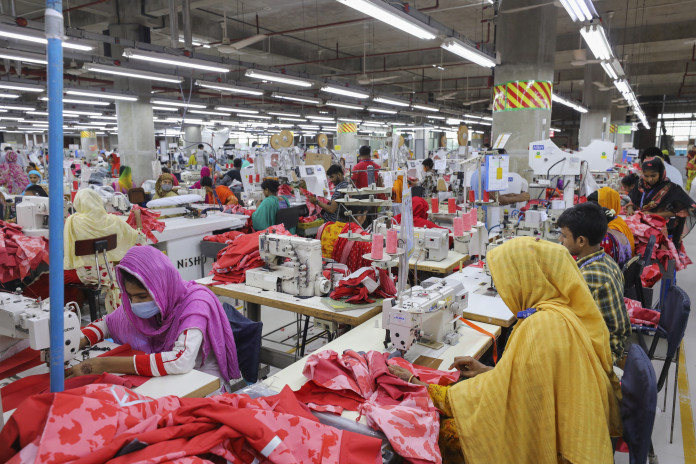
For the poorer and middle classes, the gap between income and expenditure is now widening. In an already economically vulnerable country, the situation is likely to have significant social implications
The modern world is a complex web of interconnected events, and some conflicts have far-reaching implications, even for countries far away from the actual theatre of war.
The Iran crisis is an example of such a globalised war.
It is not just a war between two countries; it is a complex situation in which global politics, trade, and energy markets converge. For Bangladesh, this war is not distant; it is close to the heart because of its implications for the economy.
To understand this, it is imperative to comprehend that this is not an isolated incident, rather a part of a long series of conflicts between Iran and other countries in the region. The geopolitical importance of this region is such that it is crucial to global trade, especially for energy supplies.
Tensions between countries over certain global maritime routes have an immediate impact on global markets. The prices of oil and natural gas fluctuate immediately. But for an import-dependent nation like Bangladesh, the situation is not just an issue; it is a problem.
Bangladesh is an import-dependent nation when it comes to energy supplies. A large part of its power generation depends on imported energy sources such as oil and LNG. When global energy prices rise, it puts pressure on its finances.
The government may try to reduce this pressure by offering subsidies, but such action is not a long-term solution. In the long run, it manifests as increased deficits and, ultimately, even impacts inflation.
Inflation, in this sense, is no longer merely an economic factor but becomes an actual reality. The increase in fuel prices raises transport costs, and the prices of food items and other essential commodities rise.
The country's major export destinations, namely Europe and the USA, are extremely sensitive to the changing consumer sentiment. If global economic uncertainty leads to reduced consumer spending, the demand for non-essential items, especially clothing, is likely to fall. This, in turn, will affect the production levels, the operations, and ultimately the employment scenario for millions of workers.
For the poorer and middle classes, the gap between income and expenditure is now widening. In an already economically vulnerable country, the situation is likely to have significant social implications.
The effects are not confined to the local market. The country's export-based economy, especially the ready-made garments (RMG) sector, is also vulnerable to the global economic slowdown driven by regional instability.
The country's major export destinations, namely Europe and the USA, are extremely sensitive to the changing consumer sentiment. If global economic uncertainty leads to reduced consumer spending, the demand for non-essential items, especially clothing, is likely to fall. This, in turn, will affect the production levels, the operations, and ultimately the employment scenario for millions of workers.
Another important factor is the potential threat to remittance inflows. Millions of Bangladeshi workers are employed in the Middle East, and the host countries are likely to be affected, either directly or indirectly, by the escalating tensions there.
Any disturbance in the host country's economic scenario, owing to the war, reduced investment, and/or increased government spending, is likely to affect migrant workers' employment. The negative implications on remittance inflows will further strain the country's foreign exchange reserves, making the task of maintaining foreign exchange stability even more challenging.
Another important vulnerability is shipping and logistics. The world is interconnected through trade, which is conducted through the seas. Many of these sea routes are also geopolitically unstable. If these routes are no longer safe, shipping costs will increase due to higher insurance premiums and freight charges.
These will, in turn, be passed on to the consumers. Bangladesh is already dependent on imports for raw materials and intermediate goods.
Amid all these challenges, Bangladesh's position in the diplomatic arena is equally significant. Bangladesh has strong economic relations with Western countries, but it also has historical and cultural affinities with the entire Muslim world.
To navigate these challenges, a balancing act is required. Being too close to one side will invite diplomatic consequences, while being indecisive will lead to a loss of leverage. The only sensible approach in the current situation is one of carefully cultivated neutrality while protecting national interests in the background.
But diplomacy can only go so far, and the current situation underscores the need to be better prepared economically. Diversification of energy is not just a future requirement, but an urgent necessity. This can be done by increasing the share of renewable energy, building strategic fuel reserves, and becoming more efficient in the use of available fuel.
Similarly, the need of the hour is to diversify the export market as well. Being dependent on a single industry or only a handful of countries can be detrimental in the current situation, while exploring new markets can provide a cushion in the event of a decline in demand from traditional markets.
On the labour front, active engagement with the host country in the Middle East is vital to ensure the security and stability of Bangladeshi migrant labourers. At the same time, the creation of alternative labour markets could also help the country avoid over-reliance on any region.
In the end, the Iran conflict is merely an example of the following universal principle: in the globalised world, distance is irrelevant. Wars thousands of miles away can affect the local market, the job market, and the local economy. The problem, however, is not merely responding to the crisis but creating an infrastructure ready to take it on.
The question is no longer whether Bangladesh is affected by the war, as the answer is clearly yes. The question is whether Bangladesh is ready to tackle the crisis with foresight and wisdom. The answer, however, is clearly no, as the world is no longer ready to tackle the crisis, and it is already upon us, entering the world through markets, policies, and costs, shaping the future before the war is over.
Zillur Rahman is a political analyst and president at the Centre for Governance Studies (CGS). He is the host of 'Tritiyo Matra' on Channel i. His X handle is @zillur.
This article was originally published on The TBS.
Views in this article are author’s own and do not necessarily reflect CGS policy.