
The Indispensable Island: Sri Lanka’s Blueprint for Sovereign Survival
Maj. Gen. Boniface Perara | 29 April 2026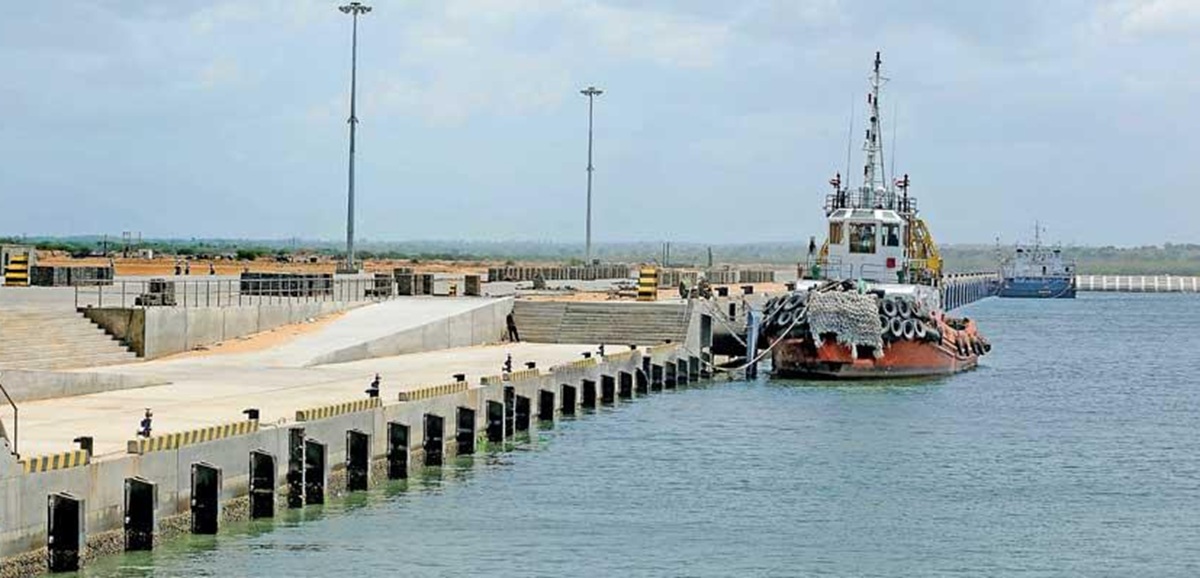
In a multipolar world order, the ability to provide logistics, refueling, and security for these sea lanes makes Sri Lanka indispensable to every superpower, from the United States and China to regional powers like India
• Virtually all trade between the Atlantic and the Pacific must pass within miles of the Sri Lankan coast
• The mountain regions regulate the climate and provide a natural defensive depth
• Sri Lanka’s fundamental geographic, ecological, and strategic foundations remain not only intact, but unparalleled
Sri Lanka occupies a position on the global map that is disproportionate to its physical size. Often described as a ‘teardrop’ off the coast of India, a more strategic assessment reveals it to be the ‘unsinkable aircraft carrier’ of the Indian Ocean. While the nation has recently weathered the storms of economic bankruptcy and political upheaval, its fundamental geographic, ecological, and strategic foundations remain not only intact, but unparalleled. To understand why Sri Lanka can survive under almost any global circumstance and why it possesses the potential to surpass the economic titans of the Middle East one must look beyond the balance sheets of the present and into the permanent assets of the land and sea. Unlike the arid landscapes of the Middle East, where survival is a constant battle against a scarcity of water and extreme heat, Sri Lanka is a biological fortress. The island’s resilience is rooted in its diverse climatic zones and its sophisticated ancient hydrological engineering.
Hydrological autonomy
The Middle East spends billions on desalination: Sri Lanka receives its water from the sky. The island is fed by two monsoons, creating a perennial supply of water that is captured by a network of thousands of man-made “tanks” (wewas) and lakes. This ‘water body tube’ system, some of which dates back over two millennia, ensures that even in the Dry Zone, life and agriculture persist. This decentralised water security is a primary reason why no external power can easily ‘starve out’ the nation.
Agricultural abundance and flora
Sri Lanka’s soil is exceptionally fertile. The division into Wet and Dry zones allows for a continuous harvest of varied crops. From the high-yield tea and rubber of the mountains to the resilient coconut and rice of the plains, food security is a natural byproduct of the climate. The abundance of ‘wild food’ jackfruit, breadfruit, and indigenous yams means that even in times of total economic isolation, the population can subsist for years. This ‘hidden food’ provides a layer of survival that urbanized or desert-based nations simply do not possess.
The central highlands serve as the island’s ‘water tower’. The mountain regions regulate the climate and provide a natural defensive depth. With significant forest cover housing unique flora and fauna, the island maintains a micro-climate that prevents the desertification seen in other tropical regions. This biodiversity is not just an aesthetic asset, but an economic one, forming the basis for high-end eco-tourism and future bioprospecting.
While the land is a ‘heaven’, the true future of Sri Lankan prosperity lies in the water. As an island nation, Sri Lanka’s territory is not limited to its 65,000 square kilometres of land; its Exclusive Economic Zone (EEZ) and continental shelf extend far into the Indian Ocean, granting it rights over a massive maritime domain.
The shift to blue growth
A “Blue Economy” focuses on the sustainable use of ocean resources for economic growth. For Sri Lanka, this means:
• Deep-Sea Mining: Potential deposits of minerals and rare earth elements on the seabed.
• Sustainable Fisheries: Moving from artisanal fishing to high-tech, sustainable industrial fleets that can feed the region.
• Renewable Energy: Utilizing offshore wind and wave energy to achieve total energy independence, a feat the Middle East is currently attempting through massive solar investments.
The transition to a Blue Economy would transform Sri Lanka from an “island with a debt” to a “maritime power with a surplus.”
Geopolitical Gravity: The Pivot of the Indian Ocean
Sri Lanka’s location is its greatest geopolitical asset and its greatest risk. It sits at the midpoint of the world’s busiest sea lanes, connecting the energy-rich Middle East with the manufacturing hubs of East Asia.
Control of the sea lanes
Virtually all trade between the Atlantic and the Pacific must pass within miles of the Sri Lankan coast. This gives the island immense ‘choke-point’ leverage. In a multipolar world order, the ability to provide logistics, refueling, and security for these sea lanes makes Sri Lanka indispensable to every superpower, from the United States and China to regional powers like India.
Strategic accessibility
The island’s compact size and high ‘accessibility’ mean that infrastructure once properly managed can connect any point on the coast to the interior within hours. This makes the entire island a potential Special Economic Zone (SEZ), where the movement of goods and people is seamless.
The human paradox: Vision vs. Management
The central tragedy of Sri Lanka, as noted, is the disconnect between its natural wealth and its political management. Despite a high literacy rate and a history of academic excellence, the ‘scholar-warrior’ spirit has often been sidelined by short-term populism and a lack of long-term national vision.
The bankruptcy wake-up call
The declaration of bankruptcy was a historic low, yet the subsequent recovery demonstrated the nation’s inherent resilience. It proved that with even a modicum of ‘visionary leadership’ and disciplined management, the country could stabilise itself. However, stability is not the same as prosperity.
The leadership gap
The ‘majority population’ has historically lacked the strategic knowledge to select leaders based on technocratic merit rather than emotive rhetoric. To become the ‘Pearl of Southeast Asia’, Sri Lanka requires a Managerial Revolution. This means moving away from traditional politics and toward a governance model that treats the state as a strategic enterprise maximizing its assets, protecting its sovereignty, and investing in human capital.
The path forward: Surpassing the Middle East
Why can Sri Lanka surpass the Middle East? The Middle East is built on a ‘fragile’ asset: oil. As the world transitions to green energy, those nations must desperately diversify or face irrelevance. Sri Lanka is built on ‘permanent’ assets: water, fertile land, and a strategic location that will remain relevant as long as global trade exists.
A strategy for the future:
Technological Integration: Using AI and satellite data to manage the EEZ and optimise agricultural yields in the wet and dry zones.
Strategic Education: Curricula must shift toward ‘National Security Economics’—teaching the next generation how to transform the island’s location into economic power.
Infrastructure with purpose: Infrastructure shouldn’t just be about roads, but about connecting the ‘water tubes’ to modern irrigation and linking ports to high-tech manufacturing hubs.
Conclusion
Sri Lanka is a country that nature has blessed with every tool for survival. It has the climate to feed itself, the mountains to water itself, and the ocean to enrich itself. No regional or superpower can truly ‘destroy’ it, for its roots are too deep in the fertile soil and its location too vital for the world to lose.
The nation does not need a savior; it needs a Grand Manager. With a vision that aligns its ecological ‘heaven’ with its geopolitical ‘gravity’, Sri Lanka will not just survive it will lead. The potential is there for all to see: a resilient, green, and blue powerhouse that stands as the true indispensable foundation of the Indian Ocean.
The writer is a distinguished International Researcher, Author and analyst with a career spanning over 36 years of service in the Sri Lanka Army, including 20 years in active combat.
This article was originally published on Daily mirror online.
Views in this article are author’s own and do not necessarily reflect CGS policy.