
Rakhine Between War and Ethnic Harmony
Aung MarmOo | 29 April 2026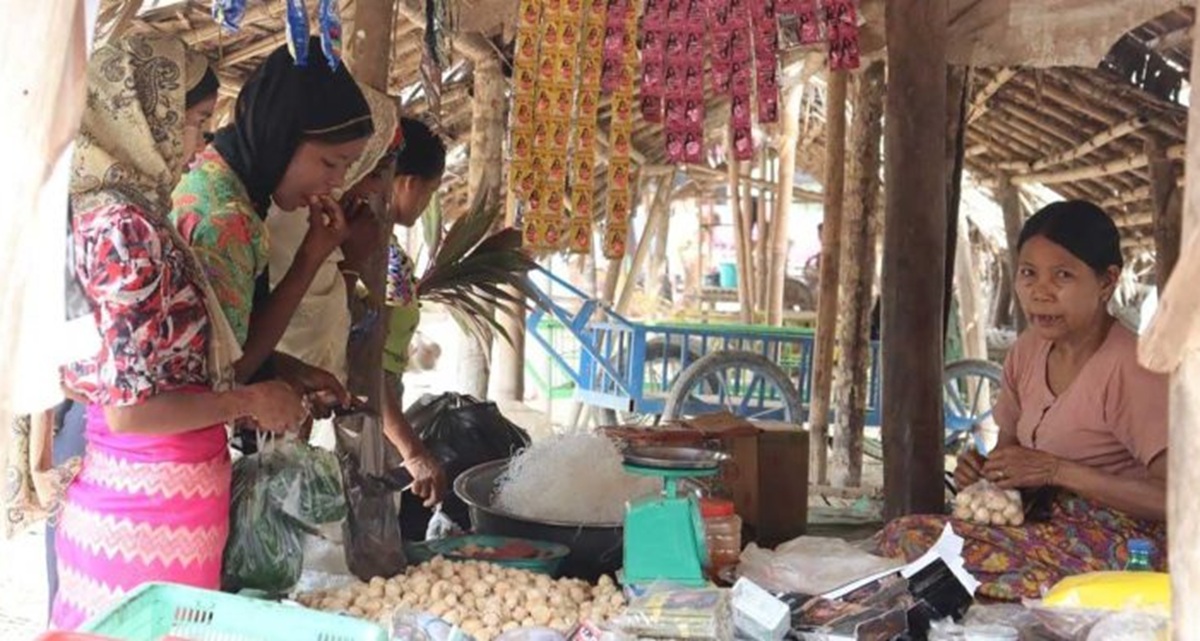
War continues to reshape Rakhine State, but a quieter transformation unfolding beneath the surface may prove just as consequential as any battlefield gains.
The Arakan Army (AA), which now controls most of the state, is making efforts to promote social harmony among its diverse and fractious ethnic communities—and in some parts they are bearing palpable fruit.
One example is the upper Laymyo River area of Mrauk-U Township, where Arakanese, Chin, Mro, Khami, and Maramargyi communities live side by side. Residents here say that inter-ethnic relations are now characterized by friendliness and mutual respect, with few outright hostilities.
“The AA governs the people equally. Even though we are Chin, we are treated warmly and respectfully,” said Kan Thein, a 53-year-old from Khitechaung Village.
Maramargyi residents in the Laymyo Chaung area also say that inter-ethnic relations, communication and trade have improved.
They noted significant differences between the period of military rule and the current administration, the Arakan People’s Revolutionary Government. (APRG)
Oo Saw Nwe, a Maramargyi woman from Mrauk-U’s Yawmani Village, said: “Things have improved. Travel has become easier. Even at night, if something happens to children or pregnant women, we can go out. During the junta period, we didn’t dare to travel at night. So things are much more convenient now: both administration and transportation have gotten a lot better.”
The testimonies point to something deeper than administrative change. They suggest an attempt, however incomplete, to redefine governance along more inclusive lines.
A different model of authority
Since late 2023, the AA has effectively replaced the Myanmar military’s administrative structures in most parts of Rakhine.
For decades, ethnic minorities in Arakan particularly Chin, Mro, Khami, and smaller communities navigated layers upon layers of marginalization: from the central state, from conflict dynamics, and at times from local power structures. Governance was often distant, coercive, or altogether absent.
The post-2021 coup environment deepened these fractures. As the military intensified operations, including airstrikes and artillery attacks, civilian life across Rakhine deteriorated rapidly. Entire communities were displaced. Telecommunications blackouts isolated populations. Markets collapsed, and humanitarian access shrank.
The humanitarian toll was staggering: rising civilian casualties from airstrikes, the destruction of villages, and growing numbers of internally displaced people struggling without adequate support.
In a region long fractured by identity politics, mistrust, and conflict, then, even incremental improvements in inter-ethnic relations represent a significant departure from the past. And it is in places like Laymyochaung that the new governance is being tested through everyday realities: freedom of movement, dispute resolution, local trade, and social relations.
Harmony in a time of war
Yet this emerging social harmony exists alongside an intensifying war. Regime airstrikes continue to hit civilian areas across Arakan, often with devastating consequences. Villages have been reduced to ashes, schools destroyed, and children killed or injured. The humanitarian situation remains dire, with limited access to healthcare, education and livelihoods.
This dual reality of improving local cohesion under AA administration on one hand, and escalating violence from above raises a critical question: can a new social contract take root in the midst of ongoing war?
For many communities, the answer is pragmatic. Survival requires adaptation. If local governance structures provide security, fairness, and a sense of inclusion, they are likely to gain legitimacy regardless of formal recognition.
A test of inclusivity
Their long-term effect will depend on whether they can evolve beyond immediate wartime necessity.
Promoting ethnic harmony is not only about organizing cultural events or ensuring freedom of movement. It requires sustained commitment to inclusive governance: equal representation, equitable resource distribution, and credible mechanisms for addressing grievances.
Rakhine is one of Myanmar’s most diverse regions. Its future stability will depend on whether this diversity is managed through inclusion or becomes a renewed source of tension.
The AA’s current approach suggests an awareness of this challenge. But it remains a work in progress.
The regional and international dimension
The situation cannot be understood in isolation. Cross-border dynamics with Bangladesh, ongoing displacement, and the unresolved Muslim/Rohingya crisis all intersect with internal governance questions. Thus any effort to build a stable and inclusive political order in Rakhine will inevitably have to address these broader issues.
At the same time, the absence of effective international intervention, whether in preventing regime airstrikes or ensuring accountability, continues to shape realities on the ground.
Statements of concern have done little to alter the trajectory of the conflict, leaving local people to construct their own systems of governance as best they can.
A fragile but significant shift
The reports from Laymyochaung do not suggest that Rakhine’s problems have been solved, but they do point to a fragile and important shift: the possibility that, even in the midst of war, new forms of coexistence and governance can emerge.
For communities long divided by history and conflict, that possibility carries weight. Whether it can endure and expand beyond isolated areas will depend on the trajectory of the war, the choices of those in power, and the resilience of the communities themselves.
Aung MarmOo is the editor-in-chief and executive director of Development Media Group (DMG), a news agency based in Rakhine State. He faces charges under Myanmar’s Unlawful Associations Act and has been in hiding since May 2019.
This article was originally published on The Irrawaddy.
Views in this article are author’s own and do not necessarily reflect CGS policy.