
Digital media or Physical discs? A red pill blue pill situation
Iftekhar Hossain | 19 September 2026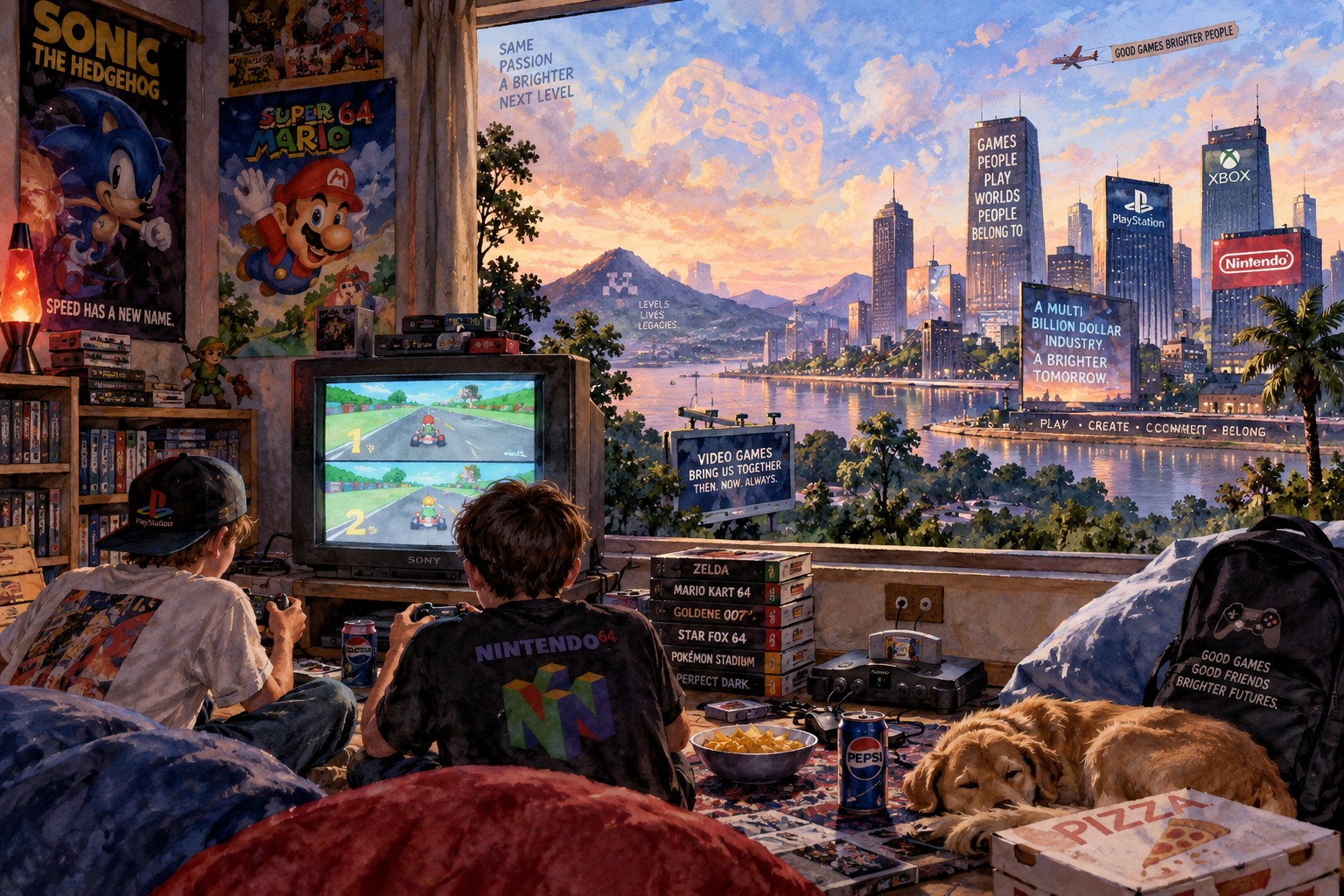
For one generation, video games are 21-inch CRT TV hooked to a Sega Mega Drive playing Samurai Showdown with 5 cousins. With soda bets, exploring new combos and looking away from sultry animations.
The same console is passed to the oldest cousin as one leave for abroad. So, playing video games became a daily routine. Memorizing backstreet boys’ songs and playing obscure video games like Generations Lost is how many 90’s kids grew up. Many got their hands on a computer around 2001-2007. There was little to no internet, but there were DVD’s and gamers to buy with all of the lunch money they could save. Walking to school for a week just to buy “need for speed: Underground”. The rush is still felt when they first saw the opening scene of the game and fell in love with the car culture.Spending hours on the game, and buying video games a gradual shift was observed.
When video games were first introduced to Bangladesh, it was a mere $9.4 billion industry. It doubled in 2007, and now it's a towering $213.9 billion industry.Mobile gaming is leading the pact but the foundation was laid by consoles and pc games. Flying over cinema, music and the global book market. Video games are the number one form of entertainment.
But, here lies the problem. From Tetris being bundled in the Gameboy color and video games having a massive crate of collectables, it is being derailed from the way it grabbed the attention the most. The physical media. Gamers across the world used to line up to buy video games. The craze did not begin at the launch of the iPhone; it began at the launch of the bestselling video game console ever, The PlayStation 2. Many still long for one.
PlayStation 2 had everything: GTA, NFS, Gran Turismo, Devil May Cry, Crash Bandicoot, Spyro, The Last Guardian. It was a generational leap which led to where video games are now. Grand Theft Auto 5 and Halo 3 had the world record for the longest lines to purchase a copy of those games. Having video games stacked around the console or pc was a fashion choice and it was braggadocious to those who understand the value.
Personal computers and consoles have come a long way since Gameboy, PlayStation one and two and Xbox. Without limiting hardware, Personal computers are making and playing games at the same time, while consoles are connecting our precious family times together. It doesn't matter if you’re a college student or a 9-5 corporate employee, video games are there.
The issue with modern video games is licensing. Up until 2024 apart from Nintendo and PC’s, all of the other consoles had physical media. Games used to come in Blu Ray discs. Sometimes even two. And the joy of having physical copies of games is players could share the discs. They could sell them with their consoles or individually.
But the biggest player in the game industry Sony is stopping their production of physical media for all new PlayStation games starting January 2028, claiming digital sales are dominating the market by 80% to 85%. Also, the new PlayStation 5 has two variants, one with the Blu-ray drive, the other cheap one, doesn't have the drive.
The gaming community is pushing back this decision fiercely, with petitions, criticism.
This violates the rights of consumers, as users are not buying the video game; they’re buying a license of the game. Just like a Netflix subscription. Once the time is over, the game will simply vanish from the library. It has happened with games like ‘The Crew’, ‘Deadpool’, many Need for Speed games and so on.
Sony, Rockstar Games, are out to sell subscriptions for the games, they are not actually selling copies of it. If they want, they can revoke the license and the game will no longer be a part of the “Digital Library”. Also, video games aren’t cheap these days. The most anticipated video game of the decade, Grand Theft Auto 6 has two prices. Sounds similar? Just like the PS5. The base game is $79.99, and the ultimate edition is $99.99. What's the difference? The base game has many features locked, and players would have to pay $20 extra to have them, the cherry on top is there are no physical discs for this game.
Console wars, server hacks, lawsuits, the video games industry has seen it all. The audience has also gone through the waves. Gamers in Bangladesh used to buy video games for 50taka per disc for pc games, 1000-7000 for PlayStation, Xbox, switch games depending on condition, release dates and console variants. Having a copy of an expensive piece of hardware along with the original disc meant a loyalty towards the people who made it all possible, the developers, the studio. It creates a connection between the audiences through the game. But the biggest players in the game are too focused on the percentage of sales, rather than catering to the audience, those who kept the industry alive. Those who enabled writers, animators, programmers, designers, actors to give their all and make a video game story so vivid, lifelike, worth taking the journey to, it is only right for them to own a piece of that work. The towering industry that has seen the worst crunch cultures, layoffs, failures are built on innovation, inclusion and ultimately to give the gamers an experience of a lifetime.
Generations upon generations are turning towards video games, from Street fighter tournaments to livestreamers with the same insane skills at call of duty. Two different generations and genres of video game, but the intensity is still intact. But is this skill, grit, love, only limited to license? Will the future of video games be subscription driven, or have a massive surge of new ideas, new vision and more audience driven. And we can only hope it's not the Fortnite way. Just because digital sales have a stronger percentage, physical media has ownership built into it. At the end of the day, if we are buying a product worth $99.99, we should be able to feel it at least.
Iftekhar Hossain is Digital Media Executive at Centre for Governance Studies.
Views in this article are author’s own and do not necessarily reflect CGS policy.