
The Holy Land's Unholy War: Israel vs. Hamas
Depanjali Roy | 02 November 2023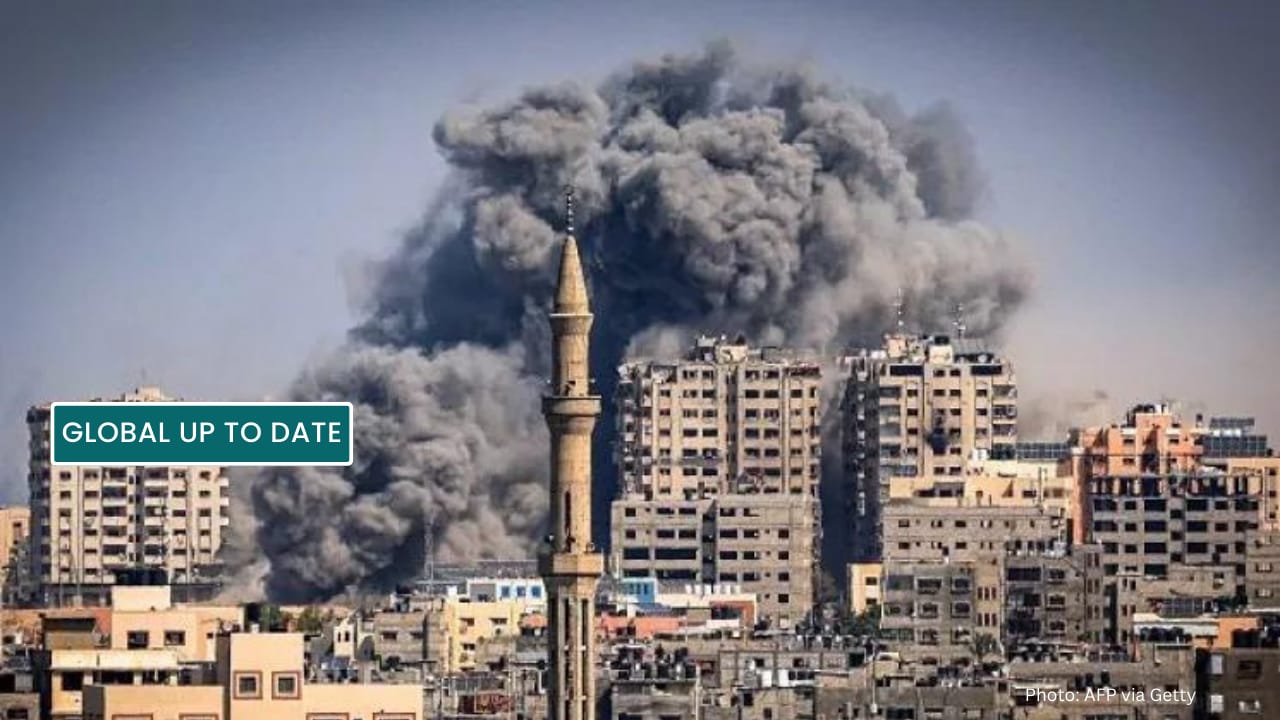
Throughout history, the world has witnessed numerous wars, with many of them being driven by territorial power struggles. On October 7th of this year, Hamas initiated a missile attack on Israeli territory, marking a tragic event reminiscent of the 1973 Yom Kippur War. Upon analyzing this Hamas attack, it appears that they had been planning it for months, carefully choosing the optimal time to strike, with the intention of shaking the foundations of Israel's authority from within.
The Hamas-led operation has been dubbed "Operation Al-Aqsa Flood." According to Hamas military commander Mohammed Al-Deif, this offensive is a response to the suffering endured by Palestinians at the hands of Israeli military forces. It is also considered a form of retaliation for the events that transpired at Al-Aqsa Mosque on May 10, 2021. Regarding the recent attack, on the morning of October 7, Hamas launched a barrage of 5,000 missiles aimed at Israeli territory. Even Israel's advanced defense system, the "Iron Dome," proved unable to intercept all of the incoming missiles. Hamas's strategy was highly coordinated, involving simultaneous attacks from land and air. Many Palestinians, along with Hamas commanders, breached the Gaza Strip border using bulldozers, seized Israeli military tanks, took hostages, and initiated violence across the region. As of now, several foreigners and Israeli citizens remain held hostage by Hamas, and videos depicting their actions have circulated widely on social media.
Following the startling attack, Israeli Prime Minister Benjamin Netanyahu announced a military operation called "Iron Sword." He emphasized the need to respond resolutely to the actions of Hamas, stating, "They initiated the conflict, and we will bring it to a conclusion." This declaration represents a decisive offensive stance by the prime minister, as there appeared to be no alternative but to respond robustly. It's worth noting that the failure of Israeli intelligence agencies is apparent in this situation. Israel possesses three intelligence organizations equipped with cutting-edge technology and networks. The surprise attack also highlights a certain level of negligence on the part of the Israeli government.
Several factors contributed to this:Firstly, the government, under Benjamin Netanyahu, is currently grappling with challenges related to the reformation of the judicial system and facing accusations of corruption. These internal issues have diverted the government's attention from external threats. Additionally, these reforms have implications for the Israeli military, leading to protests and meetings among citizens and defense forces, further diverting the government's focus from security matters.
Secondly, The Israeli government thought that the relations between Israel and Palestine are getting stable as no conflicts are taking place for the last few months. Also, some Palestinians from Gaza also got the work permit to work in Israel and no tensions were witnessed. The Israeli government took it lightly and this ignorance cost them sudden destruction.
Thirdly, Israel, as a formidable nation, boasts state-of-the-art intelligence capabilities, well-equipped armed forces, and strong alliances, notably with countries like Egypt and the United States. Nonetheless, the Israeli government opted to disregard critical intelligence provided by the Egyptian authorities just days before the attack. This heedless decision led to significant and regrettable consequences.
The loss continued even after 23 days of the conflict. The Israeli Army initiated a ground operation in Gaza while simultaneously continuing missile launches. They had issued warnings to Palestinian civilians to relocate from the north to the south of the Gaza Strip, but tragically, even the southern region came under attack by the Israeli military. Basic necessities such as food, water, electricity, and medical assistance were severed from Gaza, a dire violation of human rights that drew sharp criticism from the United Nations. It was viewed as an inhumane act. After 23 days, relief trucks finally entered Gaza to aid civilians. The death toll had already risen to 8,000 Palestinians during this war. Despite the considerable loss of life, Benjamin Netanyahu rejected the proposal for a ceasefire with Hamas, expressing the belief that such a move would be seen as Israel's defeat in the conflict.
Other than that, if we see a bigger picture involving other countries, like allies of Israel and Palestine can make the war go even worse. Not to mention it will impact the world economy as well. Escalating the war will benefit not Israel, nor Palestine but mainly Iran. There is a high possibility that Iran helped and funded Hamas, to carry out the attack on the 7th October. Every country in the Middle East knows that Iran, aShia country, supports Hamasideology of occupying the whole Israel territory and making their land “Jewish-less”. Their support is getting stronger after Saudi Arabia and Israel are about to sign a peace agreement to normalize their relations. During this prolonged war even Lebanon and Syria also making their hands dirty. On October 29. Lebanon and Syria launched rocket on Northen Israel attacking their air base. Though no injuries took place. But its clean sign from their sign to Israel to stop the war. In response Israel attacked their targets included “infrastructure for directing terror, and military infrastructure”, by which they mean Hezbollah influenced territories. As more parties engaged in the war, the situation will get bad to worse.
In these circumstances both of the parties of the war should only think of their own good by making a possible ceasefire to stop the civilians from suffering. Before the war turns into a global crisis, institutions like the United Nations and other super powers should come forward to resolve this conflict, with soft power or if needed hard power. As this is the era of globalization, this war will not only affect these two countries but others with a “domino effect”.
Depanjali Roy, Research Associate, Centre for Governance Studies