
Why the ‘Route-Based Approach’ is the Future of Global Migration Governance
Md. Saiful Islam Shanto | 22 January 2026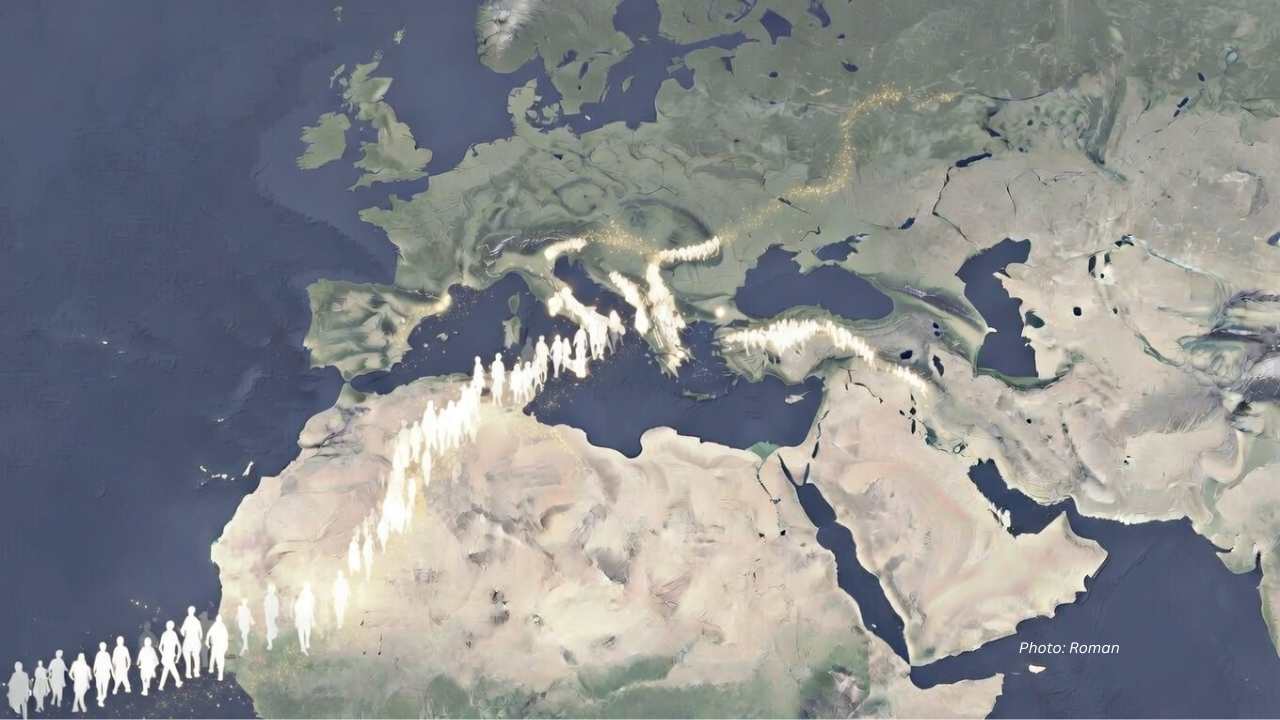
The traditional framework for managing global migration is undergoing a fundamental transformation. For decades, international aid and government policies operated under a country-specific model. If a crisis erupted in a specific nation, resources were funneled into that localized geographic box. However, the reality of human movement in the 21st century defies these static boundaries. People on the move travel across multiple borders, navigate complex transit zones, and head toward shifting destinations. In a landmark shift, the International Organization for Migration (IOM) launched its 2026 Global Appeal, requesting USD 4.7 billion to assist 41 million people. This appeal represents a strategic pivot toward a "route-based approach" designed to handle irregular migration and climate-induced displacement with unprecedented continuity.
The route-based approach is a framework that prioritizes the entire journey of a migrant over their location at a single moment. By focusing on migration corridors, the international community can provide protection at every critical junction. This shift is driven by staggering statistical realities. By the end of 2024, internal displacement reached an all-time high of 83.4 million people. This surge was fueled by intersecting crises, including conflict and economic instability. In 2024 alone, disasters triggered 9.8 million new displacements, a 27 percent increase from the previous year. These figures demonstrate that migration is a fluid, regional phenomenon. Treating it as a series of isolated national problems is no longer a viable strategy.
Efficiency is the primary driver of this new model. Under the old system, a migrant might receive medical aid in one country but find themselves without support the moment they cross into a neighboring state. These gaps create opportunities for exploitation. Human traffickers thrive in "no-man's-lands" where official humanitarian presence is weak. By monitoring entire routes, such as the Eastern Route from the Horn of Africa to the Arabian Peninsula, the IOM can strategically place Humanitarian Service Points (HSPs). These points provide clean water, food, and health screenings regardless of a person’s legal status or the specific country they are transiting.
The human cost of the previous fragmented approach has been devastating. The year 2024 was the deadliest for migrants since 2014, with at least 9,197 documented deaths. A significant portion of these fatalities occurred in transit zones where aid was unavailable. In Asia alone, nearly 2,800 people lost their lives in 2024 while fleeing violence or environmental degradation. A route-based strategy addresses this by creating a "continuum of care." When humanitarian organizations coordinate across borders, they can track vulnerabilities as they evolve. This allows for earlier interventions that prevent a difficult journey from becoming a fatal one.
Climate change adds urgency to this transition. Environmental displacement is rarely a straightforward move from one home to a final destination. In regions like South Asia, the process is often step-wise. A family may move from a coastal village destroyed by rising sea levels to a nearby town, then to a metropolitan hub, and eventually across international borders for work. This is a progressive journey of survival. The route-based approach utilizes the Displacement Tracking Matrix (DTM) to monitor these patterns in real-time. By analyzing data from 170 countries, the IOM can anticipate where groups are likely to move. This "anticipatory action" enables agencies to prepare transit centers before a sudden influx occurs, reducing the risk of local conflict and resource exhaustion.
The 2026 funding environment makes this shift a practical requirement. Global aid budgets are facing constraints. The IOM’s 2026 appeal of USD 4.7 billion is a 42 percent reduction from the USD 8.2 billion requested for 2025. This decrease does not reflect a drop in human need; rather, it reflects a "Humanitarian Reset." The IOM must do more with less by maximizing system-wide efficiency. A route-based model allows for shared procurement and synchronized data systems among countries along the same corridor. For instance, a single regional supply chain can manage the distribution of shelter materials across several borders, reducing administrative overhead.
Furthermore, this approach offers a sustainable path for host communities. When migration is managed as a regional corridor, responsibility does not fall solely on the country of destination. It encourages "regional responsibility-sharing." Neighboring states can coordinate on labor migration pathways that align with market needs. The 2026 appeal specifically requests USD 257 million to support safe return and sustainable reintegration. By providing migrants with legal options and a clear path for return, the appeal aims to reduce the desperation that drives people toward dangerous irregular routes. Currently, 168 million migrant workers sustain essential sectors like healthcare and agriculture globally. Facilitating their movement through regular pathways strengthens both origin and destination economies.
Migration, when managed well, is a driver of resilience. In 2024, global remittances reached USD 905 billion. This capital flow often exceeds foreign direct investment in low-income countries and serves as a lifeline for millions. However, these benefits are often overshadowed by the chaos of irregular movements. By adopting a route-based approach, the international community can reclaim the narrative. It moves the conversation away from "border security" in isolation and toward "route management." A secure border is best achieved through a well-managed corridor where people are registered, protected, and guided toward legal channels.
The 2026 Global Appeal serves as a roadmap for this evolution. It allocates USD 1.5 billion toward saving lives and another USD 1.5 billion toward driving long-term solutions to displacement. These investments transition the world from a reactive "crisis mode" to a proactive "management mode." The old methods of managing mobility are no longer sufficient. The challenges of the 21st century require a strategy that is as mobile as the people it seeks to protect. By focusing on the entire corridor, the international community can reduce suffering, eliminate gaps for exploitation, and harness the potential of human mobility. This shift represents the future of global governance—a future where safety and dignity are guaranteed at every step of the journey.
Md. Saiful Islam Shanto is a Research Assistant at Centre for Governance Studies (CGS).
Disclaimer: Views in this article are author’s own and do not necessarily reflect CGS policy