
Food Crisis in Gaza: A Humanitarian Emergency
Tanzila Hosain Tonny | 02 January 2026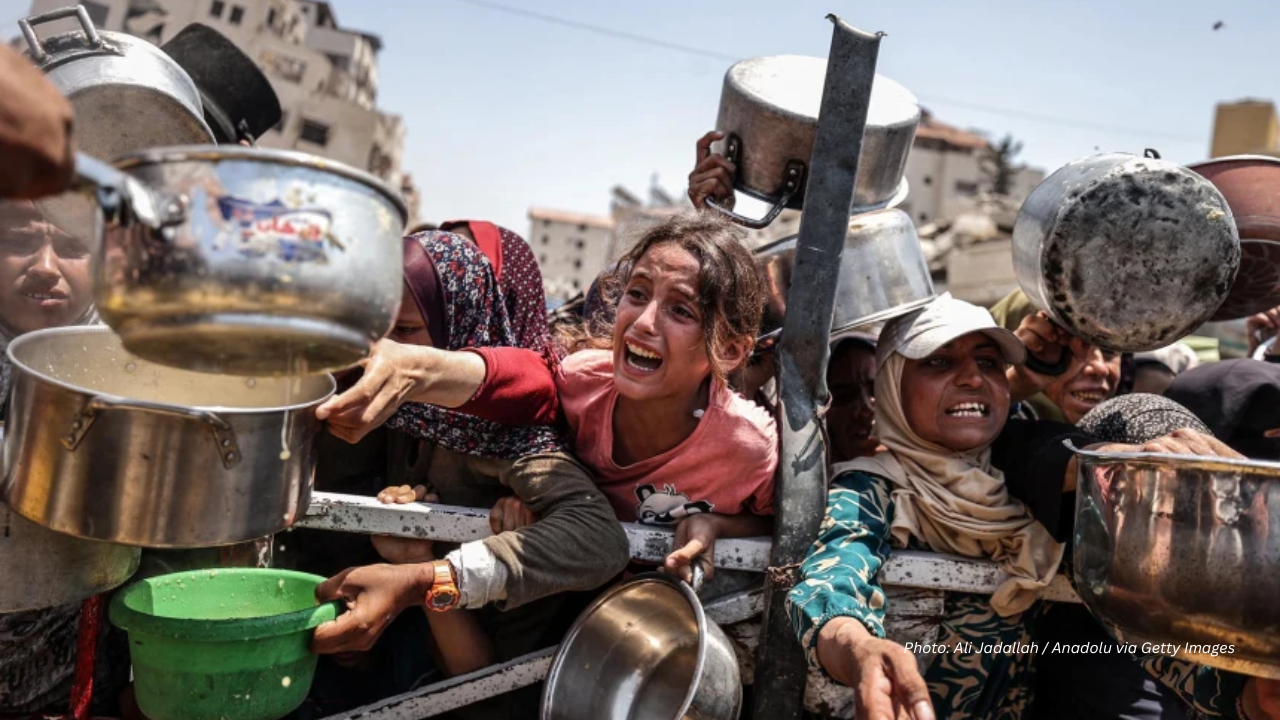
Between mid-October and late November in Gaza, around 1.6 million people faced severe hunger, including over 500,000 in emergency and more than 100,000 in catastrophic conditions, according to UN report. Hunger is a daily concern for nearly everyone in Gaza. Every family struggling to supply one meal every day. Famine has now become a major threat in Gaza. The current scenario is the result of a blockade, ongoing military operations, and the complete breakdown of civilian infrastructure. Understanding the crisis is vital in finding a meaningful solution.
Background and Context:
The Israeli-Palestinian conflict has been ongoing for almost a century. The war between Israel and Palestine began because of territorial disputes and competing national identities. The conflict rose after Britain supported a Jewish homeland in Palestine, and escalated with the 1947 UN partition plan, which was rejected by Arab nations. When Israel declared independence in 1948, leading Arab-Israel War. Israel emerged victorious, displacing 750,000 Palestinian and deepening the conflict.
In October 7, 2023 the Israel-Palestine war again began causing massive death, humanitarian and food crisis in Gaza and its surrounding area.The food crisis in Gaza is a man-made famine caused by the combined consequences of a continuing conflict, a long-standing economic blockade, and systematic breakdown of local foodsystems and infrastructure.The man-made famine is caused by four factors: violence, displacement, restricted access, and food system collapse. Repeated displacement and collapse of cropland, fishing, and essential supplies have driven the crisis deeper the end of the full blockade. More than 100 NGOs claim that Israel is starving Gaza by blocking aid unless organizations hand over details of their Palestinian staff, leaving most unable to deliver assistance since 2 March. In July alone, Israel rejected over 60 aid requests under new registration rules, despite claiming there are no limits on humanitarian access. In reality, starvation-related deaths in Gaza are rising due to these blockades, with more than 500 people having died from starvation and severe malnutrition in 2025amid the humanitarian crisis.
Scale of the Crisis:
Since the violence escalated, over 90 percent of homes in Gaza have been destroyed, and around 98 percent of its farmland has become inaccessible. More than half of Gaza’s roads have also been severely damaged, leaving large areas in ruins. After months of intense warfare, Gaza is now entirely dependent on international aid for survival. Although a ceasefire began on 10 October 2025, Israel permits only 200 UN-approved aid trucks per day instead of the 600 required, and even that level remains a small drop in an ocean of need. Israel continues to control Gaza’s borders, restricting the entry of essential goods.As a result, around 500,000 people are facing emergency levels of food insecurity, while more than 100,000 are in catastrophic conditions. Malnutrition is the most prevalent among children under five, as well as pregnant and breastfeeding women. More than 50,000 children are currently acutely malnourished, placing them at risk of lifelong health consequences. Additionally, mortality linked to starvation and related causes continues in hard-hit areas, and despite some improvement in access since the October ceasefire, severe food scarcity still affects about 77 percent of the population in Gaza, with high levels of acute malnutrition among children remaining a critical concern. This marks the first confirmed famine in Gaza and the Middle East, and it is likely to worsen unless immediate and sustained access to food and humanitarian assistance is ensured.
Breakdown of Humanitarian Aid Delivery
Aid entering Gaza is still far below the urgent needs, with $50 million worth of supplies, including food and medical aid, rejected by Israeli authorities since the ceasefire began. Over 100 humanitarian organizations have signed a letter urging Israel to stop the weaponization of aid into Gaza as starvation is severe there. Aid groups reported that many major NGOs have been unable to deliver food supplies. Because of the continued closure of crossingin the north, much of northern Gaza remains effectively out of reach of aid deliveries. Recently Flotilla, a convey of 44 boats with 500 activists carrying humanitarian aid to Gaza but Israeli force intercepted the Flotilla. The flotilla sought to establish a maritime corridor, aiming to break Israeli’s blockade and drew global attention but the mission was disrupted by Israeli force.
International Response
Global leaders and organizations including United Nations, WEP, UNICEF, Oxfam and Amnesty International have condemned Israel’s blockade, citing it as the cause of this preventable famine. These organizations continuously calling for safe corridors, increased aid entry and protection of civilians. But due to a lack of support from its member states, organizations such as the UN are struggling to address the Gaza crisis, illustrating a historical trend of failure to prevent humanitarian crises. Despite the UN’s potential to act, the lack of a unified approach from member states and the US’s influence have hindered serious humanitarian crisis in Gaza. Experts argues that without strong global leadership and military action, the UN is limited in its ability to stop atrocities like those occurring in Gaza.
What Needs to Happen
Statistics measure the scale, but people experiences reveal the depth of suffering. Parents describes the pain of telling their children there is no food left. Young people worry about their future as all educational institutions are remain closed. Aid workers recount moments where they had to choose which families to serve first because supplies were too limited. These scenario shows that the crisis is not abstract rather it affects every family in Gaza. While the December 2025 IPC(Integrated Food Security Phase Classification) report indicates that famine has been temporarily pushed back following improved access after the October ceasefire, nearly 1.6 million people, about 77 percent of the population, continue to face crisis or emergency levels of food insecurity, with hundreds of thousands in severe conditions. Experts warn that these gains are extremely fragile, as acute malnutrition remains widespread and famine could return without immediate and sustained humanitarian access, restoration of agricultural land and essential infrastructure, and a durable political solution.
Conclusion
The hunger crisis in Gaza is a man-made emergency driven by the conflict, restrictions and the collapse of systems that people rely on to survive. Hunger has become severe and the risk of famine is real. The world has narrow window to act for Gaza. Ensuring food access is not just a humanitarian duty; it is a matter of protecting life and dignity. The urgency is too obvious and the consequences of delay may lead to massive death due to hunger.
Tanzila Hosain Tonny is a Research Intern at Centre for Governance Studies (CGS)
Disclaimer: Views in this article are author’s own and do not necessarily reflect CGS policy