
The Monroe Doctrine Reimagined: U.S. Action in Venezuela
Nuzhat Tabassum | 20 January 2026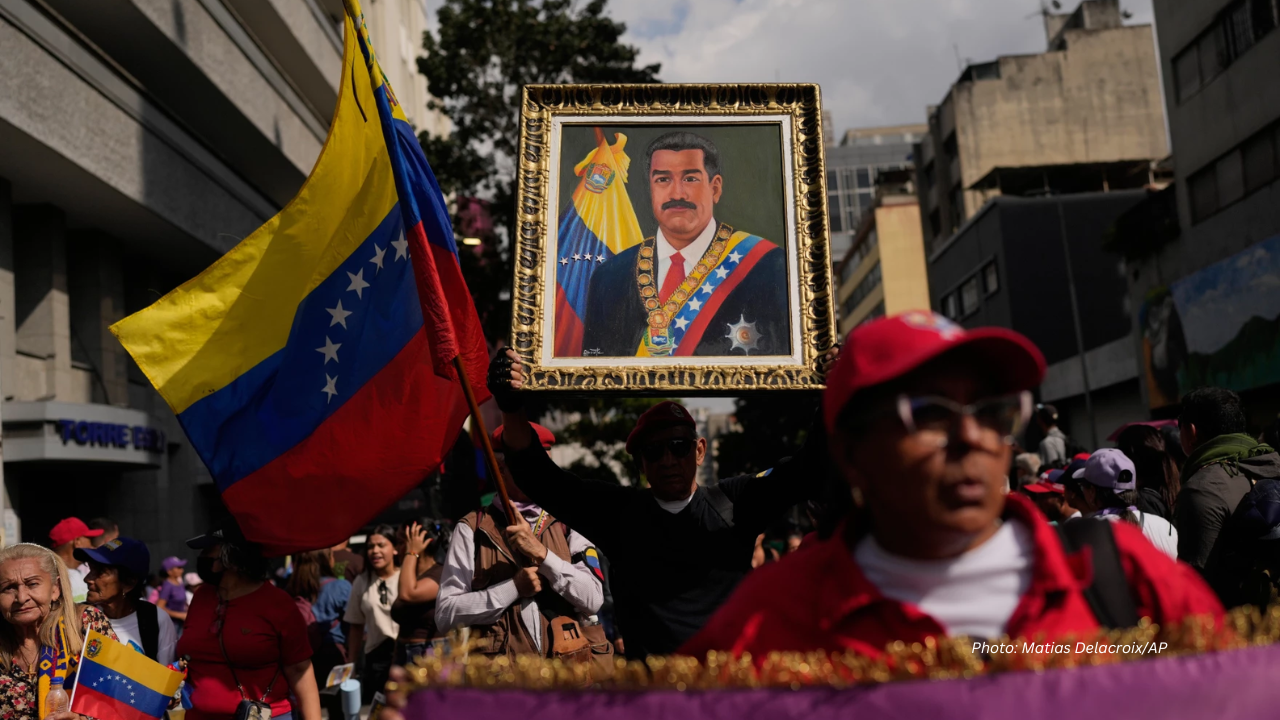
In January 2026, the United States launched a military operation in Caracas, marking one of the most significant foreign interventions in contemporary Latin American history. The operation culminated in the capture of Venezuelan President Nicolás Maduro and his wife. This action followed months of escalating pressure from the U.S. on multiple fronts: military, economic, and political. The Trump administration presented its policies as a battle against "narco-terrorism." However, critics contend that the underlying motivations were more complex, involving oil interests, strategic geopolitical positioning, and a desire for hegemony within the Western Hemisphere.
The issue fundamentally revolves around Venezuela's oil, especially its heavy, sour crude. Crude oil's characteristics vary, primarily in terms of viscosity and sulfur content. Lighter, sweeter crudes are typically easier and less expensive to refine, which is why they fetch higher prices. Heavy, sour crude, on the other hand, is denser, contains more sulfur, and is more expensive to turn into fuels like gasoline, diesel, kerosene, and jet fuel. Venezuela's oil, found mainly in the Orinoco Oil Belt, is notably dense and tar-like, necessitating sophisticated extraction methods like steam injection and the use of diluents.
Despite these challenges,Venezuela holds an estimated 303 billion barrels of proven oil reserves the largest in the world. Most of these reserves are heavy, sour crude. While most U.S. production is light, sweet crude but nearly 70 percent of U.S. refining capacity especially along the Gulf Coast in Texas and Louisiana was built decades ago to process heavier crude grades like those from Venezuela. Industry analysts argue that renewed access to Venezuelan oil would benefit U.S. refineries “tremendously,” as many facilities were specifically designed for that feedstock.
Venezuela's oil history began in 1922, when a colossal well at Los Barrosos-2 in the Maracaibo Basin erupted, turning the nation into a petroleum giant, earning the moniker "The Millionaire of America." The Venezuelan oil industry was nationalized in 1976, a move orchestrated by President Carlos Andrés Pérez. This led to the establishment of Petróleos de Venezuela, SA, or PDVSA. Foreign firms received roughly $1 billion in compensation for the loss of their concessions, yet they were permitted to continue operating as PDVSA affiliates.
After Hugo Chávez took office in 1999, the landscape shifted dramatically. He tightened the government's grip on the oil sector. Then, in 2007, he ordered foreign firms to turn over a 60 percent share of their joint ventures to PDVSA. ExxonMobil and ConocoPhillips refused, leading to the seizure of their assets. Chávez also removed technical experts from PDVSA and redirected oil profits to fund political and military objectives. Investment in infrastructure declined sharply, and production began falling even before his death in 2013.
When Nicolás Maduro succeeded Chávez, oil prices soon collapsed in 2014, pushing Venezuela into an economic catastrophe marked by hyperinflation, poverty, and mass migration. U.S. Sanctions, first levied in 2005 and then significantly ramped up in 2019 under Trump's administration, severely limited Venezuela's ability to obtain foreign capital and technology.
In this context, the Trump administration ramped up its pressure tactics in 2025. The U.S. government labeled Venezuelan gangs like Tren de Aragua as terrorist groups and put a $50 million bounty on Maduro. More than 30 strikes were carried out on boats in the Caribbean and Pacific, reportedly killing over 100 people. The administration alleged these ships were connected to drug trafficking, specifically the smuggling of fentanyl. Yet, counternarcotics specialists and DEA evaluations suggest Venezuela plays a limited role as a transit point for cocaine, and doesn't produce fentanyl. Critics argue the anti-drug rationale lacks supporting evidence.
On January 3, 2026, more than 150 U.S. aircraft entered Venezuelan airspace in a pre-dawn operation. American forces captured Maduro and his wife in Caracas. The administration invoked Article II constitutional powers and emergency statutes, describing its actions as part of a “noninternational armed conflict” against drug cartels.
The strategic rationale underpinning these maneuvers was presented through a reinterpreted lens of the Monroe Doctrine to thwart imperial European encroachment, the doctrine subsequently transformed via the Roosevelt Corollary to legitimize U.S. intervention in Latin America when instability or misconduct was perceived. The Trump administration has advanced what it calls a new “Trump Corollary,” elevating the Western Hemisphere as the top U.S. strategic priority. This reinterpretation ties U.S. security and prosperity as inextricably linked to maintaining dominance in Latin America and preventing rival powers especially China and Russia from gaining access to crucial resources like oil, essential minerals, ports, and military bases. Venezuela serves as a prime example. Its connections with China, Russia, and Cuba, coupled with its vast oil reserves and strategic Caribbean location near vital shipping routes, have been used to justify a more aggressive U.S. stance.
Following Maduro’s capture, Vice President Delcy Rodríguez was sworn in as interim president and received conditional backing from Washington. The U.S. announced it would oversee Venezuela’s oil sector and potentially influence governance during a transitional period. An executive order declared a national emergency to safeguard Venezuelan oil revenues in U.S. custody, shielding the funds from creditors and controlling the Venezuelan oil revenue in a way it believes will help stabilize the country and advance broader policy goals.
The administration has encouraged American oil companies to invest heavily in rebuilding Venezuela’s oil industry, promising favorable arrangements and selective removal of sanctions. Chevron, operating under sanctions exemption, plans to increase production. ExxonMobil, however, has described Venezuela as “uninvestable” under current conditions.
Beyond the oil, geopolitics is a major player. Venezuela has cultivated close relationships with China, Russia, Iran, and Cuba, all while under the weight of U.S. sanctions. China, for its part, has poured money into infrastructure and resource projects throughout Latin America. The Trump administration's approach was clear: prevent rival powers from gaining access to key assets in the Western Hemisphere. This included energy reserves, ports, minerals, and communication networks. Venezuela also holds substantial deposits of gold and rare earth elements, both of which are essential for advanced manufacturing and defense technologies.
Rebuilding Venezuela's oil industry is a long-term project, possibly decades. The existing infrastructure is crumbling, a skilled workforce has largely departed, and the political climate is anything but stable. It's hard to say if any intervention will bring back economic health or just make things worse. One thing is clear: Venezuela's heavy, sour crude, once seen as a technical hurdle for refiners, is now at the heart of a much bigger struggle. This involves global energy markets, competition between major powers, internal politics, and the limits of international law.
• Nuzhat Tabassum is a Program Assistant at Centre for Governance Studies (CGS)
Disclaimer: Views in this article are author’s own and do not necessarily reflect CGS policy