
Summit of Fire: Israeli Airstrike and Gulf Geopolitics
Nuzhat Tabassum | 28 September 2025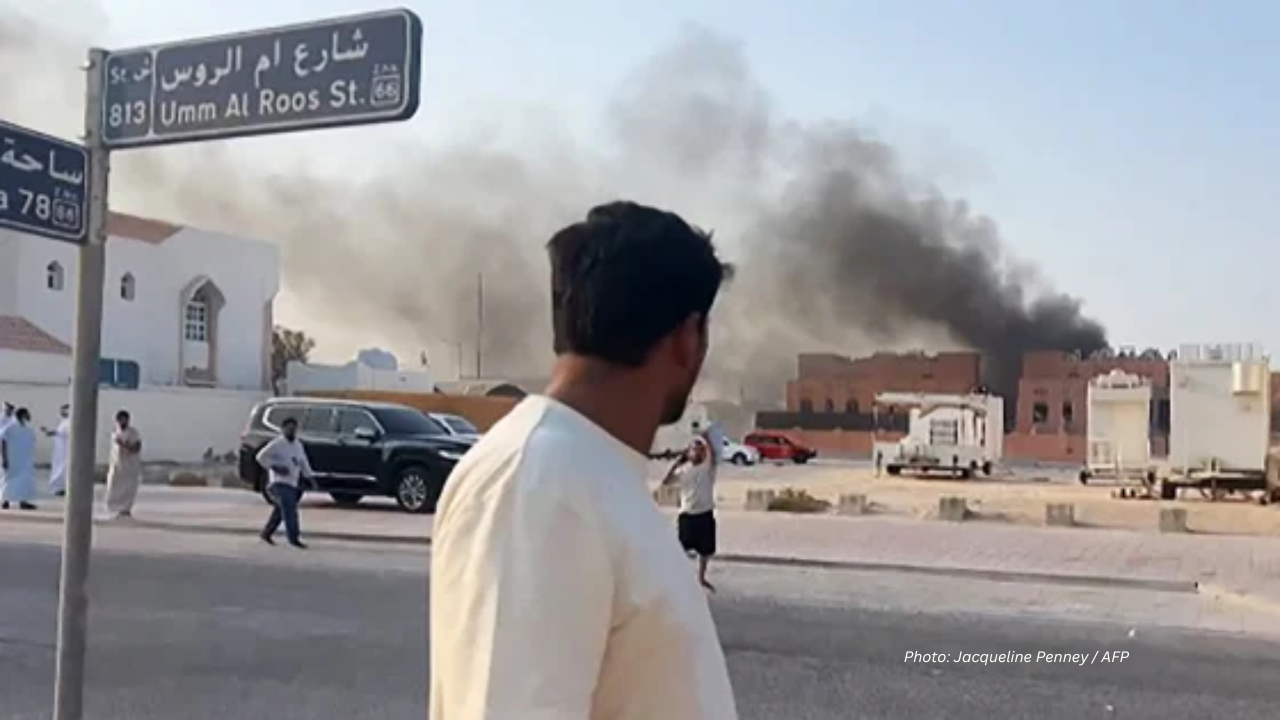
On September 9, 2025, the Middle East witnessed the most shocking incident in history as Israel launched an airstrike in Doha, Qatar, referred to as the“Summit of Fire”, targeting senior members of Hamas involved in ongoing cease-fire talks of Gaza. The strike left six people dead, including a Qatari security officer, and wounded several others. The airstrike came at such a moment when Qatar was trying to mediate a ceasefire between Hamas and Israel, thereby hindering Qatar’s efforts to bring peace in Gaza. On September 15, 2025, the Arab-Islamic summit in Doha convened after the incident and suggested that all member states reassess their diplomatic relations, implement sanctions, and stop arms deliveries to Israel. Despite condemnation from Qatar and other Arab–Islamic states, Israel’s policies are not expected to change. It is also unlikely that the USA will take any formalaction against Israel.
Israel has historically conducted operations targeting Hamas leaders in other countries, at times raising concerns regarding national sovereignty, such as the attempted assassination of Ismail Haniyeh in Iran. In a similar context, Israel sought to neutralize senior Hamas negotiators, including Khaled Meshaal, former head of the organization’s political bureau, and its current acting chair, Khalil al-Hayya. The September 9 airstrike, however, did not achieve this objective. Although Qatar has been a close partner of the United States for several decades, it has maintained its engagement with Israel. The Middle East policy under former U.S. President Donald Trump continued to emphasize strong support for Israel, the advancement of commercial agreements with Gulf states, and the implementation of the Abraham Accords, which established economic, commercial, and security partnerships between Israel and Gulf countries. The broader U.S. strategy in the region has focused on securing national interests and maintaining regional security, while generally refraining from intervening in Israel’s actions in Gaza, Lebanon, Syria, Yemen, and Iran.
In a trilateral call with US President Donald Trump, Benjamin Netanyahu, and Sheikh Mohammed bin Abdul Rahman Al Thani following the airstrike, Israel expressed regret for the death of a Qatari security officer and its violation of its sovereignty, and it promised not to repeat the incident. However, after the call, Netanyahu has faced severe criticism from his own country. Despite the attack, Qatar has not officially relinquished its position as mediator.The United States has encouraged Doha to continue its mediation efforts, citing the strategic benefits previously derived from Qatar’s facilitation of negotiations.
Israel’s actions have contributed to perceptions of insecurity and instability in the Gulf region. The country is viewed as prioritizing military objectives over regional cohesion, while Gulf states continue to emphasize stability, economic development, and infrastructure growth. The strike makes Qatar anxious about becoming one of the many Arab nations that have experienced Israeli military action. The strike has been regarded by GCC members as an assault on all GCC nations. Since the blockade of Qatar five years ago, which was led by Saudi Arabia and the Emiratis, the GCC countries have become more coordinated and unified. The Saudi Crown Prince and Prime Minister Mohammed bin Salman denounced Israel's actions and declared their solidarity with Doha, while UAE President Mohammed bin Zayed visited Doha a day after the attack. However, the USA's stand on this issue was disappointing to the GCC countries. GCC countries have considered the USA their primary security guarantor. However, a number of US Middle East policies, together with Israel's most recent attack on Qatar, are progressively escalating Gulf monarchies' skepticism regarding the US security umbrella's dependability. If a strong US ally like Qatar came under an attack by another close US ally, Israel, there might be another country that would be attacked and would face no repercussions.
In order to address the member states' security concerns, the GCC countries held an emergency summit in Doha and committed to evaluating the GCC's defense posture, implementing cooperative defense structures, and utilizing Gulf deterrent capabilities. There were no immediate announcements of economic or political sanctions against Israel. However, GCC defense ministers announced a number of security and defense measures, including improved intelligence sharing, coordinated air surveillance, an accelerated joint early warning system, updated joint defense plans, and joint air defense exercises. The ministers also reaffirmed their complete support for Qatar's right to self-defense. Besides this, Qatar and other Arab - Islamic countries have limited options to safeguard themselves. One option Qatar can take is to pull back from the ceasefire negotiations. But experts believe that this method will only be useful to punish the USA, not Israel, as they have little regard for international norms. Another option they have is to put economic pressure on Israel's allies, mainly the USA and Europe, as they have a significant amount of investments in Europe and the USA.
The assault on Qatar on September 9th by Israel demonstrates why Saudi Arabia, its neighbor, has been pressing for a formal defense alliance with the US. The Gulf nations and Washington do not have any formal security agreements. The Doha incident highlights the importance of prioritizing enhanced Gulf security over inter-Gulf politics and competition. To improve collective security, a strong bloc like the GCC should be able to use its vast financial and military resources strategically.
The attack on Doha exposed the fragility of regional security and the limits of U.S. influence in the Gulf. The incident underscores the need for Gulf Cooperation Council (GCC) countries to strengthen their own security frameworks, rather than relying solely on U.S. support. It is also important for member states to advocate for formalized security agreements with the United States, rather than relying on informal understandings, to enhance mutual trust and accountability. For Qatar, the primary challenge lies in maintaining its role as a mediator without undermining its credibility or appearing complicit. More broadly, the incident suggests a shift in regional dynamics, where military capability increasingly influences interactions and negotiations. Israel’s “Summit of Fire” may have lasting implications for Gulf–Israel relations and could reshape regional perspectives on alliances, collective security, and state sovereignty in the Middle East.
Nuzhat Tabassum is a Program Assistant at Centre for Governance Studies (CGS)
Disclaimer: Views in this article are author’s own and do not necessarily reflect CGS policy