
Corruption Sparked a Nationwide Movement in Philippine
Tanzila Hosain Tonny | 29 September 2025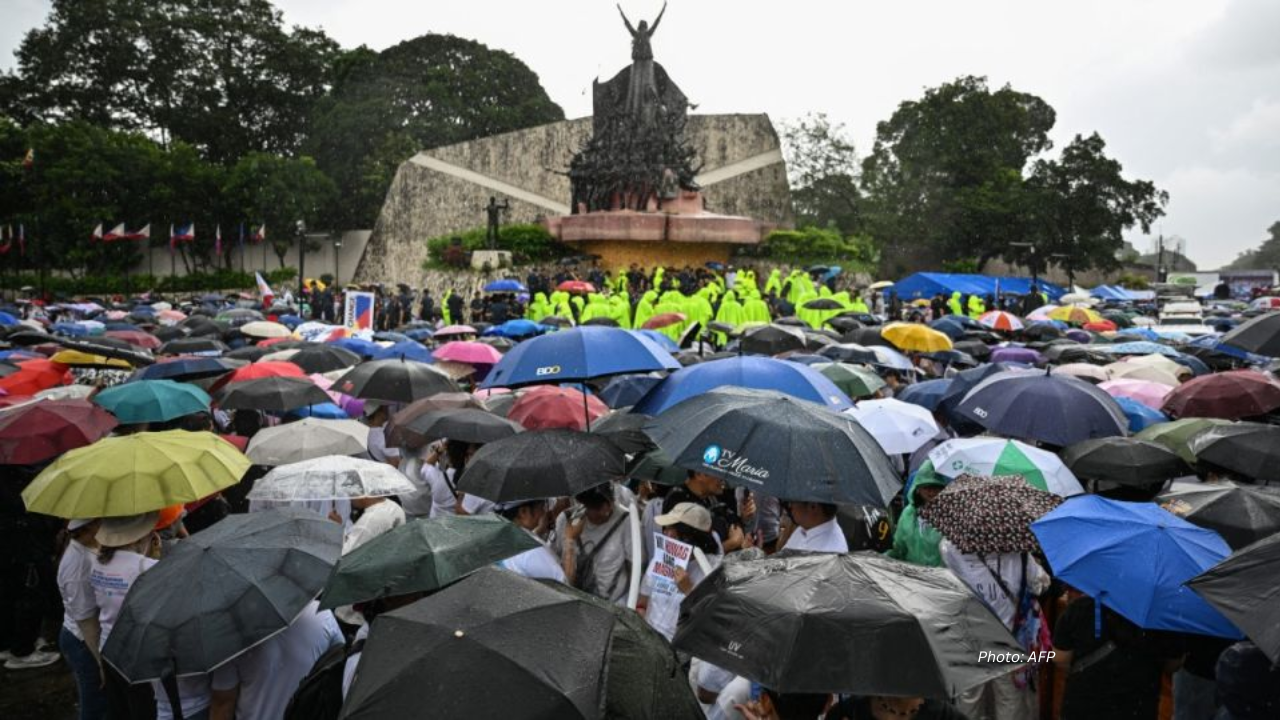
In September 2025, the Philippines was swept into one of its most powerful civic uprisings in recent years, after revelations of massive corruption in the country’s flood-control projects ignited widespread public outrage. What began as disclosures of irregularities in government-funded infrastructure quickly evolved into a national reckoning, as citizensfrom students and church groups to professionals and community leaders, poured into the streets demanding accountability and systemic reform. The scandal, which exposed “ghost” projects, substandard construction, and billions of pesos in suspected kickbacks, not only underscored deep-seated governance failures but also galvanized a movement that challenged the very core of public trust in state institutions.Corruption not only benefits individuals but also collective entities such as political parties, corporations, or groups, including non- financial gains and the preservation or expansion of a person's power and influence. Philippines is extremely vulnerable to natural disasters, with an average of 20 tropical cyclones per year. The governments are attempting to mitigate the damage, but excessive corruption hinders development, as seen by the country's low rating in Transparency International's Corruption Perceptions Index when compared to other Asian countries.
In his July 18 State of the Nation speech, President Ferdinand Marcos Jr. first revealed the flood-control corruption issue, stating that just 15 contractors had received ₱100 billion of the ₱500 billion allotted for flood management project. He ordered investigations and established a platform for public reporting, which revealed extensive irregularities and "ghost projects." Later, journalists discovered that several of the companies had connections to influential politicians, such as Congressman Zaldy Company and former Pasig mayoral candidate Sarah Discaya. Public anger over the findings led to protests spearheaded by young people calling for transparency and the return of stolen money.
The demonstrations started on September 4 in Pasig, a city within Metro Manila, the capital region of the Philippines, when protesters set vandalized the DPWH office in Manila and the headquarters of St. Gerrard Construction. Similar demonstrations coordinated by labor and activist groups took place in Cebu, one of the major cities in the central Philippines, on September 5. On September 12, thousands participated in a "Black Friday" (as a respond to corruption) walkout in response to political scandals and human rights violations, making it the greatest student protest at the University of the Philippines as an outbreak. From September 13 to 20, 2025, anti-corruption protests expanded from Metro Manila to Bulacan, Hagonoy, and Baguio City, with demonstrators addressing alleged corruption and failed flood control projects. Students and activists accused President Ferdinand Marcos Jr. and former President Rodrigo Duterte of allowing corruption of funds and ignoring public welfare. In 21 September, thousands came together in the Philippines, mainly in Manila, against corruption involving fraud or unsatisfactory flood control projects, with organizers predicting 130,000 attendees. Demonstrations took place in more than 20 sites such as Luneta Park and the EDSA People Power Monument. The rallies were attended by Gen Z, faculty of the universities, civil society, several politicians and catholic church members. The catholic organizations in the Philippines, including Simbayanihan (a faith-based social group led by the Catholic Church in the Philippines), Caritas, and Justice and Peace groups, work to promote advocacy and public participation in a variety of topics.
Over 200 protestors were arrested after confrontations with police during theanti-corruption demonstration in Manila, with 224 prisoners, including a few youngsters. The conflicts injured 131 law enforcement officers, several of officials started medical treatment. As a result, schools closed and a curfew was enforced. More protests are planned as investigations into the flood-control corruption scandal continue, with authorities warning that the situation may become unpredictable.
The date 21 September is significant historically because it marks Ferdinand Marcos Sr.'s (father of the current president) imposition of martial law in 1972, which led of a long period of dictatorship witnessed by widespread arrests, torture, and killings. In significantly different from his father's stance, President Ferdinand Marcos Jr. expressed sympathy for the demonstrators, agreed with the validity of the people’s allegations and recognized their freedom to express dissatisfaction. His approach suggests a potential commitment to combating corruption while respecting freedoms of speech, which differs significantly with the brutal strategies of the previous regime. The President has formed an independent panel to investigate alleged corruption in infrastructure projects, including ineffective flood-management infrastructure. He stressed that no one will be free from examination, attempting to reestablish public trust. Ombudsman Jesus Crispin Remulla revealed that around 30 cases involving the DPWH are under preliminary examination as the government prepares to press charges relating to irregularities in flood control projects. However, many citizens believe that genuine accountability and meaningful reform have yet to occur. Demonstrators argue that, despite ongoing investigations, few officials or contractors have been fully held to account. As a result, the anti-corruption movement has persisted, with protests continuing even during major holidays, creating additional challenges for public travel and safety across the country.
Tanzila HosainTonny is a Research Intern at Centre for Governance Studies (CGS)
Disclaimer: Views in this article are author’s own and do not necessarily reflect CGS policy