
The Rohingya Crisis as a Ticking Clock: A Failure of Regional Diplomatic Governance
Md. Saiful Islam Shanto | 01 January 2026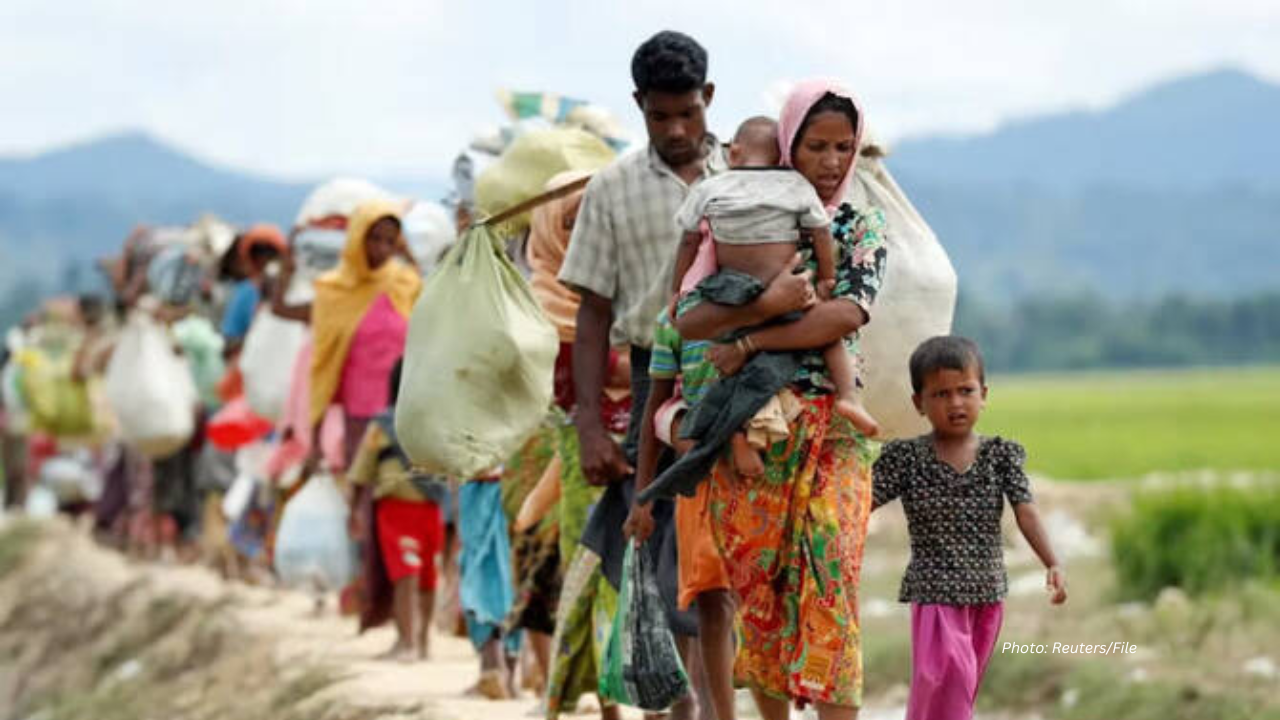
It is 2026. Eight years have passed since the 2017 exodus. Over one million Rohingya are trapped in Bangladesh. They are not just waiting. They are surviving. The United Nations' response plan, as aid agencies constantly warn, is critically underfunded. Food rations are cut. Nearly 300,000 children have no school. Their learning centers are closed. This despair has a soundtrack. It is the ticking of a clock. The violence in the camps is escalating day by day. Armed groups like ARSA and RSO are growing stronger. Human rights groups have documented that they abduct refugees for ransom. They extort families. They forcibly recruit children. This is why this is no longer just a humanitarian crisis. It is now a significant national security threat to Bangladesh. This crisis persists for one reason. Scholars of international relations widely agree that there has been a catastrophic failure of diplomatic governance. The systems for managing this crisis are broken. Bilateral talks have failed. Regional groups are paralyzed. Geopolitics has blocked any real solution.
We must first look at the bilateral failures. The repatriation agreements between Bangladesh and Myanmar are a case study in failed diplomacy. These agreements were only "performative." They looked good on paper but achieved nothing in reality. Dr. Azeem Ibrahim, a prominent academic and author of The Rohingyas: Inside Myanmar's Hidden Genocide, has consistently argued that these agreements were "hollow" because they lacked the necessary oversight mechanisms to ensure safety.There were no enforcement mechanisms. There were no penalties for Myanmar. There was no third-party verification. No one could check if conditions in Rakhine were safe. Crucially, the agreements also ignored the root cause. Myanmar’s government still denies the Rohingya citizenship. Thisis the central governance failure within Myanmar that was never addressed. Bangladesh's interim government proposed a new 7-point plan in August 2025. This effort is commendable. However, many observers fear it will likely meet the same fate. The reason is simple. The military junta lacks the political will to change. The current bilateral track gives Bangladesh no leverage to force that change.
We must also look at the regional failures. The region’s institutions are incapable of solving this crisis. SAARC is a non-entity. The South Asian Association for Regional Cooperation is widely considered functionally paralyzed. It is irrelevant to this or any other serious security issue.The failure of ASEAN is even more spectacular. The "ASEAN Way" is a principle of non-interference. This principlehas provided diplomatic cover for the junta. ASEAN’s Five-Point Consensus was meant to solve the Myanmar crisis. The junta has systematically ignored it. Many regional leaders and diplomats now privately admit it is a failure. ASEAN, as a governance body, has proven it cannot police its own members.BIMSTEC is the supposed "pragmatic alternative." But foreign policy experts point out that BIMSTEC is the wrong tool for this job. It is a bloc focused on economics and connectivity. It has always avoided political crises to maintain cohesion. Bangladesh’s recent appeal for help at the 6th BIMSTEC Summit shows its desperation. This appeal highlights a critical governance gap. As many observers have noted, the Bay of Bengal region has no institution capable of managing a human security crisis.
This institutional paralysis is not an accident. Many conflict resolution specialists believe it is a deliberate choice. This choice is enforced by a geopolitical stalemate. Security experts have described the Rohingya people as hostages, trapped in a strategic competition between China and India.China actively maintains a "devastating deadlock." It engages with all sides in Myanmar. It talks to the junta, the ethnic armies, and the democratic opposition. This cynical governance model, they contend, serves China's own economic and strategic interests. It sidelines ASEAN. It blocks any meaningful action at the United Nations.India, as many observers note, is torn. It provides humanitarian aid to Bangladesh. But its "Act East" policy relies on Myanmar. Its strategic connectivity projects, like the Kaladan highway, need a stable partner in Naypyidaw. This prevents India from applying the decisive pressure needed to solve the crisis. These two great powers have created what many have called a "geopolitical veto." This veto neutralizes any meaningful regional governance. Critics point out that China and India both prioritize their own access to Myanmar. They have abandoned any collective responsibility.
The ticking clock is getting louder. Bangladesh has repeatedly warned that the camps in Cox's Bazar are imploding. This implosion is a direct result of these layered governance failures. The failure to govern this crisis is now actively exporting instability to Bangladesh. This is the key takeaway for policymakers. It is clear that diplomacy based on consensus and non-interference has completely failed. Bangladesh must pivot. It must stop investing diplomatic capital in broken institutions. The interim government should lead a new "diplomatic coalition of the willing." This coalition should include nations like Malaysia and Indonesia. These nations are logical partners. They are also directly affected by refugee arrivals. They have been the most vocal advocates for the Rohingya within ASEAN. This new group must bypass the old, failed frameworks. It must create a new governance mechanism. This mechanism needs a single, clear mandate. It must enforce accountability. It must ensure protection. It must forge a pathway to citizenship for the Rohingya. It must do this with or without the consent of the failed regional bodies.
Md. Saiful Islam Shanto is a Research Intern at Centre for Governance Studies (CGS)
Disclaimer: Views in this article are author’s own and do not necessarily reflect CGS policy