
Roundtable on Media Freedom: Exploring Grievances and Self-regulations
06 August 2025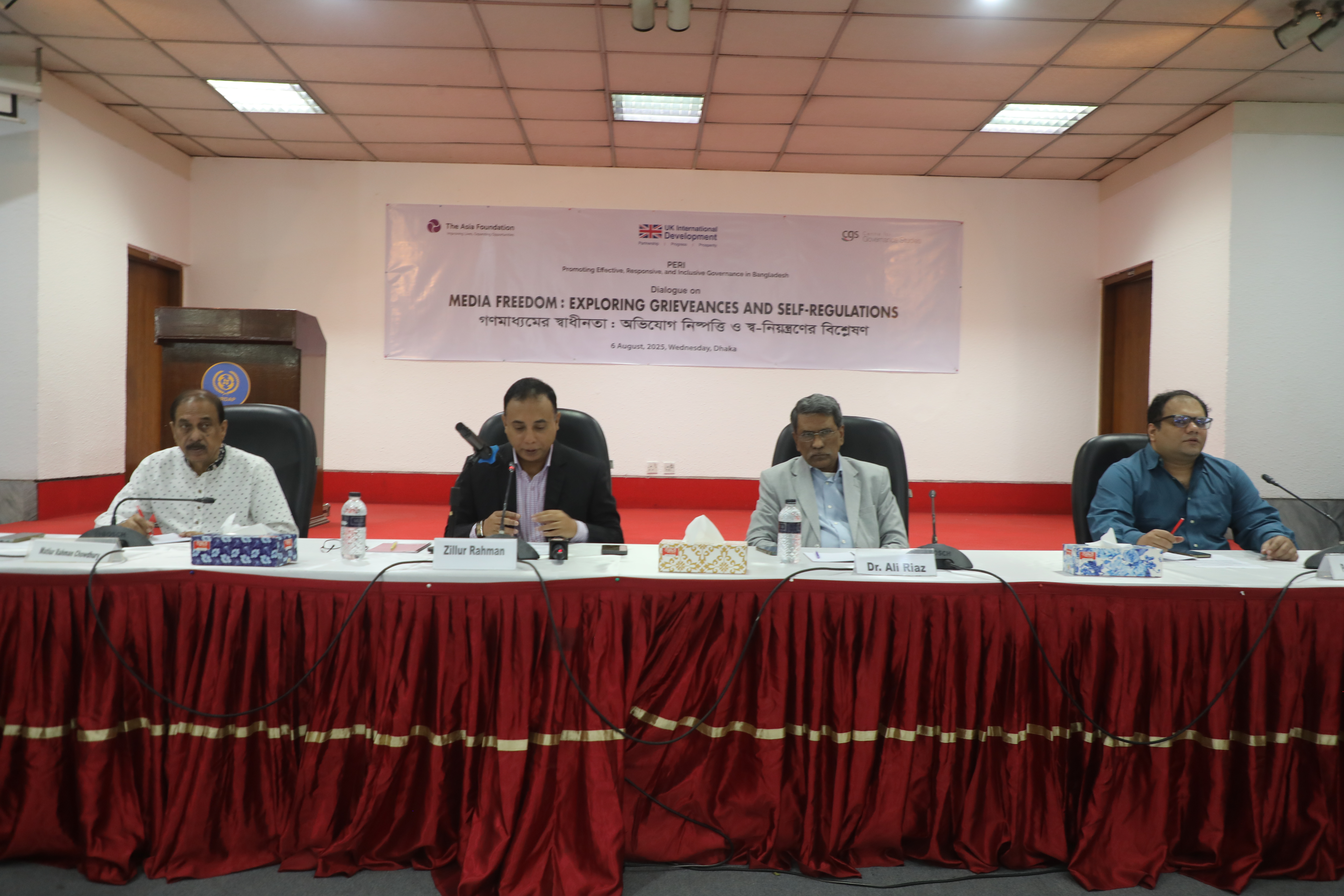
The Centre for Governance Studies (CGS) held a roundtable dialogue on Thursday, August 6, 2025, at the CIRDAP Auditorium, Dhaka. The event focused on reforms related to Bangladesh’s mass media sector.
The name of the roundtable dialogue was “Media Freedom: Exploring Grievances and Self-regulations”, with a focus on media freedom, self-regulation by journalists, grievance redress, and reforms related to the mass media.
The guests of honor were Dr. Ali Riaz, Head of the Constitution Reform Commission and Vice Chairman of the National Consensus Commission, and Matiur Rahman Chowdhury, Editor-in-Chief of Manab Zamin. Other guests included,Advocate Subrata Chowdhury, President, Gono Forum; S. M. Shameem Reza, Professor, Department of Mass Communication & Journalism, University of Dhaka;Parvez Karim Abbasi, Executive Director, CGS;Rezwanul Haque Raja, Editor-in-Chief, Maasranga Television and Chairman, Trustee Board, Broadcast Journalist Center; Reaz Ahmad, Executive Editor, Dhaka Tribune;Dr. Moudud Hossain Alamgir Pavel, Convener, BNP Media Cell;Asif Bin Ali, PhD Candidate, Georgia State University, Atlanta, US; Mahbub Morshed, Chief Editor and Managing Director of Bangladesh Sangbad Sangstha (BSS); Mahmuda Habiba, Member, BNP Media Cell and Joint Secretary General, Jatiyatabadi Krishak Dal; Kazi Jesin, Freelance Journalist; Manjurul Islam, Executive Editor, Bangladesh Pratidin; Zahid Newaz Khan, Senior Journalist;Barrister Shihab Uddin Khan, Advocate, Supreme Court of Bangladesh.The session was moderated by Zillur Rahman, President of CGS.
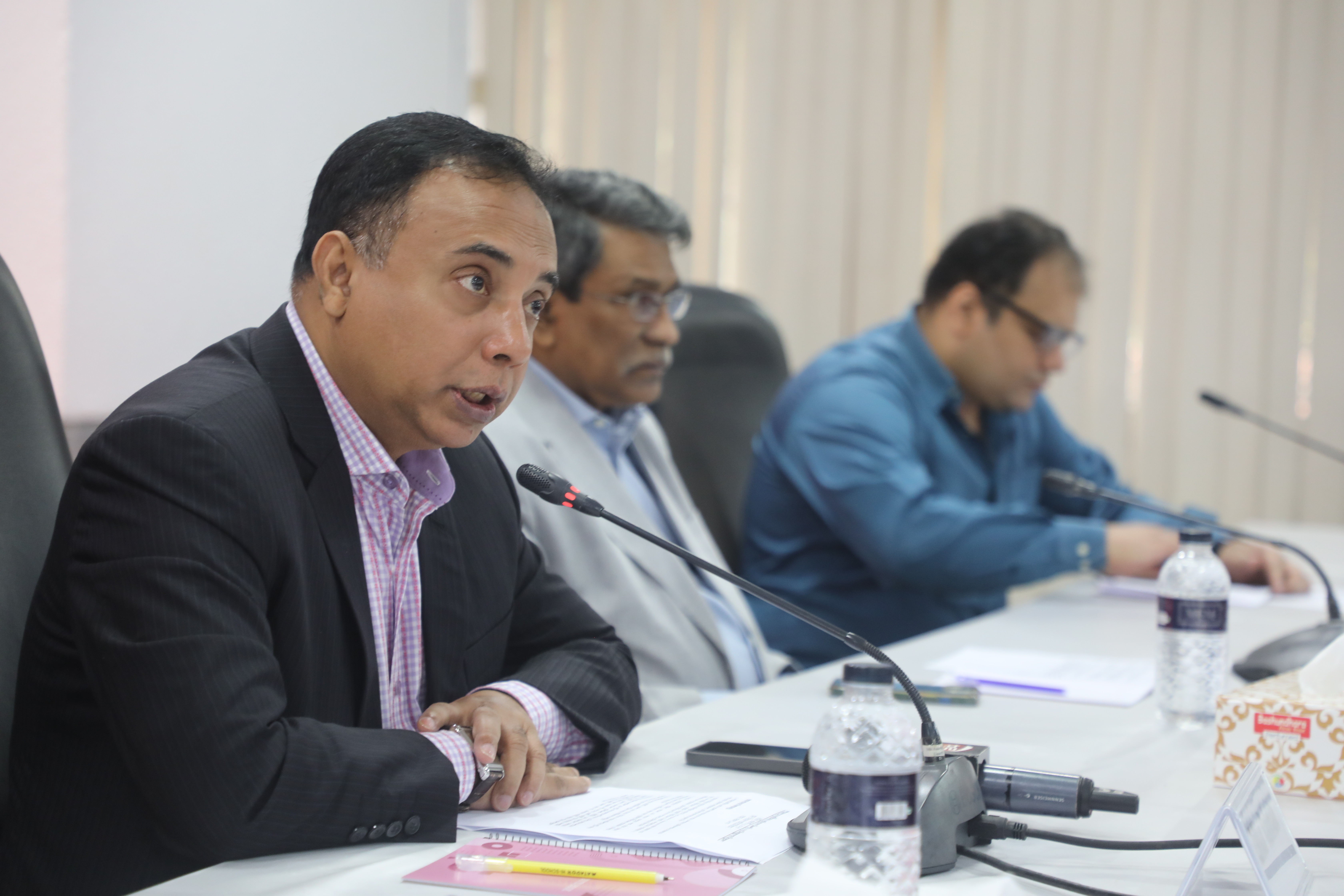
Zillur Rahman started the session saying, today’s discussion is about freedom of the media, and we will talk about self-regulation by journalists and the resolution of complaints. A five-member committee has been formed by the government to ensure autonomy for Bangladesh Betar and Television. A new committee for the Press Council has also been announced, along with several other committees. However, in reality, these committees have not been able to accomplish anything effective. There has been much talk about media reform, and the Chief Adviser has given direct instructions on the matter, but what we have seen in practice is that not much has happened.
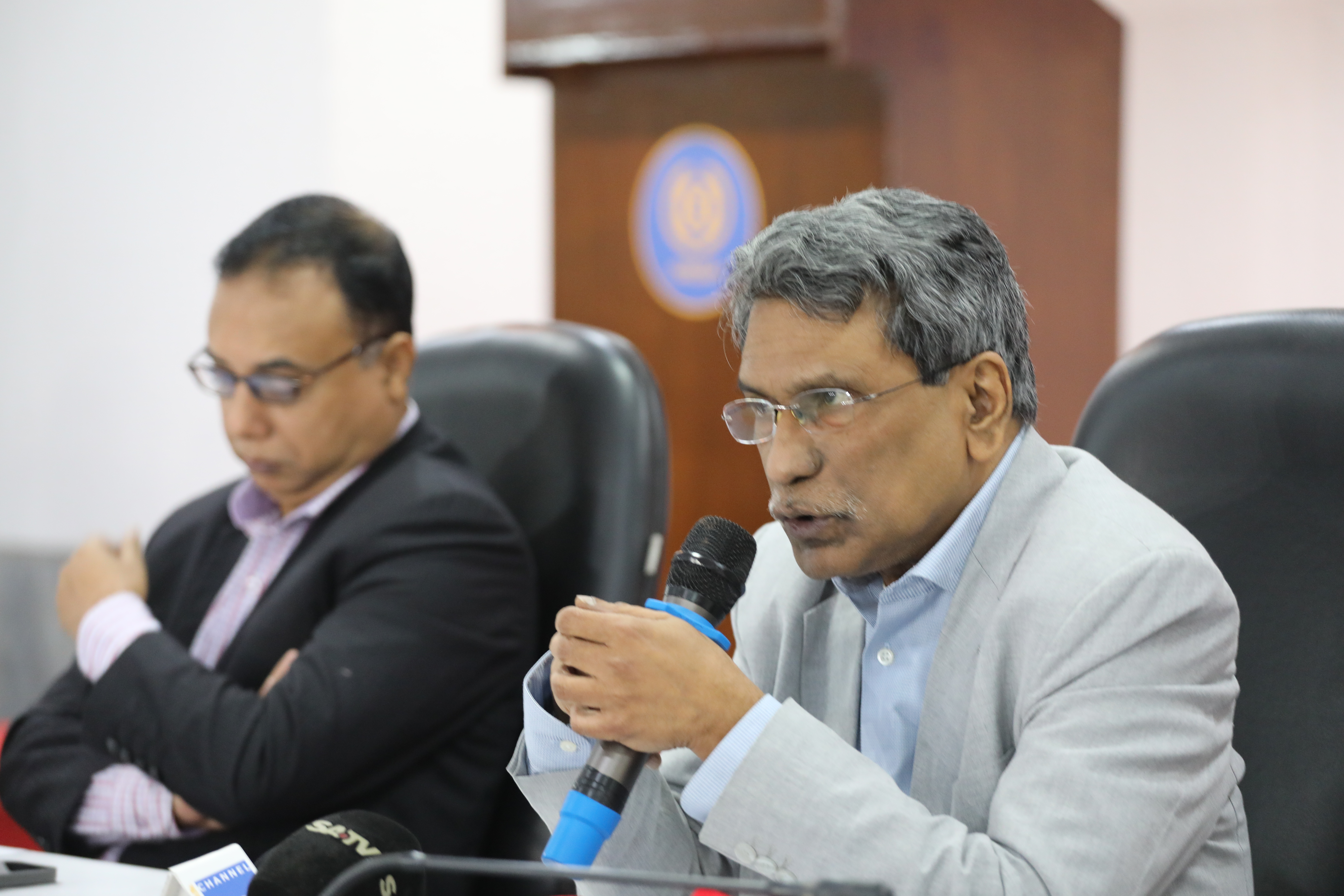
Dr. Ali Riazsaid, First, we must talk about the freedom of the media, and we need to understand, who do we mean by 'media'? He further said, 'Sometimes I ask journalists: stand in front of a mirror and ask yourself, are you a journalist or a politician? One year ago, during the July movement, the Prime Minister held a meeting with journalists. You know what each of them said during that meeting! Is that journalism? Would you and I call that journalism? Should we defend that?
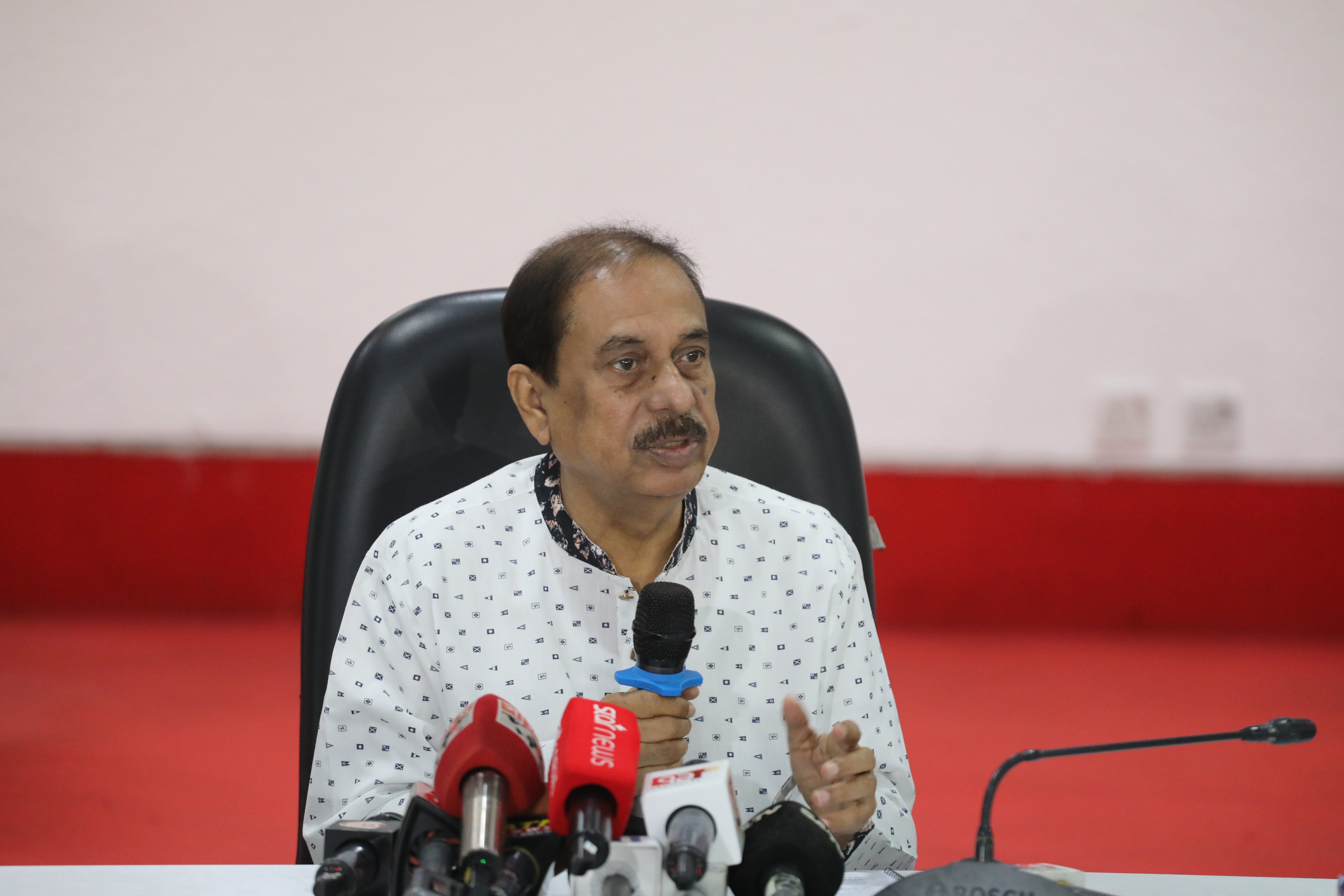
Matiur Rahman Chowdhury said,Today, we find ourselves in a crisis. We had high expectations from Professor Yunus in relation to the government, what have we received? Nothing. And the work he could have done, he is not doing. There was no need to take twelve or eighteen months. The recommendations being presented for media reform—if these are the ones we rely on, then not just for the next ten years, even in the next hundred years, they will never be implemented.
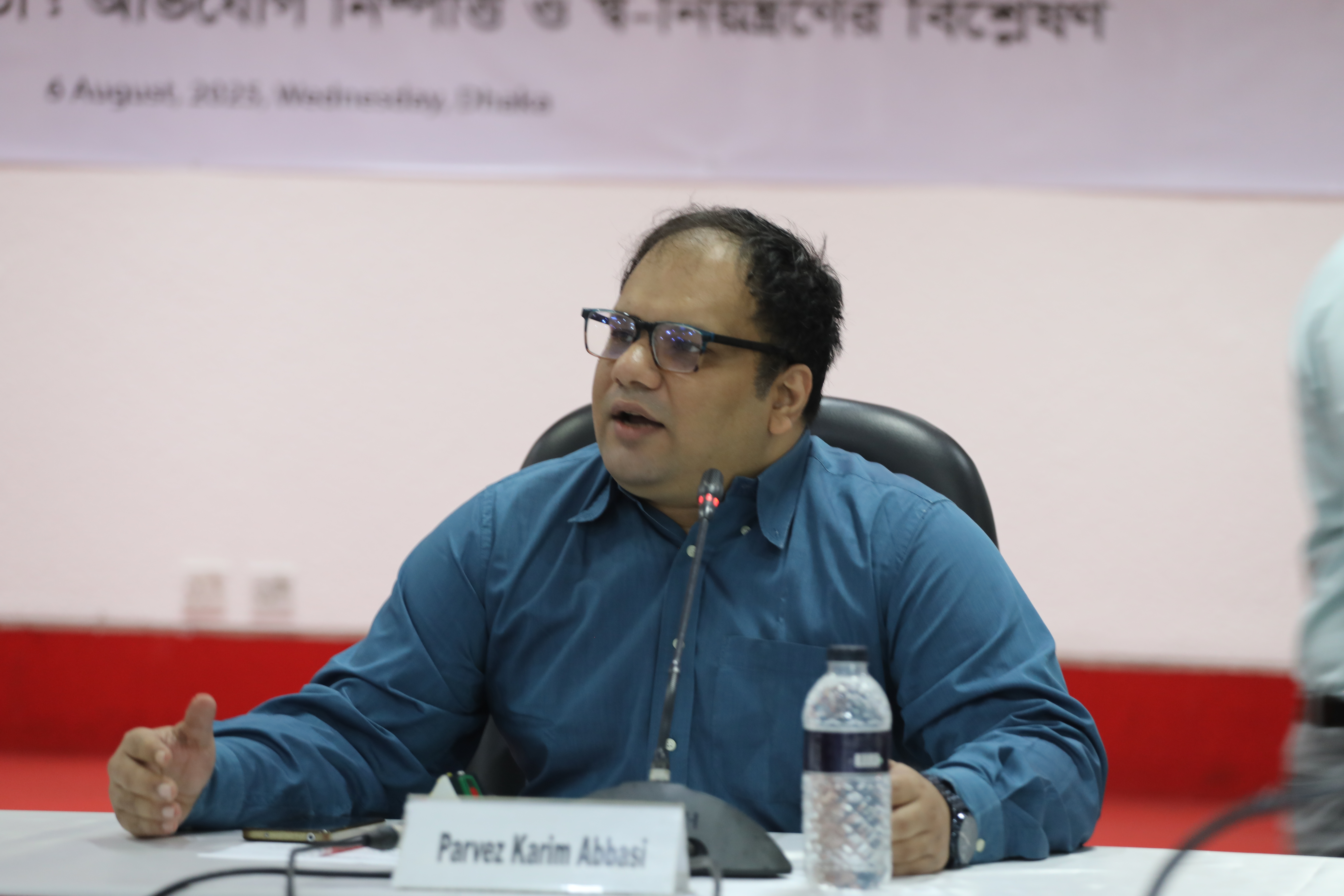
Parvez Karim Abbasi said,Is the media truly free now, one year after the Monsoon Revolution? While it may not be completely free, it is undeniably freer to a significant extent. However, harassment, tagging, or fascist tacticswhatever you call thempersist. Criticism is ingrained in our Bengali identity, yet we struggle to accept it. This is reflected in the media as well. Even if you offer constructive criticism of the government, you may face backlash on social media or other platforms, and various pressure groups may emerge against you.
The gist of the roundtable dialogue was that Bangladesh’s media reform process has not produced meaningful results despite several committees and recommendations. Speakers discussed media freedom, political influence over journalism, self-censorship, weak implementation of Press Council responsibilities, journalist protection, wage and job security, corporate influence over media houses, and the need for stronger grievance redress mechanisms. The dialogue also emphasized that journalists must reflect on their professional role, rebuild credibility, and separate journalism from political loyalty.